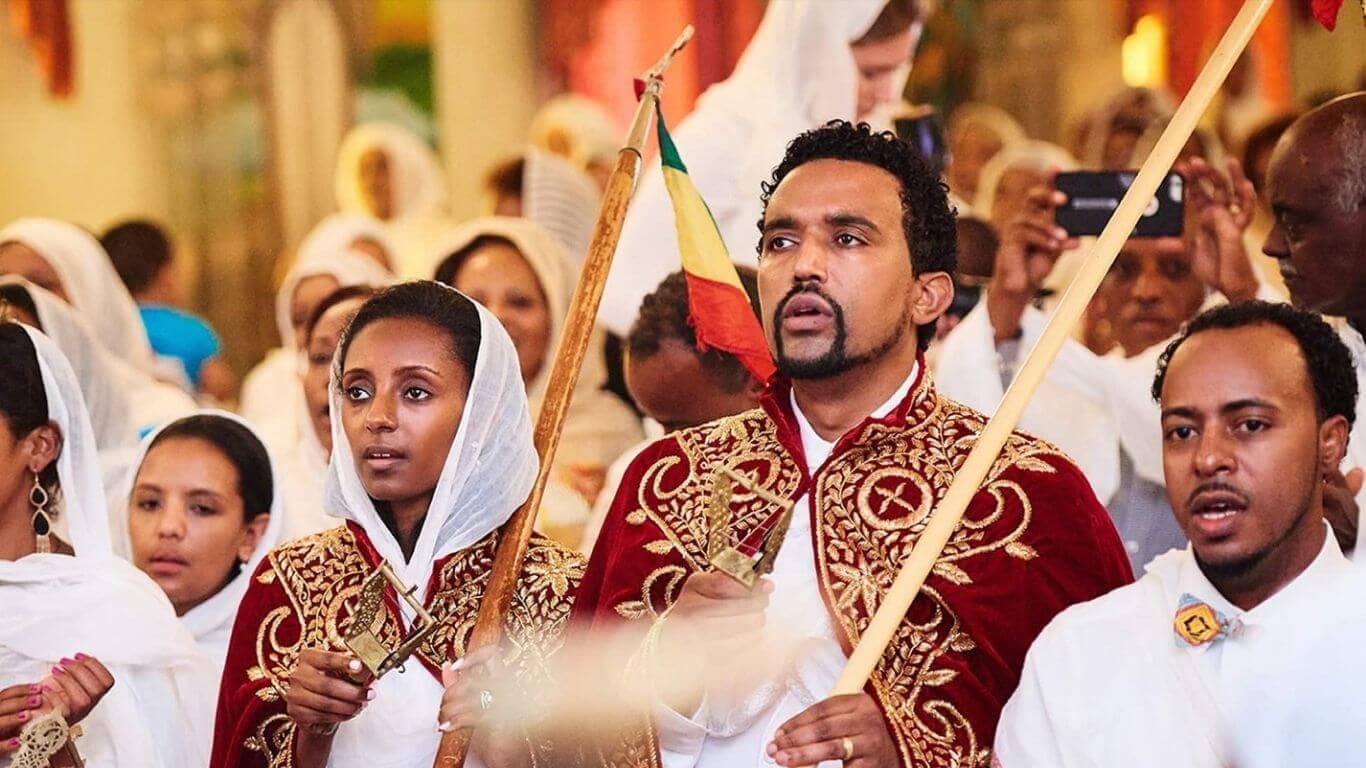
Ethiopian weddings are among Africa’s most vibrant celebrations, blending rich cultural traditions, faith, music, dance, and modern influences. Here’s everything you need to know.
East Africa has a way of turning weddings into full cultural experiences rather than just ceremonies. In places like Uganda, for example, weddings in Kampala often bring together city elegance and deep tradition in one setting, while destinations like Jinja add something different entirely, with waterfront views that make “I do” feel almost cinematic. It’s a region where every country adds its own personality to the idea of marriage.
Move a little northeast, and Ethiopia stands out on its own. Located in the Horn of Africa, it’s one of the oldest nations on the continent and home to a deeply layered cultural identity. Weddings here aren’t just events you attend and leave; they’re moments that pull in families, neighbors, and entire communities.
What makes Ethiopian weddings especially unique is how many worlds they bring together at once. You’ll find Orthodox Christian ceremonies, Muslim traditions, and long-standing cultural practices all shaping how marriage is celebrated. Each one carries its own rhythm, but they all share the same foundation: family, respect, and community.
This is why weddings in Ethiopia are often big, emotional, and full of meaning. They move slowly, involve elders in almost every step, and stretch across different stages that feel connected rather than separate. Music, dance, food, and tradition all sit at the center of it, not as decoration, but as part of the ceremony itself.
This guide breaks it all down in a simple way, from how marriages begin and what traditions actually look like to the ceremonies, costs, and modern wedding trends shaping Ethiopia today. To understand it properly, we start with the bigger picture of what weddings in Ethiopia really look like.
Overview of Weddings in Ethiopia
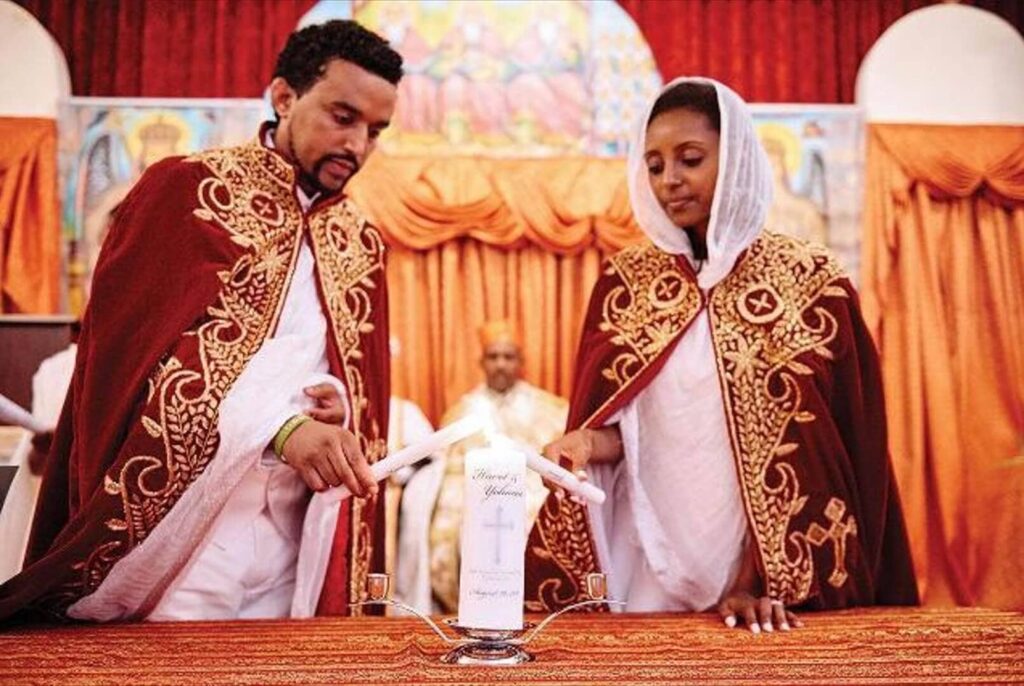
Weddings in Ethiopia are not single-day events. They are extended celebrations that move through several connected stages, often beginning long before the ceremony and continuing after the main event has ended. Family discussions, religious rites, cultural rituals, and post-wedding gatherings all form part of one continuous process.
At the center of it all is family. Marriage is rarely treated as a private decision between two people. Instead, it is shaped and supported by both families, especially in the early stages when discussions begin and expectations are set. Elders often guide these conversations, offering advice and blessings that carry real weight in the process.
What defines Ethiopian weddings is their layered structure. A couple may go through a religious ceremony, followed by traditional celebrations and extended family events that can stretch across multiple days. These layers are not separate experiences; they build on each other and give the wedding its depth.
There is also strong variation depending on location and community. In cities like Addis Ababa, weddings often lean modern, with professional vendors, structured receptions, and styled venues. In rural areas, celebrations tend to be more traditional, with stronger community involvement and locally rooted customs. Despite these differences, the communal nature of weddings remains consistent.
Ethnic diversity also shapes how weddings look across the country. Among communities such as the Amhara, Oromo, Tigray, Gurage, and Somali, variations appear in clothing, music, rituals, and pre-wedding practices. Traditions like Shimglena (elders facilitating marriage discussions) or pre-wedding gatherings in certain regions highlight how locally grounded these customs can be. While details differ, the direction is the same everywhere: weddings are a shared social experience, not an isolated event.
Across all these differences, the underlying purpose remains consistent. Weddings in Ethiopia bring people together, formalize family bonds, and mark transitions that are recognized by the wider community. That is what gives them their scale, rhythm, and meaning.
To understand how all of this begins, it’s important to look at the first stage of the process: how marriage actually starts in Ethiopia.
How Marriage Begins in Ethiopia
Marriage in Ethiopia often begins long before any formal ceremony takes place. While modern couples frequently choose their own partners, marriage is still widely understood as something that connects families, not just individuals.
Family involvement plays a central role from the start. Once a couple decides to marry, relatives often step in to guide the process, offering advice, facilitating introductions, and helping shape early decisions. Their involvement is not symbolic; it is part of how marriage is structured in many communities.
One of the most established traditions in this early stage is Shimglena, where respected elders act on behalf of the groom’s family to approach the bride’s family. This process is built on negotiation, respect, and mutual understanding. Even in modern settings, it remains an important cultural marker in many communities.
Engagement practices vary widely depending on region, religion, and ethnicity. Some families keep things simple, while others hold structured gatherings where both sides meet, blessings are exchanged, and preparations for the wedding formally begin. These early interactions help build a relationship between families before the main celebration takes place.
What defines this stage is its purpose. Marriage in Ethiopia is not treated as a sudden event. It is a gradual process of alignment between families and communities. The discussions, blessings, and introductions are not side rituals; they are the foundation that everything else builds on.
@gettphotography Perfection 🧡 #habeshawedding #wedding #ethiopian_tik_tok🇪🇹🇪🇹🇪🇹🇪🇹 #habeshatiktok #viral #eritreantiktok🇪🇷🇪🇷habesha ♬ original sound – Getnet Teshome
Ethiopian Wedding Traditions and Culture
Ethiopian wedding traditions are deeply rooted in culture, but they don’t follow one single pattern. With over 80 ethnic groups across the country, customs shift from place to place. Still, one thing never changes: marriage is never just about two people. It’s about families, elders, and a wider community stepping into something together.
Traditions Before the Wedding and Engagement
Before the wedding day itself, everything starts with family involvement and negotiation. Even though modern couples often choose their own partners, families still play a central role in approval, blessings, and planning.
In many cases, elders step in early through ceremonies like Shimagelay, where representatives from the groom’s family visit the bride’s home to formally request her hand in marriage. It’s respectful, structured, and often filled with light tension that quickly turns into celebration once both sides agree.
Across regions, engagement traditions also vary. In the Harari culture, for example, gifts like sweets and chat leaves are used to open discussions between families. If accepted, it signals that the engagement is officially moving forward.
What ties all of this together is preparation. Families meet, elders guide discussions, and both sides begin shaping the wedding long before the ceremony begins. It’s less about speed and more about agreement, respect, and alignment.
Traditions During the Wedding
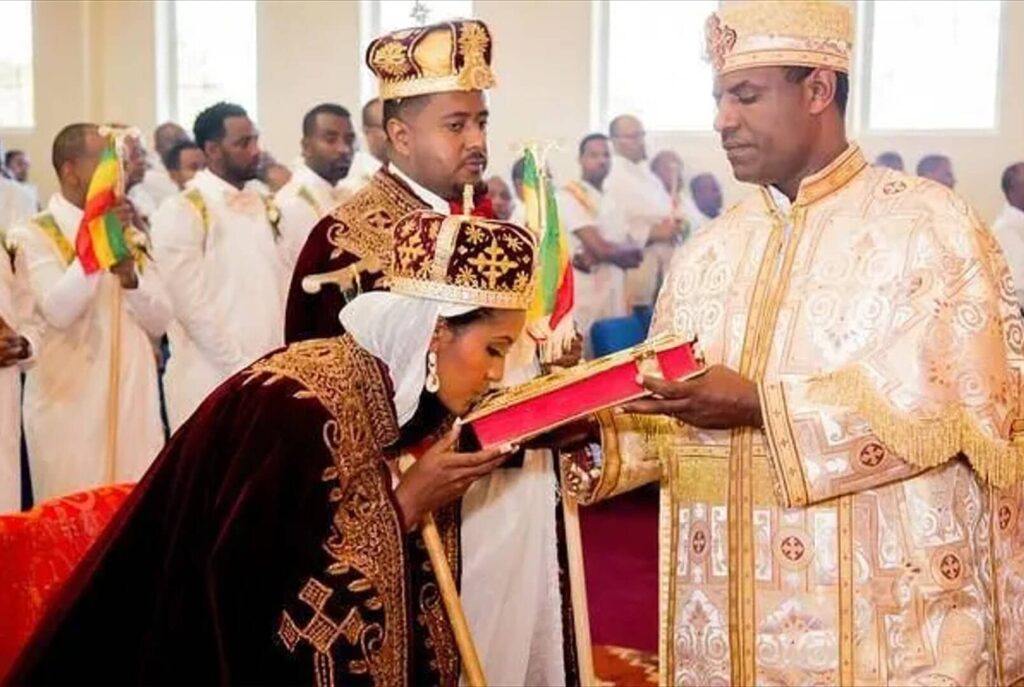
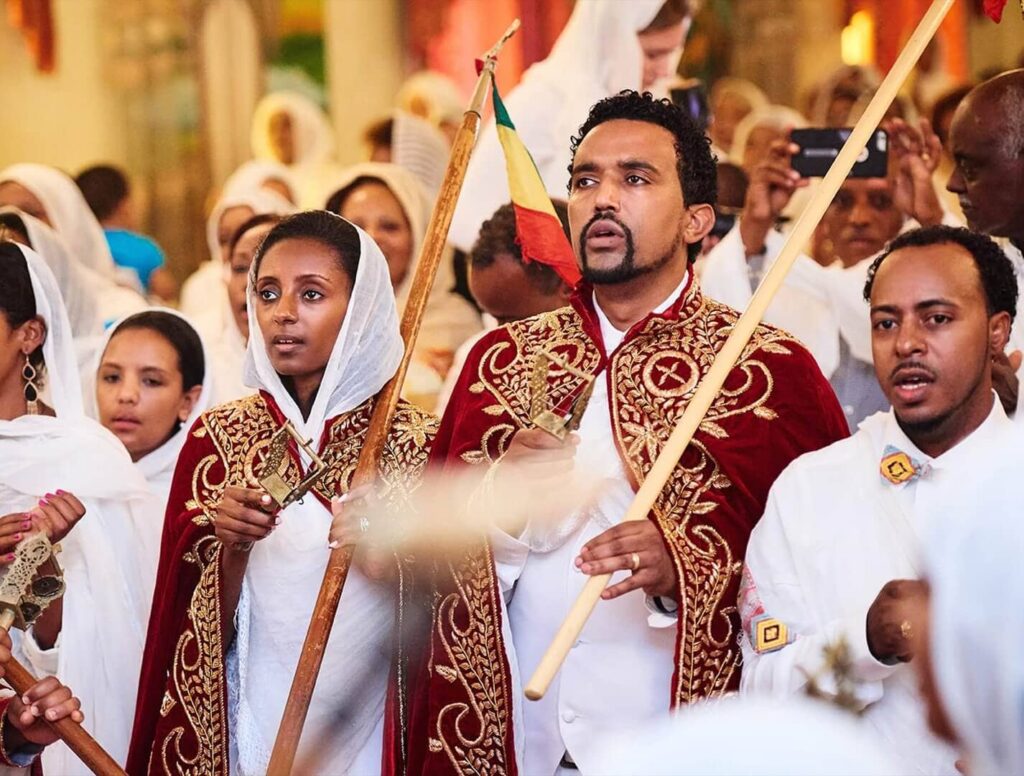
Once the wedding begins, traditions become more visible and expressive. Religious ceremonies often take center stage, especially in Orthodox, Muslim, and Protestant weddings. In Orthodox weddings, for instance, priests lead the ceremony, rings are exchanged, and crowns are placed on the couple as a symbol of honor and blessing.
At the same time, cultural rituals unfold alongside religious ones. The couple is often escorted by family members, traditional music fills the space, and guests take part in long-standing customs like dancing, feasting, and blessing the newlyweds.
In many weddings, the groom arrives with elders or groomsmen to formally “enter” the bride’s home, sometimes met with playful resistance before being welcomed in. Once inside, families gather, food is shared, and celebrations begin to build.
Everything during this stage is intentional. From blessings by elders to shared meals and symbolic gestures, the wedding day becomes a blend of faith, identity, and community participation.
Traditions After the Wedding
After the main ceremony, the celebration doesn’t slow down. It expands. This is where traditions like Melse come in, a post-wedding gathering usually hosted by the bride’s family and attended by close relatives and friends.
The couple returns in traditional attire, often including a Kaba, and immediately steps back into celebration mode. There’s dancing, food, blessings, and, in some cases, rituals like Dabo Sim, where the bride is given a new family name in a playful but meaningful ceremony involving bread sharing and group participation.
In some families, additional gatherings follow, like Kilikil, where both sides of the family meet more casually to bond and strengthen relationships. These moments are less formal but just as important, because they help merge two families into one extended network.
What this really shows is that Ethiopian weddings don’t end in a single day. They stretch out, sometimes across several events, allowing the meaning of the marriage to settle gradually into family life.
The Bigger Picture
Across all stages, before, during, and after, Ethiopian wedding traditions are built on one idea: connection. Whether it’s elders guiding decisions, families negotiating agreements, or communities celebrating together, every step reinforces belonging.
And even as modern life changes how weddings are planned and styled, that core structure stays intact. Tradition doesn’t disappear. It adapts, but it still holds the center.
Ethiopian Orthodox, Muslim, and Civil Weddings
One of the reasons Ethiopian weddings are so diverse is that there is no single wedding format followed across the country. Religion plays a major role in shaping the ceremony, traditions, and even the overall wedding experience. While cultural customs remain important, the type of marriage a couple chooses often determines how the wedding day unfolds.
The three most common types of weddings in Ethiopia are Orthodox Christian weddings, Muslim weddings, and civil marriages.
@gettphotography The most beautiful Ethiopian Orthodox Wedding,
♬ original sound – Getnet Teshome
Ethiopian Orthodox Church Weddings
Orthodox Christianity has a long history in Ethiopia, and Orthodox weddings are among the most recognized wedding ceremonies in the country.
These weddings are often characterized by:
- Religious ceremonies conducted by priests
- Traditional church rituals and prayers
- Crowning and blessing of the couple
- Strong emphasis on faith and lifelong commitment
- Family and community participation
Many Orthodox weddings take place in churches and are followed by large receptions where family and friends continue the celebration.
Ethiopian Muslim Weddings
Muslim weddings follow Islamic marriage traditions while often incorporating local Ethiopian customs.
Common features include:
- Marriage contracts and religious blessings
- Family involvement throughout the process
- Gender-specific celebrations in some communities
- Traditional music, food, and cultural practices
- Large gatherings of relatives and guests
While customs vary between regions and communities, family approval and community support remain central to the experience.
Civil Weddings
Civil weddings are legally recognized marriages conducted through government authorities rather than religious institutions.
Couples may choose a civil marriage because:
- They prefer a non-religious ceremony
- They come from different religious backgrounds
- They want a simple legal process
- They intend to combine a civil ceremony with a traditional or religious celebration later
Many couples who marry through the civil system still hold traditional celebrations with family and friends afterward.
Key Differences Between the Three
Although all three lead to legally or socially recognized marriages, the experience can be quite different.
| Orthodox Wedding | Muslim Wedding | Civil Wedding |
|---|---|---|
| Church-based ceremony | Islamic ceremony | Government ceremony |
| Led by priests | Led according to Islamic traditions | Conducted by civil authorities |
| Strong religious symbolism | Religious and cultural traditions | Primarily legal in nature |
| Often followed by large celebrations | Often followed by community celebrations | Frequently combined with traditional events |
Regardless of the path a couple chooses, the goal remains the same. Marriage in Ethiopia is not simply about signing documents or holding a ceremony. It is about bringing families together, receiving the support of the community, and beginning a new chapter surrounded by tradition and meaning.
Once the type of wedding has been decided, attention shifts to the celebration itself and what actually happens on the wedding day.
The Wedding Ceremony (What Actually Happens on the Day)
By the time the wedding day arrives, weeks or even months of preparation have already taken place. Families have met, elders have offered guidance, and plans have been carefully put in place. While the exact details vary across Ethiopia’s many communities, the wedding day itself is usually a lively mix of tradition, faith, family, and celebration.
The day often begins with separate preparations for the bride and groom. Family members, close friends, and attendants gather early, helping with final arrangements and creating an atmosphere of excitement before the ceremony begins.
The Arrival of the Bride and Groom
One of the most anticipated moments is the arrival of the couple. Depending on the community and style of wedding, this can be simple and intimate or highly ceremonial.
Common traditions may include:
- Traditional music welcoming guests
- Processions involving family members and friends
- Cultural songs and dances
- Symbolic gestures that honor both families
In many weddings, the arrival is treated as a celebration in itself, with guests gathering long before the formal ceremony begins.
The Religious Ceremony
For many Ethiopian couples, the religious ceremony is the centerpiece of the wedding day.
Depending on the family’s faith, this may take place in:
- An Ethiopian Orthodox church
- A mosque
- A civil marriage venue
Orthodox weddings are often known for their elaborate religious rituals, prayers, and blessings, while Muslim ceremonies focus on Islamic marriage traditions and family participation. Civil weddings tend to be shorter and more formal but are often followed by traditional celebrations.
Blessings From Elders
Even as modern weddings become more popular, the role of elders remains deeply respected.
Throughout the ceremony, elders may:
- Offer prayers and blessings
- Give marriage advice to the couple
- Represent the support of both families
- Symbolically pass on cultural values and traditions
For many families, these blessings are among the most meaningful parts of the entire wedding.
The Celebration Begins
Once the formal ceremony concludes, attention shifts to the celebration.
This is where Ethiopian weddings truly come alive.
Guests gather to:
- Share food and drinks
- Dance and sing together
- Congratulate the couple
- Participate in cultural performances
- Take photographs and create memories
In some communities, traditions connected to earlier processes such as Shimglena may still be acknowledged through speeches, family introductions, or symbolic moments that highlight the joining of two families.
A Community Celebration
Unlike weddings that focus only on the couple, Ethiopian weddings often feel like community events. Relatives, neighbors, colleagues, and family friends all play a role in the celebration. The atmosphere is energetic, welcoming, and centered on togetherness.
Whether the wedding takes place in Addis Ababa, a rural village, or anywhere in between, the message is usually the same: marriage is not just the beginning of a life together for two people. It is a moment shared by an entire community.
Of course, no Ethiopian wedding celebration would feel complete without the traditional clothing that makes these occasions so visually memorable.
Ethiopian Wedding Attire
If there’s one thing that immediately stands out in an Ethiopian wedding, it’s the clothing. Even before the ceremony begins, the outfits quietly set the tone. They carry identity, pride, and a sense of heritage that shifts slightly from one community to another but always feels deeply rooted in tradition.
Across most Ethiopian weddings, the base of traditional clothing is the habesha kemis for women and a coordinated traditional outfit for men, often referred to as habesha libs. These garments are typically made from handwoven cotton known as shemma, then finished with detailed embroidery called tibeb. Nothing about the design is random. Patterns and colors often signal regional identity, personal taste, and the importance of the occasion.
Bride and Groom Outfits
The bride usually draws the most attention in the room. Her dress is most often a white or cream habesha kemis, flowing and handwoven, sometimes paired with a netela shawl draped lightly over the shoulders. The embroidery adds subtle color without overwhelming the simplicity of the outfit. Gold-toned jewelry is common, chosen to complement rather than compete with the dress. Headpieces and ornaments are also used, adding detail that feels both ceremonial and elegant.
The groom’s look is just as intentional. He typically wears a coordinated habesha libs outfit made from the same woven fabric, often a long shirt with matching trousers. In some weddings, especially in urban settings, you’ll also see a blend of traditional wear with a modern suit, particularly during reception moments. A kaba, a formal cape worn over the shoulders, is sometimes added to elevate the ceremonial feel.
On the third day of celebrations, it’s common for couples to switch into more elaborate traditional outfits. This is where styles like Fotha or Gey Ganafi come in. These are richer, more detailed garments, often paired with heavier embroidery and layered accessories that signal the peak of the festivities.
Guest Attire Expectations
Guests are not just spectators. Their clothing is part of the visual rhythm of the event. Most people wear traditional Ethiopian attire rather than Western outfits, especially for the main ceremony. White, cream, and earth tones dominate, usually paired with embroidered shawls or scarves.
There’s also an unspoken rule here. Guests are expected to dress respectfully without drawing attention away from the couple. It’s a balance between elegance and restraint, and people generally understand the assignment.
In many Harari traditions, this is even more defined. Guests may wear Fotha or Gey Ganafi outfits, but the bride is distinguished with the most elaborate version, often completed with a Siyaasa, a headpiece that marks her status on the day.
Cultural Variations Across Regions
Ethiopia’s diversity shows clearly in wedding clothing.
- In Amhara and Tigray weddings, white habesha kemis with red or gold embroidery is especially common
- Oromo celebrations often bring in more color and layered styling
- Gurage attire reflects distinct weaving patterns and textile traditions
- Muslim weddings tend to lean toward modest, flowing garments with head coverings, shaped by regional and religious norms
Despite these variations, the foundation remains the same: handwoven fabric, embroidery, and symbolism tied to identity.
Meaning Behind the Fabric and Design
Ethiopian wedding attire is not just about appearance. It communicates meaning at every level.
- White often signals purity and a fresh beginning.
- Handwoven fabric reflects craftsmanship passed down through generations.
- Embroidery patterns quietly point to regional identity and family heritage.
- Shawls and wraps add a layer of respect and cultural grounding.
What this really means is that the clothing is doing more than dressing people. It’s telling a story about where they come from and what they’re stepping into together.
Once you understand how weddings look, the next layer is what brings them alive in real time: the music, movement, and energy that fills the room.
Ethiopian Wedding Dance, Music, and Celebration
If there’s one moment where an Ethiopian wedding truly comes alive, it’s here. The music starts, and the whole atmosphere shifts. People don’t wait for permission to dance. They just move. It’s loud, it’s layered, and it pulls everyone in, whether you planned to dance or not.
From the moment guests arrive, you’ll hear a mix of traditional rhythms and modern Ethiopian music flowing through the space. Live bands warm things up with drums, strings, and vocals, while DJs keep the energy moving between old classics and new sounds. Nothing feels staged. It builds naturally, like the room is slowly syncing into one shared rhythm.
The First Dance and the Turning Point
The couple’s first dance is a big deal. It usually starts with a meaningful song, something personal to them, and for a short moment, everything slows down. All attention is on them.
Then something changes.
Friends and family step in. At first, it’s a few people, then more, and before long, the dance floor is no longer about watching. It becomes participation. That shift is what defines Ethiopian weddings. The couple leads, but the celebration belongs to everyone.
Eskista and the Heart of the Dance Floor
The most recognizable dance you’ll see is Eskista. It’s intense and expressive, built around sharp shoulder movements, chest isolations, and rhythmic footwork that follows the beat of the drums. It looks almost effortless, but there’s control behind it. And once it starts, people gather in circles, taking turns stepping in, each person adding their own style.
It’s not a performance in the usual sense. It’s more like a shared language. Everyone understands it, even if they don’t dance it the same way.
Music That Holds Everything Together
At the center of it all is the music. Traditional instruments like the kebero drum and masenqo violin set the foundation, while the krar adds melody and texture. In many weddings, singers move between call-and-response patterns that pull guests into the rhythm without effort.
In cities, especially Addis Ababa, the sound shifts throughout the night. A live band might open the ceremony, then a DJ takes over later, blending Ethiopian pop, love songs, and modern club sounds. Artists like Teddy Afro or Aster Aweke might sit right next to newer Afro-fusion tracks. It feels layered because it is layered.
Group Energy and Constant Participation
There’s rarely a “quiet moment” on the dance floor. Even when people rest, someone else is already stepping in. Dance circles form randomly. Friends pull each other into the middle. Elders clap from the side, sometimes joining in when a familiar rhythm drops.
Money spraying also appears in some celebrations, a gesture of blessing and appreciation for the couple. Cheers, ululation, and singing cut through the music constantly. It’s not background noise. It’s part of the structure of the celebration.
Regional Styles and Different Rhythms
Different regions bring their own flavor to the celebration.
In Amhara and Tigray weddings, Eskista dominates, often with a strong ceremonial feel tied to formal entrances and blessings. Oromo celebrations introduce dances like Shagoyee, often more expansive and group-driven, tied to cultural identity and movement patterns that emphasize unity.
In Somali Ethiopian weddings, dhaanto brings a smoother rhythm, with coordinated group steps and poetic singing that feels warm and communal.
In some southern communities, dances like Wonde appear in courtship traditions, where movement itself becomes part of how families and couples express intention and agreement.
More Than Entertainment
At some point, the celebration moves beyond dancing. Food is served, elders are honored, blessings are given, and the energy doesn’t drop; it just changes shape.
Even ceremonies like Melse extend this atmosphere into the next day. Dancing resumes immediately, pauses for rituals like Dabo Sim, then continues again into the night. It’s structured, but it never feels rigid. It flows around tradition rather than stopping for it.
What It All Really Feels Like
An Ethiopian wedding doesn’t separate music, dance, and celebration. They’re the same thing. One drives the other.
The room doesn’t watch the celebration. The room becomes it.
@stanlophotography You have to love Ethiopian Weddings #ethiopianweddings #culturalwedding ♬ original sound – Stanlo Photography
Ethiopian Wedding Food and Feasts
If there’s one thing you learn quickly about Ethiopian weddings, it’s this: nobody leaves hungry. Food isn’t just part of the celebration; it’s the backbone of it. Everything else, the dancing, the music, the outfits—eventually circles back to the table.
At the center of the feast is always a spread of stews called wats, served with injera. Injera is that soft, slightly tangy flatbread that doubles as both plate and utensil. People tear pieces, scoop food, and share from the same platters. It’s simple, but it changes the whole feel of the meal. Nobody eats alone, even when they technically are.
The Dishes That Define the Table
The dish you’ll hear about most is doro wat. It’s a slow-cooked, spicy chicken stew that shows up at almost every major celebration. It’s rich, layered, and takes time to prepare, which is part of why it feels special. Around it, you’ll usually find tibs (sautéed meat), lentils, vegetables, rice, and goat or lamb dishes, depending on the family and region.
In some weddings, especially among certain communities, kitfo also appears—finely minced raw beef mixed with spices and butter. It’s bold, traditional, and not something served casually. Everything on the table has meaning, even if it looks like just a feast.
Food as Hospitality, Not Just Eating
What makes Ethiopian wedding food stand out isn’t just what’s served, but how it’s shared.
Meals are communal. Big trays go in the center, and people eat together from the same plate. It’s normal for someone to reach over and feed another person a bite, a tradition called gursha. It might seem small, but it carries weight. It’s a gesture of trust, respect, and connection.
And then there’s the coffee ceremony. It often comes after the main meal, and it slows everything down in a good way. Coffee beans are roasted on the spot, brewed carefully, and served in rounds. The final cup, known as baraka, is considered a blessing. It’s not just caffeine. It’s closure for the meal and a quiet moment in the middle of a loud celebration.
Desserts, Drinks, and Extra Touches
Alongside the main dishes, you’ll often find lighter foods and sweets. Butter biscuits, halawa, sweet vermicelli, and pastries show up at many weddings, especially in urban or Harari celebrations. Tea and coffee flow constantly.
In some settings, tej, a traditional honey wine, is also served. It adds a warm, slightly sweet edge to the celebration, especially later in the evening when the energy shifts from structured ceremony to open celebration.
Feasts That Stretch Across Days
Ethiopian weddings don’t really end in one sitting. The main feast is just one part of a longer rhythm. Depending on the family and region, celebrations continue into multiple days, with repeated meals, gatherings, and smaller feasts hosted by relatives.
In Tigrayan weddings, for example, food preparation itself becomes part of the celebration, with families gathering to cook together while singing and sharing stories. In other regions, extended family hosts additional meals after the main wedding, keeping the celebration alive beyond the ceremony itself.
What It All Comes Down To
At its core, Ethiopian wedding food is about more than feeding people. It’s about showing generosity in a very direct way. If you’re at the table, you’re not just a guest. You’re part of the circle.
And that’s really the point. The wedding doesn’t feel complete until everyone has eaten, shared, and been included.
After the Wedding: Melse and Post-Wedding Traditions
In Ethiopian weddings, the celebration doesn’t really end when the ceremony is over. If anything, that’s just the halfway point. The energy continues into the next day and sometimes even beyond, in a rhythm of gatherings that keep both families connected.
Melse: The Second Celebration
The most important of these is the Melse.
It happens the day after the main wedding, usually hosted by the bride’s family, and it feels less formal but just as meaningful. Only close friends and family attend, which changes the tone completely. It becomes more intimate, more relaxed, but still full of life.
The couple arrives dressed in traditional Habesha attire, often with a Kaba draped over their shoulders, sometimes paired with elegant head jewelry. From the moment they walk in, dancing begins. No long wait, no slow start. The celebration picks up where it left off.
Food is blessed, served, and shared. The couple and their bridal party often take on the role of hosts, moving between guests, making sure everyone is welcomed and included. Then the dancing returns, and it doesn’t stop easily.
Dabo Sim: A Name, a Moment, a Memory
One of the most memorable parts of the Melse is the Dabo-Sim ceremony.
It’s playful but deeply symbolic. The groom’s family gives the bride a new name that she will be called by from that moment forward. The process is lighthearted at first, with suggestions that the bride’s family often rejects in good humor. There’s laughter, teasing, and a bit of back-and-forth before an acceptable name is finally agreed on.
Once the name is accepted, bread is cut and shared among guests. But there’s a twist. Guests are expected to repeat the correct name before receiving their piece. If they get it wrong, they don’t get the bread. It turns into a small but lively moment that everyone remembers long after the wedding is over.
Kilikil: Where Families Truly Meet
In some traditions, another gathering follows, called Kilikil. This is usually hosted by the groom’s family and is even more intimate. It’s about mixing families, not just celebrating them separately.
Here, both sides sit together more casually. The bridal party often serves food, and conversations flow more freely. It’s less about performance and more about connection. In many ways, it’s the moment where two families stop feeling like separate sides and start feeling like one extended unit.
More Than One Celebration
What makes Ethiopian post-wedding traditions unique is that they don’t treat the wedding as a single event. Instead, it unfolds over time.
In many families, Melse can be repeated or hosted multiple times by different relatives. Close friends or extended family might organize their own version later, each one adding another layer to the celebration. The couple moves through these gatherings like guests of honor in a continuing story.
In modern cities, especially Addis Ababa, these events sometimes take on a more contemporary form. Hotel receptions, structured seating, and decorated stages might replace home gatherings, but the core idea stays the same: keep the celebration going, keep the families connected.
What It All Means
At its heart, the Melse and everything that follows is about continuity. The wedding doesn’t end abruptly. It stretches, it breathes, and it settles into family life slowly.
And that’s the real point. In Ethiopian culture, marriage isn’t just a moment you step into. It’s something the whole community walks into with you, again and again, until it feels fully real.
Wedding Planning in Ethiopia (Vendors, Venues, and Modern Trends)
Behind every Ethiopian wedding that looks effortless on the surface, there are usually months of planning and a long chain of people making it all work. It’s not a one-person job. It’s families, vendors, and planners all pulling in the same direction to turn tradition into a real-life event.
How Planning Usually Starts
Most Ethiopian weddings don’t come together quickly. Planning often starts months ahead, sometimes even a year in advance, for larger or more formal celebrations. Families are heavily involved from the beginning, especially when it comes to guest lists, venues, and cultural expectations.
In many cases, the early focus isn’t even decoration or entertainment. It’s logistics. Dates, church arrangements, guest coordination, and budgeting all come first. Once that foundation is set, everything else starts to take shape.
Venues: From Home Courtyards to City Hotels
Where the wedding happens depends a lot on family background and budget.
In rural areas, weddings often take place in home compounds or open community spaces. Tents are set up, chairs are arranged, and the entire neighborhood usually gets involved. It feels open, communal, and very grounded in tradition.
In cities like Addis Ababa, things look more structured. Hotels, banquet halls, and event centers are common choices. These spaces often come fully equipped for large weddings, with lighting, seating, and stages already in place. Church weddings also play a central role for Orthodox Christian couples, followed by receptions in nearby venues.
The Vendors Behind the Celebration
A modern Ethiopian wedding is powered by a growing ecosystem of vendors.
Wedding planners have become more common, especially in urban areas. They handle everything from scheduling to coordinating vendors on the day itself. Photographers and videographers are also essential now, often capturing both cinematic highlights and documentary-style footage of the entire celebration.
Decorators shape the visual identity of the event, mixing traditional elements like woven textiles and cultural colors with modern floral designs and lighting setups. Caterers, musicians, DJs, makeup artists, and even MCs all play a role in keeping the event flowing smoothly.
What stands out is how collaborative it is. Even when professionals are hired, families still stay closely involved in decision-making.
Modern Wedding Trends in Addis Ababa
Weddings in Addis Ababa are evolving fast. You still see strong traditional foundations, but they’re increasingly blended with modern styling.
Couples now plan choreographed entrances, often paired with live music and lighting effects. LED backdrops, floral stages, and professionally designed themes are becoming standard in higher-budget weddings. Multi-camera video teams are also common, turning weddings into cinematic productions.
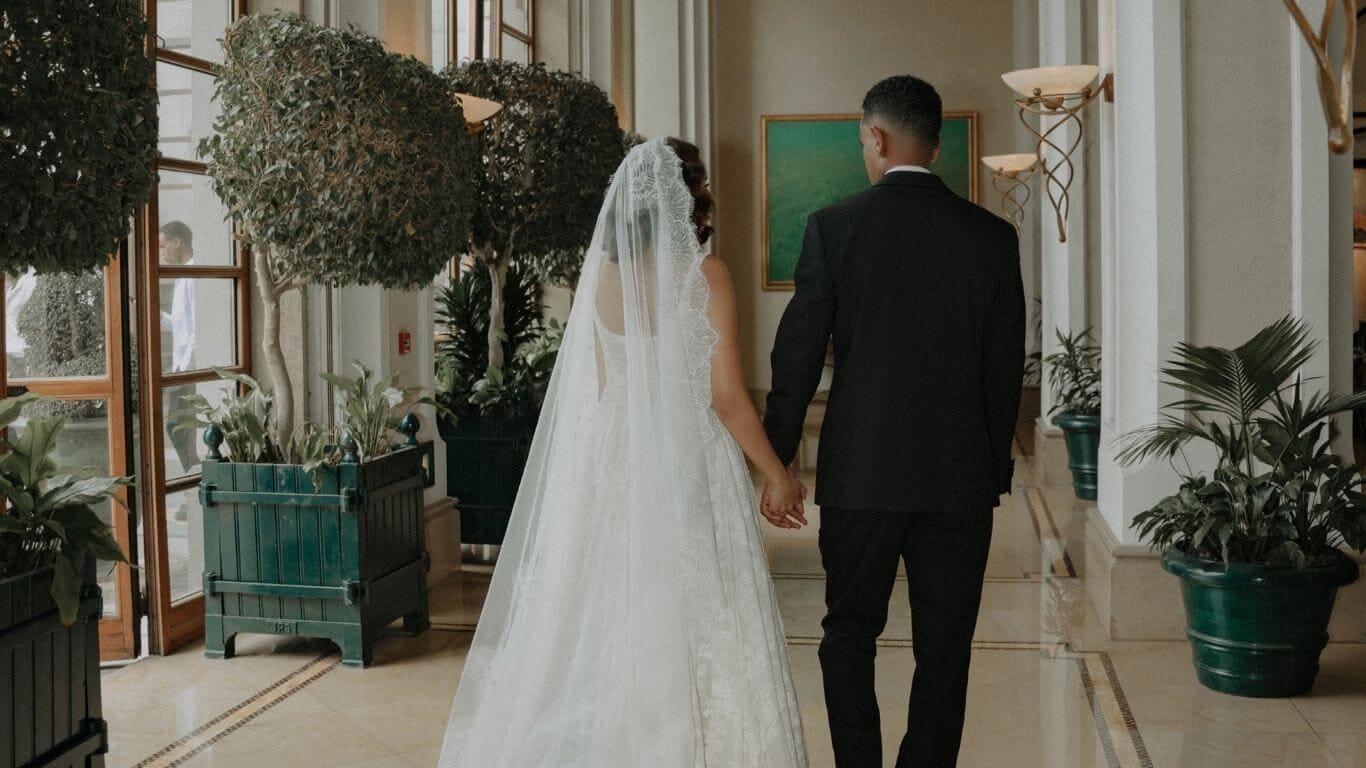
Fashion is also shifting. Some brides start the day in a full habesha kemis, then switch into a modern white gown for the reception. Grooms often do the reverse, mixing suits with traditional outfits depending on the moment.
Even entertainment is evolving. DJs now sit alongside live bands, blending Ethiopian classics with contemporary Afrobeat, R&B, and global sounds.
Blending Tradition with Modern Life
What makes Ethiopian wedding planning unique is how carefully tradition is still preserved, even in modern settings. No matter how luxurious the venue or how polished the production, key cultural elements remain: injera feasts, eskista dancing, blessings from elders, and multi-day celebrations.
It’s not about replacing tradition. It’s about fitting it into a new format without losing its meaning.
Common Mistakes Couples Make
There are a few things that tend to trip people up.
One is underestimating guest size. Ethiopian weddings are rarely small, and lists tend to grow quickly once extended family gets involved. Another is leaving vendor bookings too late, especially during peak wedding seasons when demand is high.
Some couples also try to over-modernize the event and end up losing the cultural balance that makes the wedding feel authentic. On the other side, some lean too heavily on tradition without planning the logistics needed for large modern gatherings.
The best weddings usually sit in the middle. They respect the culture, but they’re also organized enough to run smoothly.
Legal Requirements and Marriage Laws in Ethiopia
Ethiopian marriage sits in two worlds at the same time: the legal system and long-standing cultural and religious traditions. Most couples move through both because each one covers something the other doesn’t. One gives legal recognition. The other gives social and spiritual meaning.
Marriage Certificate and Registration Process
For a marriage to be legally recognized, it must be registered with government authorities. This is where the official marriage certificate comes from. It’s the document that proves the union exists in the eyes of the law and is used for things like inheritance, legal rights, and formal records.
Ethiopia recognizes multiple forms of marriage, each carrying its own weight. Civil marriages registered with the government offer the clearest legal standing. Alongside this, religious marriages are widely practiced and recognized when properly documented. These include Ethiopian Orthodox ceremonies, Muslim Nikah, and Protestant weddings. Customary marriages can also be valid, as long as they are acknowledged by both families and local authorities.
In most real situations, couples don’t choose just one path. They combine them. A civil registration for legal protection, followed by a religious or traditional ceremony for cultural meaning.
Age and Legal Requirements
The legal minimum age for marriage in Ethiopia is 18. Both individuals must give full consent. On paper, this is clear and strictly defined, and forced or underage marriage is not legally permitted.
In practice, especially in rural areas, traditional family arrangements can still influence how marriages are discussed or introduced. But legally, consent and age remain the baseline requirement.
Civil vs Religious Recognition
Civil marriage is the formal legal route, handled through government offices. It’s the foundation of legal recognition.
Religious marriage, on the other hand, carries deep cultural and spiritual weight. Ethiopian Orthodox, Muslim, and Protestant ceremonies are all widely practiced and respected across communities. For many families, this is the most meaningful part of the process.
Most couples go through both systems. Civil registration first or alongside, then religious or customary ceremonies that reflect their identity and beliefs.
Marriage Across Borders (Foreign Couples)
For foreigners marrying in Ethiopia, the process involves more documentation than local marriages. This typically includes a certificate of no impediment, passport copies, legal translations, and sometimes notarized statements confirming identity and eligibility to marry.
Once these documents are verified, couples can complete the civil registration. After that, many choose to hold a religious or traditional ceremony as well, blending legal requirements with cultural experience.
Divorce and Legal Separation
Divorce in Ethiopia is handled through the courts and follows a formal legal process. It usually involves decisions around property, financial responsibilities, and child custody where relevant.
Religious institutions may support reconciliation or counseling, but the final decision is made through the civil legal system. Separation can also be recognized depending on the case, though it doesn’t always carry the same legal finality as divorce.
Polygamy (Neutral Overview)
Polygamy exists in Ethiopia in limited and context-specific forms. Civil law is based on monogamous marriage, which is the standard legal framework for official registration.
However, some customary or religious practices in certain communities may recognize polygamous arrangements. In these cases, recognition depends on the specific legal and cultural context, and not all unions are registered in the same way under civil law.
How It All Fits Together
What makes Ethiopia’s system interesting is how layered it is.
There’s the legal structure that defines rights and responsibilities. Then there’s the religious and cultural structure that defines meaning and identity. Most marriages sit in both spaces at once, moving between paperwork and ceremony, law and tradition.
And in the end, that’s what shapes Ethiopian weddings overall: not one system replacing another, but several working side by side.
Ethiopian Wedding FAQs
How is marriage done in Ethiopia?
Marriage usually combines a legal civil registration with a religious or traditional ceremony. Most couples also hold a large cultural celebration involving family, food, and multi-day festivities.
How long do Ethiopian weddings last?
They often last several days, with the main ceremony followed by celebrations like Melse and family gatherings. In some cases, smaller events continue even after the main wedding weekend.
Do Ethiopians wear wedding rings?
Yes, many couples exchange wedding rings, especially in modern or urban weddings. Traditional ceremonies may place more emphasis on cultural rituals than rings, but both are common today.
Do Ethiopians marry more than one wife?
Civil law in Ethiopia is based on monogamy, so legal marriages are between one man and one woman. Some communities may still recognize polygamous unions through customary or religious practices.
Is divorce common in Ethiopia?
Divorce exists and is handled through the legal system, but it’s not considered casual or frequent. It usually involves formal court procedures and family considerations.
What is the age of consent in Ethiopia?
The legal minimum age for marriage is 18. Both parties must consent for the marriage to be valid under Ethiopian law.
Final Thoughts
Ethiopian weddings sit at the intersection of culture, faith, and community in a way that feels very intentional. Nothing exists in isolation. The music, the food, the rituals, and even the legal side all connect back to one idea: this is not just a couple getting married, it’s two families coming together.
What stands out most is the sense of belonging that runs through everything. Whether it’s elders giving blessings, guests sharing food from the same plate, or everyone pulling into the dance circle, there’s a constant reminder that you’re part of something bigger than yourself.
And that’s really why Ethiopian weddings stand out. They balance deep tradition with a modern, evolving lifestyle without losing their identity. Even as styles change and cities modernize, the core stays the same, a celebration that is loud, communal, and deeply rooted in connection.