
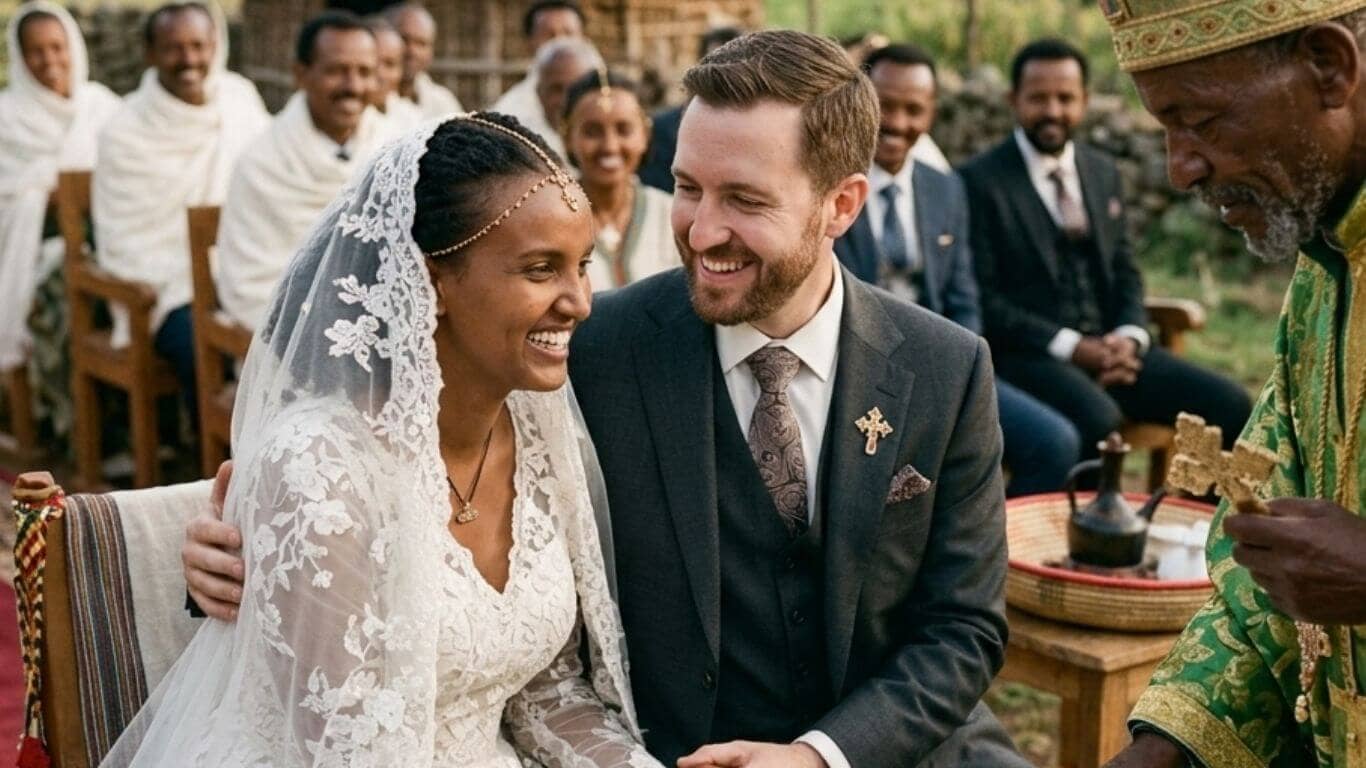
Foreigners can marry Ethiopian citizens, but the process involves legal requirements, documents, and official registration that you need to know.
Yes, foreigners can legally marry Ethiopian citizens. It’s allowed under Ethiopian law, and it happens every day in different forms—civil, religious, and customary. On paper, the rule is simple. In practice, it’s a process that involves paperwork, verification, and local government offices, all of which expect things to be done in a very specific way.
Here’s the thing, though: this is not a “show up and sign” situation. Marriage in Ethiopia involves legal eligibility checks, document authentication from your home country, and registration through local authorities like the Kebele. Even when everything is clear, timelines can stretch depending on how fast your documents move through the system and how well you prepare.
What catches most foreigners off guard is how layered it is. There’s the legal side written in law books, and then there’s how it actually plays out at the office counter. Some requirements are strict and universal; others depend on interpretation, location, or how complete your paperwork is. That gap is where most of the confusion comes from.
This guide breaks everything down in plain terms. You’ll see who can legally marry in Ethiopia, what documents you actually need, the full step-by-step process, the different types of marriage available, and what happens after marriage in terms of residency or immigration options. It also covers the practical side most official sources don’t explain clearly.
By the end, you won’t just know that foreigners can marry in Ethiopia—you’ll understand how the process really works, what to prepare for, and the mistakes that slow people down.
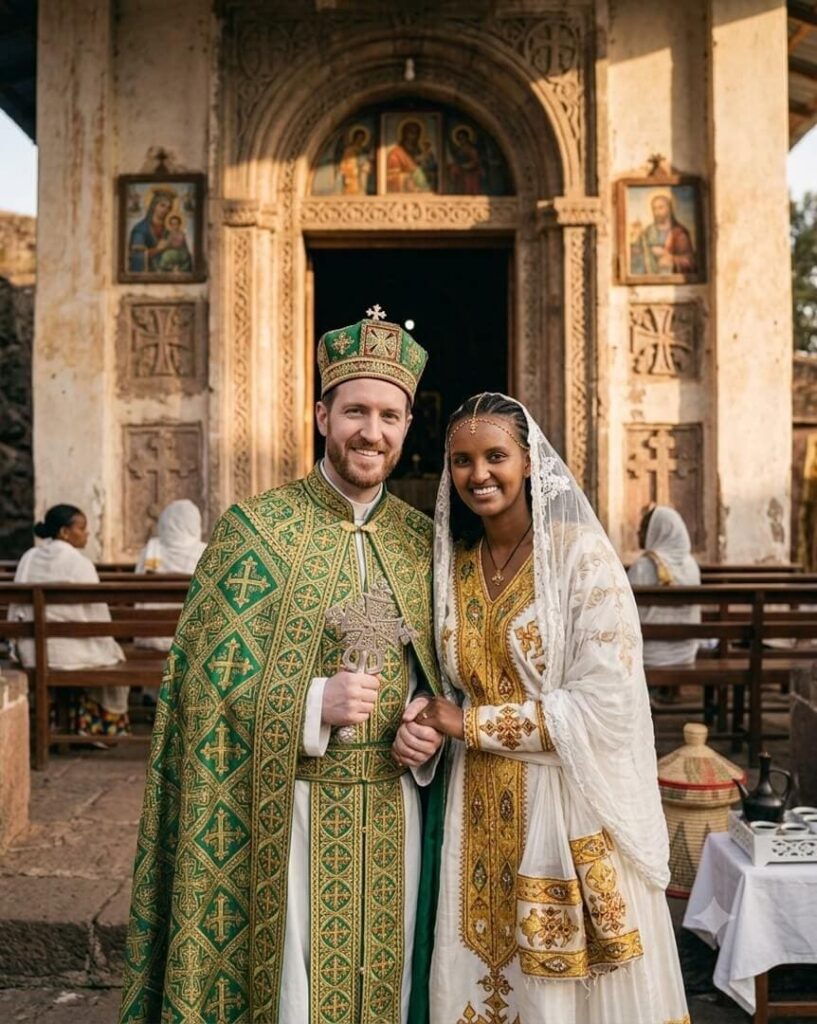
Who Can Legally Marry in Ethiopia as a Foreigner?
Ethiopia doesn’t treat marriage as just a personal agreement between two people. Legally, it’s a contract that has to meet clear conditions before the state recognizes it. That means before you even get to the ceremony or paperwork stage, both partners must already fit a specific legal profile.
First is age. Both people must be at least 18 years old to marry under Ethiopian law. There are rare exceptions where a court can allow marriage at 16 in serious cases, but that is not the normal path, and it’s not something foreigners should expect to rely on. In practice, if you’re under 18, the process stops there.
Next is marital status. Both partners must be single in the legal sense—meaning not currently married anywhere else in the world. This is where foreigners often hit their first real hurdle. You’re expected to prove it with official documents, not just verbal confirmation. For example, a foreign partner may be asked for a single status affidavit or equivalent legal document from their home country, properly authenticated through the required government channels. Without that, the process usually cannot move forward at the Kebele stage.
Then there’s consent, which sounds obvious but is still formally checked. Ethiopian law requires that both people enter the marriage freely and willingly, without pressure or coercion. During the civil process, officials may directly confirm this before signing anything. It’s a simple check, but it carries legal weight—if consent is questioned, the marriage can be delayed or rejected.
The law also draws firm boundaries around who is allowed to marry whom. Bigamy is not allowed under any circumstances, and any existing marriage must be legally ended before a new one is registered. Close family relationships are also prohibited, including direct blood relations and certain in-law relationships. These rules apply equally to both Ethiopian citizens and foreigners, and they are taken seriously during document review and registration.
For foreigners, the key difference is proof. Locals are usually verified through national ID systems, but foreigners have to bring documentation from abroad that proves the same thing—age, single status, and legal eligibility to marry. That’s why paperwork like passports, affidavits, and embassy-authenticated documents matters so much. Without them, even if both people are fully eligible in reality, the marriage cannot move forward in the system.
In simple terms, this stage is about one thing: before Ethiopia allows the marriage, it wants clear legal evidence that nothing is missing, hidden, or already binding elsewhere.
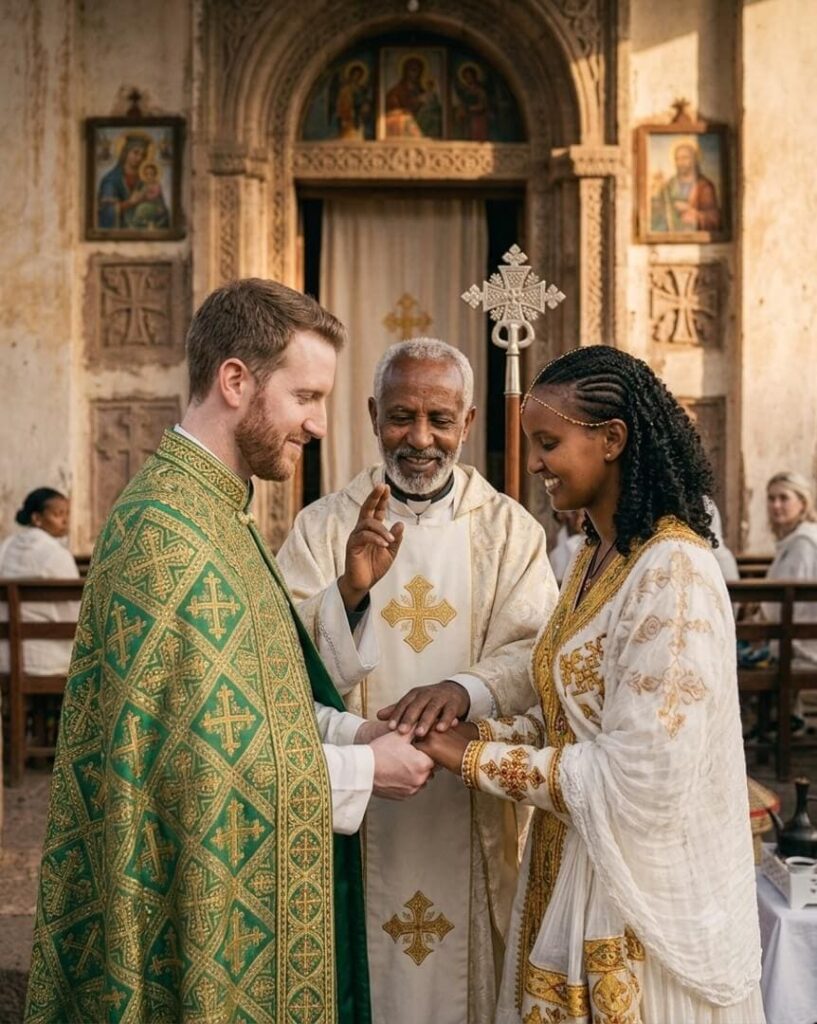
Types of Marriage in Ethiopia that Foreigners Can Enter
Once you understand who is legally allowed to marry, the next question is usually what kind of marriage actually counts in Ethiopia. This is where things get interesting, because Ethiopia doesn’t have just one official path. The law recognizes multiple types of marriage, and foreigners can enter any of them depending on how and where the union is carried out.
But here’s the part that matters most: not all marriages carry the same practical weight when it comes to paperwork, visas, or immigration. So while several options exist, one usually becomes the most important in real-life situations involving foreign spouses.
The main types of marriage in Ethiopia:
- Civil marriage (Kebele/government office)
- Religious marriage (church or mosque)
- Customary marriage (traditional systems)
Civil marriage is the most straightforward in administrative terms. It happens at the local government office, usually the Kebele or civil status office, where both partners appear with witnesses, complete verification, and sign official records. This is the version most foreigners end up relying on because it produces an immediate government-issued marriage certificate. For example, if a foreigner is planning to apply for a residence permit or later immigration benefits for their spouse, this is the document authorities will expect to see.
Religious marriage works differently. It takes place in a church or mosque depending on the couple’s faith, and it follows the rites of that religious institution. In many cases, couples choose this because of family expectations or personal beliefs. For instance, an Orthodox Christian ceremony may involve specific religious preparation before the marriage is approved by the church. It is valid under Ethiopian law, but on its own, it doesn’t always replace the need for government registration when dealing with embassies or immigration offices.
Customary marriage is based on local traditions and community practices. It often involves family negotiations, elders, and culturally specific ceremonies that vary from region to region. In some cases, couples may already be considered married within their community through these rites. But again, without formal registration afterward, proving the marriage to foreign authorities can become complicated.
What often confuses foreigners is this: all three forms are legally valid in Ethiopia if properly conducted. The law recognizes them equally at the point of formation. But in practice, especially for immigration, residency, or international recognition, the civil registration is what carries the real weight. That official marriage certificate is what embassies, visa officers, and foreign governments typically ask for.
So while the ceremony can take different forms depending on culture or family preference, the legal foundation for anything international almost always comes back to one thing—proper registration with the government.

Step-by-Step Civil Marriage Process in Ethiopia
This is the part most foreigners actually need to understand clearly. Civil marriage in Ethiopia follows a structured government process, and once you know the sequence, everything else becomes easier to manage. It’s not random, but it does require patience and correct documentation at each stage.
• Notice of intent to marry at the local office
The process starts when both partners officially notify the local civil status office, usually through the Kebele where the Ethiopian partner is registered. This is basically a formal declaration that you intend to marry.
Think of it as “opening the file.” Without this step, nothing else moves. In practice, you walk in with basic identification and state your intention to marry, and the office begins creating your marriage record.
• Submission of documents at the Kebele office
Once intent is recorded, you submit the required documents for verification. For the foreign partner, this usually includes a passport and proof of legal capacity to marry (like a single status affidavit that has been properly authenticated through your home country and Ethiopian authorities).
This is where many delays happen. If something is missing or not properly authenticated, the office will pause the process until it’s corrected. For example, a foreigner arriving with only an embassy letter that hasn’t been legalized further may be asked to complete additional steps before continuing.
• Public announcement/objection period (about 15 days)
After documents are accepted, the office publicly posts the marriage notice. This is a legal requirement designed to allow objections if there is a reason the marriage should not proceed.
The waiting period is usually around 15 days. During this time, anyone who believes there is a legal issue—like an existing marriage or a prohibited relationship—can raise an objection.
In real terms, most couples simply wait it out. But this stage is what makes Ethiopian civil marriage more formal and transparent than many foreigners expect.
• Appointment for marriage ceremony at Kebele office
If no valid objections are raised, the office schedules a marriage appointment. This is the actual ceremony date.
Both partners are expected to return to the Kebele office on the assigned day. This is not a wedding hall situation—it happens in a government office, usually in a simple administrative room where the registrar oversees the process.
• Signing with required witnesses
On the appointment day, both partners appear with witnesses. Ethiopian civil marriage typically requires multiple witnesses with valid national or Kebele IDs.
The registrar confirms identity, checks consent again, and then all parties sign the official marriage register. This is the moment the marriage becomes legally recognized.
For many foreigners, this is surprisingly simple compared to the paperwork that came before it. The ceremony itself is often quick—what took time was everything leading up to it.
• Issuance of official marriage certificate
After signing, the office issues an official marriage certificate. This document is the key legal proof of marriage in Ethiopia and is what you’ll use for anything international later—visas, residence permits, or recognition abroad.
Without this certificate, even a valid religious or customary ceremony won’t carry the same administrative weight outside Ethiopia.
• Expected timeline from start to finish
In most cases, the full process takes a few weeks at minimum. The biggest fixed delay is the public notice period, but document preparation—especially for foreigners—can extend the timeline significantly.
If your paperwork is ready and correctly authenticated before you arrive, things move much faster. If not, most of the real time is spent fixing documents rather than waiting for the ceremony itself.
In simple terms, the process is not complicated in structure—it’s just strict. Once each step is done in order, the system works. The key for foreigners is getting the documents right early, because everything else depends on that foundation.
Documents Required for Foreigners and Ethiopian Citizens
This is where the process becomes very real. Ethiopia doesn’t rely on verbal confirmation or informal proof when it comes to marriage. Everything has to be backed by documents that clearly show who you are, whether you’re legally free to marry, and whether your identity can be verified through official records.
For foreigners, especially, this is the stage that determines whether the process moves forward smoothly or gets delayed.
Foreign Partner Must Provide:
- Valid passport
This is your primary identification document. It’s used to confirm your identity, nationality, and legal entry status in Ethiopia. In practice, the Kebele office will copy and verify it before accepting your application. - Single status affidavit (proof of legal capacity to marry)
This is one of the most important documents for foreigners. It confirms that you are not currently married in your home country. For example, if you’re from the U.S., this may be a sworn affidavit or declaration of single status depending on your state system. Without this, the office has no legal basis to confirm you are eligible to marry. - Document authentication chain (home country → foreign ministry → Ethiopian embassy → Ethiopian MoFA)
This is where many foreigners get delayed. Ethiopia requires your documents to pass through an official verification chain before they are accepted locally. In simple terms, your home country verifies the document first, then it is confirmed by the Ethiopian embassy, and finally validated by Ethiopia’s Ministry of Foreign Affairs. Each step is meant to ensure the document is genuine and legally recognized. For example, a single status affidavit that hasn’t gone through this chain may be rejected even if it is legitimate in your country. - Certified translations (if needed)
If any document is not in English or Amharic, it must be officially translated. The translation is not just informal—it must be certified so local authorities can legally interpret it.
Ethiopian Partner Must Provide:
- Kebele ID
This confirms identity and residency at the local administrative level. It is essential because marriage registration is handled through the Kebele where the Ethiopian partner is registered. - National ID
This is the official government identification used to verify citizenship and personal details. - Proof of single status from local authorities
Ethiopian citizens usually obtain this directly through their local administrative office. It confirms they are legally free to marry under Ethiopian law.
Supporting Requirements:
- Registered witnesses with valid Ethiopian IDs
Witnesses are not optional. They must be present during the ceremony and must hold valid Ethiopian identification. In practice, the office will verify their IDs before allowing the signing to proceed. - Application forms from the Kebele office
These are filled out at the start of the process and officially open your marriage file. It’s the administrative foundation for everything that follows.
In real terms, this stage is less about collecting paper and more about proving legal clarity on both sides. If everything is properly prepared—especially the foreign documents—the rest of the process becomes straightforward. If not, this is usually where the delays start.
Foreigners’ Legal Authentication and Verification Process
For many foreigners, this is usually the point where excitement about the wedding suddenly turns into paperwork, stamps, and waiting periods. It also happens to be the step that creates most of the confusion. You may already know you are single, have a valid passport, and meet all legal requirements, but Ethiopian authorities still need a way to verify that information through official channels.
The reason is simple: documents from another country are not automatically recognized in Ethiopia. A marriage office in Addis Ababa cannot simply accept a foreign document at face value because they have no direct access to databases in the United States, Sweden, the Netherlands, Germany, or dozens of other countries. Authentication is basically the government’s way of saying: this document is real and has already been confirmed by the proper authorities.
Step 1: Obtain the required document in your home country
The first step is getting the actual document you need, usually proof that you are legally free to marry.
Depending on your country, the name can vary:
- Affidavit of Single Status
- Certificate of Legal Capacity to Marry
- Declaration of Marital Status
- Letter of Freedom to Marry
For example, Dutch nationals can apply for a certificate of legal capacity to marry and a declaration of marital status. For Americans, things can be more confusing because there is no nationwide federal “single status certificate.”
That difference alone catches many people off guard.
Step 2: Authentication in your home country
Once you obtain the document, it usually needs to be authenticated by authorities in the country where it was issued.
A typical chain may look something like this:
Local authority or state office → Foreign Ministry or State Department → Ethiopian Embassy
For example, a U.S.-issued document commonly follows a process like:
- Obtain the document through the relevant state authority
- Authenticate it through the U.S. Department of State
- Submit it to the Ethiopian Embassy in Washington, D.C.
- Present it later to Ethiopian authorities for local recognition
If your document is not in English or Amharic, a certified translation may also be required before it can move through the process.
Step 3: Ethiopian verification
After arriving in Ethiopia, the process may not be over yet.
Foreign documents may still need local verification through institutions such as the Ministry of Foreign Affairs or document registration authorities before they can officially be used within Ethiopia.
Think of it like a final checkpoint. Your home country may have confirmed the document already, but Ethiopia still wants to formally recognize it inside its own legal system.
What do the Embassy and the Ministry of Foreign Affairs actually do?
People often assume embassies issue permission to marry. That is not really their role.
Your embassy generally helps confirm or authenticate documents issued by your country. Ethiopia’s Ministry of Foreign Affairs then recognizes those authenticated documents so they can legally function inside Ethiopia.
One office essentially says:
“Yes, this document genuinely came from our country.”
The other says:
“Now it can legally be used here.”
Both matter.
Why this becomes the longest part of the process
Ironically, many couples discover that the wedding itself is the easy part.
The difficult part is preparing the documents beforehand.
One foreigner who discussed the process online described spending more time moving papers between offices than dealing with the actual marriage appointment. Others mentioned mailing documents between government offices, waiting for certifications, arranging translations, and collecting copies repeatedly.
Even where requirements are clear on paper, timelines can stretch.
A document may need:
- certification
- authentication
- translation
- another authentication
- local registration
Miss one step, and you can find yourself going backwards.
That is why many people who planned to complete everything in a few days later realized they needed weeks instead.
Expect to be physically present for important steps
Many foreigners also assume they can hand over paperwork through a lawyer or power of attorney and let someone else handle everything.
Some administrative tasks can sometimes be assisted by others, but several stages usually require you to appear in person, especially registration and the actual marriage appointment.
One foreign spouse who completed the process explained that being physically present in Addis for around two weeks made things much easier because officials wanted the couple present during important stages.
In practical terms, if you are planning around work leave or international travel, build extra time into your schedule rather than assuming you can fly in for a weekend and leave married three days later.
Getting legally married in Ethiopia as a foreigner is usually less about proving your relationship and more about proving your documents. Once the paperwork chain is complete, the rest of the process becomes much more manageable.
@bilentube1 Habesha woman and white man wedding #ethiopiantiktok #ethiopia #habeshantiktok #habeshatiktok #fyp #foryoupage #snowinethiopia ♬ original sound – ብሌን ትዩብ
Civil vs Religious vs Customary Marriage (What Foreigners Should Actually Choose)
At some point, most foreigners hit the same question: Do we just do the traditional wedding, or do we need the government process too? In Ethiopia, the answer depends less on preference and more on what you need the marriage to actually do for you later.
Because here’s the reality—the type of ceremony you choose and the legal strength of your marriage are not always the same thing.
Civil marriage: the legal foundation
If your goal is anything beyond the ceremony itself—like residency, immigration, or official recognition abroad—civil marriage is what carries the weight.
This is the version handled through the Kebele or civil status office, and it produces the official marriage certificate that embassies and foreign governments rely on. For example, if a foreign spouse later applies for a residence permit in Ethiopia or a spousal visa abroad, this is the document that gets checked first.
It’s not the most “romantic” version of marriage, but it is the one that holds up legally outside Ethiopia.
Religious marriage: meaningful, but institution-based
Religious marriage is often the most emotionally important part of the process for couples and families. It follows the traditions of a specific faith and is usually deeply respected socially.
For example, in some Orthodox Christian marriages, there can be preparation periods before the ceremony is even approved. In Islamic marriages, the mosque or religious authority plays a central role in validating the union according to faith rules.
But from a foreigner’s point of view, this is where expectations can get confusing. A religious ceremony can be fully valid within the community and still not be enough on its own for embassies, visa applications, or international paperwork unless it is later registered officially.
So it carries cultural and spiritual weight, but not always administrative power.
Customary marriage: deeply cultural, but varies widely
Customary marriage is rooted in tradition, and it can look very different depending on the region, ethnicity, or family background.
In some cases, elders may negotiate between families, gifts may be exchanged, and the couple may already be considered married in their community once the process is complete. It’s often the most socially significant form of marriage locally.
But for foreigners, this is where things can become complicated. Without government registration afterward, it can be difficult to use this marriage for anything formal outside the community context. What counts socially does not always translate into official recognition.
What most foreigners actually end up doing
In real situations, many couples don’t choose just one. They combine them.
A common pattern looks like this:
- A religious or customary ceremony for family and tradition
- Followed by civil registration at the Kebele for legal recognition
This combination is often what satisfies both sides: the family expectations on one hand and the legal requirements on the other.
Why civil registration still ends up being the key step
No matter which path you start with, civil registration is what makes the marriage usable beyond Ethiopia.
It’s the document that matters for:
- visas and immigration processes
- residency applications
- legal recognition in foreign countries
- official records like insurance, inheritance, or spouse documentation
Without it, you can still be married in a cultural or religious sense, but you may struggle when the marriage has to exist in a legal system outside Ethiopia.
In simple terms, the ceremony can take different forms depending on what matters to you and your family. But if you’re a foreigner planning a life that crosses borders, civil registration is the part you cannot skip.
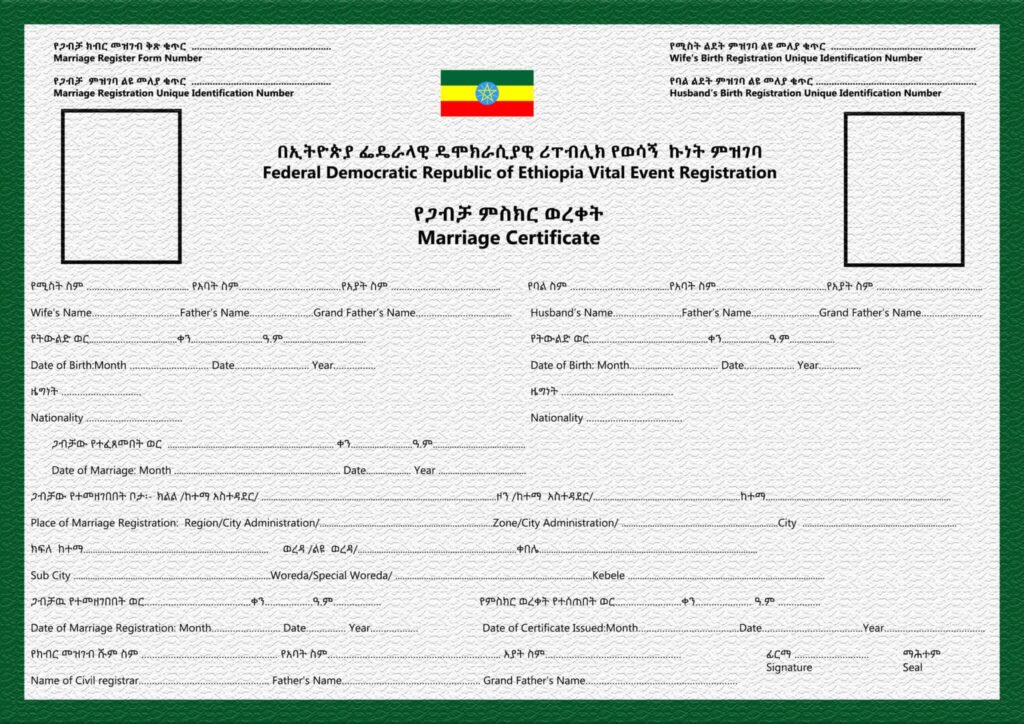
Marriage Registration and Certificate Rules
In Ethiopia, the wedding itself is only part of the legal picture. What actually makes the marriage fully recognized in the eyes of the state is registration. Without it, you may have gone through a ceremony, signed documents, and even celebrated with family—but legally, the system still doesn’t fully “see” the marriage.
Registration is mandatory for legal validity
Every marriage in Ethiopia—whether civil, religious, or customary—must be registered with the local civil status office. This is what turns a ceremony into an officially recognized legal marriage.
For foreigners, this step is especially important because your marriage doesn’t automatically get recognized outside Ethiopia unless it exists in an official registry. So even if the ceremony happens first (religious or traditional), it still needs to be recorded formally afterward.
Must be done within a set timeframe (around 30 days)
The law expects registration to be completed within about 30 days of the marriage. This is handled at the local woreda or civil registration office, depending on the area.
In practice, this means you shouldn’t treat the process as something you can “sort out later.” If you leave the country or delay paperwork, you may end up having to justify why the registration was not completed on time.
What happens if registration is delayed
Delaying registration doesn’t usually cancel the marriage itself, but it does create complications.
For example, late registration may require extra proof that the marriage actually happened—such as witnesses or supporting documents from the ceremony. In some cases, the record may carry less evidentiary weight until it is properly regularized.
One thing that often surprises foreigners is that without registration, you may struggle to use the marriage for anything official. So even if the relationship is fully valid socially or religiously, the legal system may treat it as incomplete documentation-wise.
Why the marriage certificate matters so much
Once registration is complete, the marriage certificate becomes the central document for everything that follows. It is the one piece of proof that connects your relationship to legal systems inside and outside Ethiopia.
Here’s where it actually matters in real life:
- Immigration applications
If you’re applying for a spousal visa or family-based immigration route, this is the first document authorities will ask for. For example, couples who later apply for U.S. or UK visas rely heavily on this certificate as proof of a legally recognized marriage. - Residency permits in Ethiopia
Foreign spouses often use the marriage certificate to apply for temporary residence or long-term stay privileges. Without it, the application usually cannot proceed. - Legal recognition internationally
If you move abroad or need to register your marriage in another country, foreign governments typically require an officially issued Ethiopian marriage certificate, sometimes with additional authentication. - Inheritance and legal rights
In cases involving property or inheritance, the certificate becomes proof of spousal relationship under Ethiopian law. Without it, proving legal standing as a spouse becomes much more difficult. - Property rights and disputes
Since Ethiopian law treats marriage as creating shared property rights in many cases, the certificate is what links those rights to legal enforcement.
In simple terms, the ceremony marks the start of the marriage, but registration is what makes it legally exist in a way that other systems can recognize. For foreigners especially, this is the document that connects everything—Ethiopia, immigration systems abroad, and long-term legal rights.
Residency and Immigration After Marriage
Once the marriage is legally registered, many foreigners assume the next step is automatic settlement or even citizenship. That’s where expectations and reality start to diverge. Marriage in Ethiopia opens the door to residency and immigration options, but each one still requires a separate application and approval process.
Temporary residence permit for foreign spouses
After marrying an Ethiopian citizen, a foreign spouse can apply for a temporary residence permit that allows them to legally live in Ethiopia for an extended period.
This is not automatic. You still submit an application with supporting documents like your passport, marriage certificate, photos, and proof of your Ethiopian spouse’s identity. In some cases, authorities may also request proof of financial stability or additional verification depending on your situation.
For example, a foreign spouse who plans to live in Addis Ababa with their partner typically uses this permit to stay legally beyond normal visa limits and avoid frequent visa renewals or exits.
Ethiopian Origin ID by marriage (long-term stay option)
For couples who stay married and registered over time, Ethiopia offers an “Origin ID by marriage” pathway, which functions as a more stable long-term residency option.
This usually becomes relevant after a sustained period of marriage and legal residence. It allows extended stay privileges and simplifies movement in and out of the country compared to standard visa categories.
In practical terms, this is what some long-term foreign spouses rely on when they are fully settled in Ethiopia with their family, work, or property ties. It is not immediate—it is a later-stage benefit after meeting specific conditions.
Spousal visa pathways if relocating abroad together
Many couples don’t plan to stay in Ethiopia permanently. In those cases, the marriage certificate becomes the foundation for applying for spousal visas in the foreign partner’s home country.
For example, if a couple plans to move to the United States or the UK, the Ethiopian marriage certificate is used as part of the documentation for family-based visa applications such as CR-1 or equivalent spousal routes.
This is where the earlier authentication process becomes important again, because foreign immigration systems will usually require the marriage to be fully legalized and verifiable.
Important clarification: marriage does not automatically grant citizenship
One of the most common misunderstandings is assuming that marrying an Ethiopian citizen leads directly to citizenship or permanent legal status.
It does not.
Even after a valid marriage and even after obtaining a residence permit, citizenship is still a separate legal process with its own requirements, timelines, and approvals. In most cases, marriage only creates eligibility for residency pathways, not automatic nationality.
So while marriage changes your legal options significantly, it does not replace immigration procedures. It simply gives you a legitimate route to apply for them.
In short, marriage in Ethiopia is the starting point for residency and immigration benefits—not the final step. What comes next depends on where you plan to live, how long you stay, and which legal pathway you choose to follow after the marriage is registered.
Cultural Expectations and Traditions Foreigners Should Be Aware Of
Legal paperwork is only one part of marriage in Ethiopia. The other part, which often matters just as much in real life, is culture. Even when everything is legally correct, family expectations, traditions, and social norms can strongly shape how the marriage is received and how smoothly things go.
For foreigners, this isn’t something to “study from a distance.” It’s something you experience as the relationship moves toward marriage.
Family involvement in marriage decisions
In many Ethiopian families, marriage is not just between two individuals—it’s between two families. Parents and close relatives often take an active interest in who their child is marrying, even when the couple already agrees.
For example, it’s common for families to want to understand the foreign partner’s background, character, and intentions before fully accepting the relationship. In more traditional households, approval from parents can carry significant emotional weight, even if the couple is already legally ready to marry.
This doesn’t mean foreign marriages are rejected—it simply means family acceptance can play a major role in how smoothly things progress.
Traditional negotiation practices (shimagelay and telosh)
In many Ethiopian traditions, elders act as mediators or negotiators between families before marriage is finalized. This process is often referred to through systems like shimagelay, where respected elders from both sides meet to discuss the relationship, intentions, and future arrangements.
In some cases, this includes telosh, where discussions may involve symbolic gestures or agreements that reflect cultural expectations around marriage.
For a foreigner, this might feel unfamiliar at first. But in practice, it’s less about formality and more about respect—showing that the relationship is being taken seriously within the cultural framework.
For example, in some families, even if a couple has already decided to marry, elders may still meet to “officially” bless and support the union before ceremonies proceed.
Gift expectations (varies widely)
Gift-giving is another area where foreigners can sometimes get confused. There is no fixed rule, and expectations vary widely depending on family, region, and tradition.
In some families, gifts may be symbolic and simple. In others, they may be more structured as part of traditional engagement customs, especially in more formal or rural settings.
What matters most is not the value of the gift but the gesture itself. It’s usually seen as a sign of respect toward the family and acknowledgment of the cultural process.
Wedding customs vary by region and family
One thing that consistently surprises foreigners is how different wedding traditions can be across Ethiopia.
Urban families in Addis Ababa may lean more toward simplified civil and church ceremonies, while rural or regional families may include deeper traditional rituals, extended gatherings, or community-based celebrations.
So even two Ethiopian weddings involving foreigners can look completely different depending on where the family is from and what traditions they follow.
Respect and cultural awareness matter more than perfection
What often determines how well a foreign partner is received isn’t how much they know about every tradition but how willing they are to respect and engage with it.
Small things matter—listening during family discussions, showing interest in customs, and not dismissing traditions as “extra steps.” In many cases, that attitude goes further than perfectly understanding every cultural detail.
For example, a foreign partner who takes time to meet elders respectfully or learn basic cultural expectations is often viewed far more positively than someone who focuses only on the legal process.
In simple terms, marriage in Ethiopia isn’t just a legal agreement or a personal decision. It’s also a cultural process that involves families, traditions, and shared expectations. For foreigners, understanding this side of the journey makes everything—from introductions to the wedding itself—far smoother and more meaningful.
@nii_ninety_90 Cultures and Ethnicities will, at some point end up intertwining with each other!! 🇬🇭🇪🇹🇪🇷 #fyp #ghanatiktok🇬🇭 #wedding #culturalexchange #ethiopian_tik_tok ♬ [Raw recording] Record playback noise 01 (3 minutes) – Icy Light
@premsucces First Ethiopian customary ceremony done, groom can take the bride away for the ordinance wedding ceremony. This is the tradition….display of love, respect to families , joy in singing and dance to user the couple to be. Absolutely beautiful bride and handsome groom. #interculturalmarriage #crossculturewedding #family #love #wedding ♬ original sound – Premsucces🇬🇭🇬🇧
Common Challenges Foreigners Face
Even when everything is planned properly, marrying in Ethiopia as a foreigner can feel unpredictable. The law is clear on paper, but the real experience often depends on how documents are interpreted, which office you visit, and how smoothly each step connects to the next.
Here are the most common friction points foreigners run into.
Document authentication delays
One of the biggest slowdowns happens before you even arrive in Ethiopia. Your single status affidavit has to go through multiple layers of verification in your home country and then again through Ethiopian authorities.
For example, a U.S. citizen may need state-level certification, federal authentication, and then embassy-level verification before the document is even accepted in Ethiopia. Each step can take days or weeks, and delays at one stage push everything back.
This is often the part that stretches the entire timeline more than the marriage process itself.
Different interpretations at local offices
Even though there is a national legal framework, implementation can vary slightly depending on the local Kebele or municipal office.
In practice, one office may ask for additional clarification on a document while another accepts it without question. This is why some foreigners report very smooth experiences while others face repeated back-and-forth visits for the same requirements.
It’s not necessarily inconsistency in law—it’s inconsistency in interpretation.
Translation and paperwork requirements
Any document not in Amharic or English may need a certified translation before it is accepted. Even when translation is done, some offices may still request additional verification of the translated copy.
A common scenario is a foreign partner arriving with all required documents, only to be told at the Kebele that a specific stamp or translation format is missing, requiring another trip to fix it.
These small gaps can add up quickly.
Time delays and multiple office visits
Marriage registration in Ethiopia is rarely a one-day process for foreigners. Between document submission, verification, waiting periods, and final registration, multiple visits are usually required.
For example, a couple may first submit documents, return two weeks later after the public notice period, and then come back again for the final ceremony and certificate issuance.
What looks like a simple process on paper often stretches into several weeks in real life.
Misunderstanding between legal, religious, and customary systems
One of the most confusing parts for foreigners is that Ethiopia recognizes civil, religious, and customary marriages—but they don’t always function the same way in practice.
A couple may assume a church or traditional ceremony automatically completes the legal process, only to later discover they still need civil registration for official recognition.
This gap is a common source of confusion, especially when advice from different people or online forums (including Reddit discussions) gives mixed interpretations of what “counts” as legally complete.
Embassy inconsistencies
Foreign embassies play a key role in document authentication, but requirements are not always uniform.
For example, some foreigners report being told that embassy-issued affidavits are sufficient, while others are later informed that Ethiopia no longer accepts certain embassy notarizations and requires additional authentication steps.
This mismatch often forces people to redo parts of the process they thought were already completed.
Requirements changing by location
Another challenge is that requirements can differ slightly depending on where in Ethiopia you are registering the marriage.
A Kebele office in one district may be stricter about witness IDs or document formatting, while another may focus more on the authentication chain. This creates confusion for foreigners expecting a single standardized checklist.
It also means advice from one couple’s experience may not perfectly match another couple’s situation in a different area.
In simple terms, the challenge isn’t that marriage is not possible—it’s that the system has multiple layers that don’t always move at the same speed or in the same way. Foreigners who do best are usually the ones who plan for delays, expect variation, and treat each office visit as part of a process rather than a single step.
@christinegashaw this day was a representation of God’s love. Next up: engagement party 🤭 @Osayi_ #wedding #ethiopian #nigerian #love #culture #engagement ♬ Dance With You – Alex Jean
Timeline and Cost Expectations
This is the part most foreigners underestimate. On paper, the process looks manageable. In reality, the timeline depends heavily on document preparation speed, embassy processing, and how quickly local offices move once you’re in Ethiopia.
It’s not complicated in structure, but it is layered. And layers take time.
Minimum timeline (several weeks, sometimes longer)
At the very least, you should expect a process that runs into several weeks.
If everything goes smoothly, the civil marriage itself can be completed in about 2–4 weeks once you are physically in Ethiopia. But that assumes your documents are already fully prepared and authenticated before arrival.
The longer timeline usually happens before you even get there. For example:
- getting a single status affidavit in your home country
- completing state or federal authentication
- embassy legalization
- translation and final verification
In real cases, that pre-arrival stage alone can stretch into 3–6 weeks or more, depending on the country.
So a realistic expectation is: a few weeks on the fast end, and 1–2 months in total for most couples when everything is included.
Main cost areas
Costs are not fixed, but they usually fall into a few predictable categories.
Official fees and document authentication
This includes fees charged at different stages of legalizing your documents.
For example:
- U.S. State Department authentication fees (vary by document type and service speed)
- Ethiopian Embassy authentication fees (reported ranges around $59–$90 depending on applicant category)
- Ministry-level processing fees once in Ethiopia
Each step is small on its own, but they stack up across the chain.
Translations
Any document not in Amharic or English may need a certified translation.
Costs vary depending on volume, but in practice, foreigners often pay per document or per page. This is one of those “hidden” costs that shows up late in the process when offices request updated or corrected versions.
Administrative fees inside Ethiopia
Once you reach the Kebele or civil registration stage, there are usually small administrative charges for registration, processing, and certificate issuance.
These are not usually the highest cost, but they are part of the process and may vary slightly by location or office.
A real example that comes up in long-term residency cases is the Ethiopian Origin ID by marriage, which can cost around $300–$400 depending on processing speed.
Travel and logistics
This is often the biggest real-world expense for foreigners, even though it’s not “official.”
It includes:
- international flights
- local transport between offices
- accommodation during the waiting period
- time spent in-country completing registration steps
For example, many couples end up staying in Addis Ababa for 2–3 weeks just to complete all required steps in person, especially since physical presence is usually required at key stages.
Why planning ahead matters
The biggest mistake foreigners make is treating this as a single appointment process. It’s not. It’s a chain.
If one document is missing or delayed, everything after it pauses.
For example, someone might assume their embassy affidavit is enough, only to later find out it still needs additional authentication before Ethiopian authorities accept it. That kind of gap can easily push the timeline back by weeks.
Planning ahead also reduces pressure once you arrive. Instead of rushing between offices, you move step by step with fewer surprises.
In simple terms, the cost is not just money, and the timeline is not just waiting. It’s preparation, coordination, and patience working together. Couples who understand that early usually find the process far less stressful than those who treat it like a quick registration.
@travelwithmafio An American couple, beautifully united in the Ethiopian tradition at the Sheraton Addis on January 9, 2025. Wishing them a lifetime of love and happiness! 💍✨ #EthiopianWedding #LoveAcrossCultures #ForeverTogether #ethiopian_tik_tok🇪🇹 ♬ original sound – Travel with Mafio
FAQs
Can a foreigner legally marry in Ethiopia?
Yes. Foreigners can legally marry Ethiopian citizens as long as both meet the legal requirements and the marriage is properly registered with the civil authority.
Can foreigners marry Ethiopian citizens easily?
It’s legal, but not “easy” in the simple sense. Expect document authentication, waiting periods, and multiple office visits. For example, what looks like a one-day ceremony often stretches into weeks of preparation.
What documents are required?
At minimum, a valid passport, a single status affidavit, and properly authenticated documents from your home country. Ethiopian partners need a Kebele ID, national ID, and proof of single status from local authorities.
Is Ethiopian marriage recognized internationally?
Yes, but only if it’s properly registered and certified. For example, embassies and immigration offices usually require the official civil marriage certificate—not just a church or customary ceremony.
Does marriage lead to citizenship?
No. Marriage can open the door to residency or long-term stay options, but citizenship is a separate legal process with its own requirements and approvals.
Can you marry without living in Ethiopia?
Not fully. Some documents can be prepared abroad, but key steps—like Kebele registration and the ceremony—usually require physical presence in Ethiopia. Couples often plan at least a short stay to complete the process in person.
@queen_tashyy POV~ Your brother got married to an Ethiopian🥳 #kenyantiktok🇰🇪 #habeshatiktok #fyp #weddingtiktok ♬ party no dey stop – 🇳🇬
Final Thoughts
Marriage in Ethiopia is completely legal for foreigners, but it’s not a quick or simple process. It works best when you understand from the start that paperwork, verification, and registration all matter just as much as the ceremony itself. The system is structured, but it moves at its own pace.
Success mostly comes down to preparation and patience. Having the right documents ready, especially properly authenticated ones, saves you from most of the delays people run into. And beyond the legal side, understanding how things like customary, civil, and religious marriages fit into the system helps you avoid confusion about what actually counts where.
It also helps to confirm requirements directly with both your embassy and local Ethiopian authorities before you start anything. And just as important, don’t ignore the cultural side of it—things like shimagelay and telosh aren’t formal paperwork, but they often shape how families and communities experience the marriage process.