Ethiopian Orthodox Tewahedo Church weddings are deeply rooted in faith, symbolism, and centuries-old traditions. From the betrothal and Teklil ceremony to Holy Communion, here’s everything you need to know.
Marriage in Ethiopia doesn’t look the same everywhere. It shifts with geography, faith, and community. In the north, Orthodox Christian traditions shape most ceremonies. In the East, Islamic marriage customs are more common. In the south, you’ll find deep-rooted tribal and customary unions that follow their own long-standing rituals. Together, these different forms of marriage reflect a country where culture and belief are closely tied to how people come together.
Among these, religious marriages stand out most, especially the Ethiopian Orthodox Tewahedo Church tradition. This is where things become highly structured, deeply symbolic, and rooted in centuries of church practice. It’s not just about two people joining but about a covenant witnessed by faith, family, and community.
CROWNS, gold-trimmed capes, incense filling the air, and chants rising through stone church walls. No, this isn’t a film set or a royal coronation scene. It’s an Ethiopian Orthodox wedding in motion. These ceremonies carry a weight that feels both ancient and alive, where every detail has meaning, and nothing is done casually.
What makes it stand out is how layered it is. The rituals are not decorative extras; they are central to the marriage itself. From the sacred crowning to the church blessings, everything is built around symbolism, faith, and continuity. It feels formal but also deeply human in the way families and communities gather around it.
This guide takes you into that world. Not just what happens, but why it happens. The meaning behind the rituals, the flow of the ceremony, and the cultural thread that keeps it all connected across generations.
Why Couples Choose to Get Married in the Ethiopian Orthodox Tewahedo Church
Before we get into the rituals themselves, it helps to understand why some couples choose this path of marriage in the first place. The Ethiopian Orthodox Tewahedo Church wedding isn’t a casual preference or just a cultural option on the table. It’s a faith-based union, reserved for couples who are part of the Orthodox Christian tradition, in which marriage is treated as sacred rather than symbolic. In many ways, it’s less about ceremony and more about commitment being placed under God, family, and community all at once.
So why do couples go this route? The reasons run deeper than aesthetics or tradition. They’re tied to belief, identity, and the weight of continuity across generations.
Spiritual significance of marriage in the Orthodox faith
Marriage in the Orthodox Church is seen as a holy sacrament, not just a social agreement. It represents a spiritual union blessed by God, where the couple is believed to walk a shared path under divine guidance. This is often the strongest reason couples choose the church wedding—it’s about grounding their relationship in faith from the very beginning.
Importance of family approval and expectations
Family plays a central role in Ethiopian marriages. A church wedding is often seen as the most respected and complete form of union, one that aligns with long-standing expectations. For many couples, it’s not just personal choice; it’s also about honoring parents and extended family who value the tradition deeply.
Cultural identity and continuity
These weddings carry heritage. Choosing an Orthodox ceremony is also choosing to preserve a cultural identity that has been passed down for generations. It keeps language, rituals, and values alive in a way that feels both personal and collective.
Marriage as a lifelong covenant before the Church
Unlike more flexible modern interpretations of marriage, the Orthodox Church frames it as a lifelong covenant. It’s not designed to be temporary or easily broken. That sense of permanence is part of what draws couples who want their union defined by commitment rather than convenience.
Community recognition and respect
A church wedding carries weight in the wider community. It is publicly witnessed, blessed, and acknowledged in a way that gives the marriage a strong social standing. Couples often value this recognition, especially in closely connected communities where marriage is not just private but communal.
Faith, family, and community coming together
At its core, the decision comes down to alignment. A church wedding brings together the three pillars that shape many Ethiopian lives—faith, family, and community—into one moment. For couples who want their marriage to reflect all three, this path feels like the natural choice.
Ethiopian Orthodox Wedding Traditions and Customs
Ethiopian Orthodox wedding traditions aren’t random rituals placed together. They follow a clear sacred structure that has been passed down for generations within the Church. At the heart of it, the Matrimonial Rite is divided into three main parts: the Betrothal, the Ceremony of Marriage, and Holy Matrimony. Each stage carries its own meaning, building slowly toward the final blessing that seals the union.
If you step into this world, it feels like entering something far older than the present moment. The movement from one stage to the next is intentional, almost like a spiritual journey. From the exchange of rings or crowns to the crowning of the couple as king and queen of their home, and finally to Holy Communion, where the marriage is sealed in faith, every moment is layered with meaning rather than decoration.
Betrothal (Engagement Ceremony)
This is where the union begins formally. Families and the Church acknowledge the couple’s intention to marry, often marked by the symbolic exchange of rings or crowns. The idea is commitment before God and community, not just between two people. It sets the foundation for everything that follows.
Ceremony of Marriage (Crowning / Teklil)
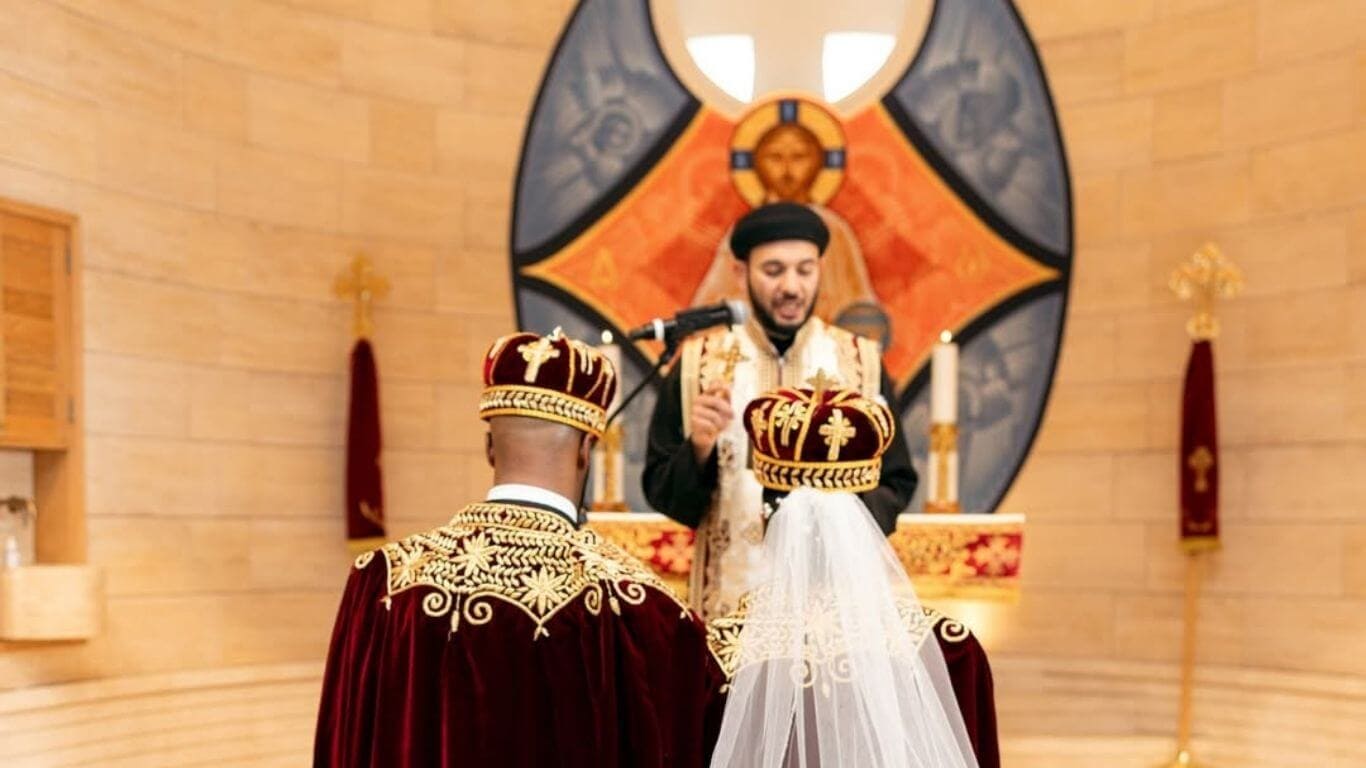
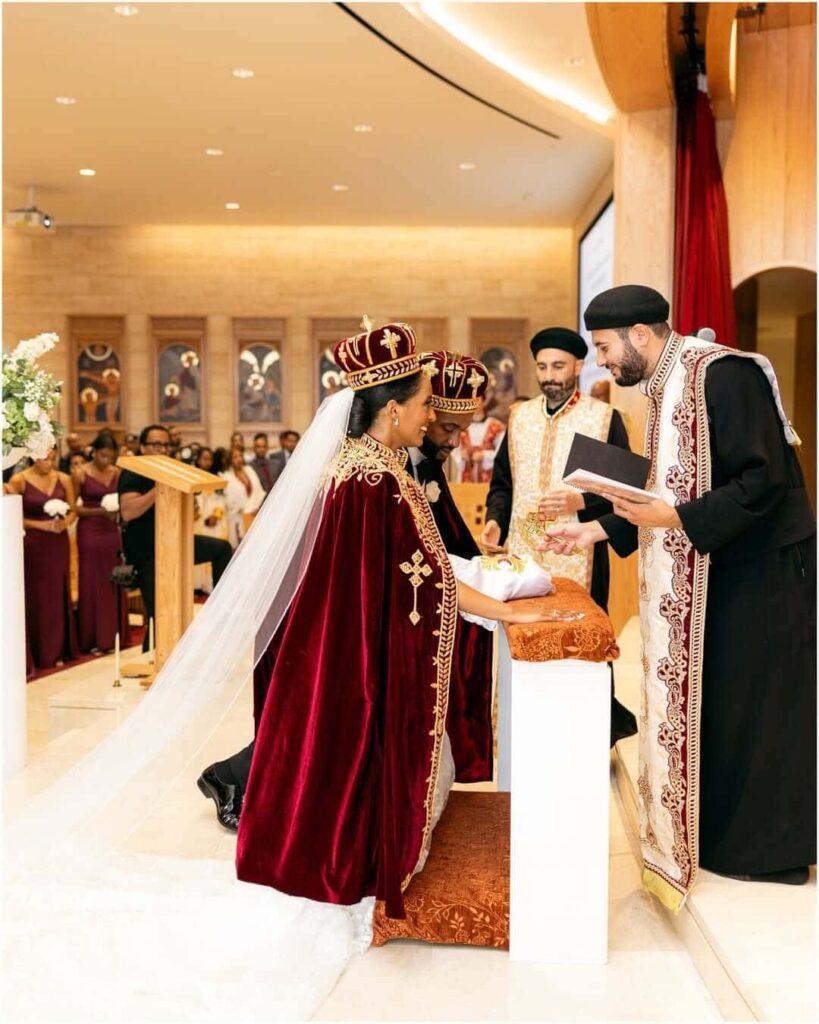
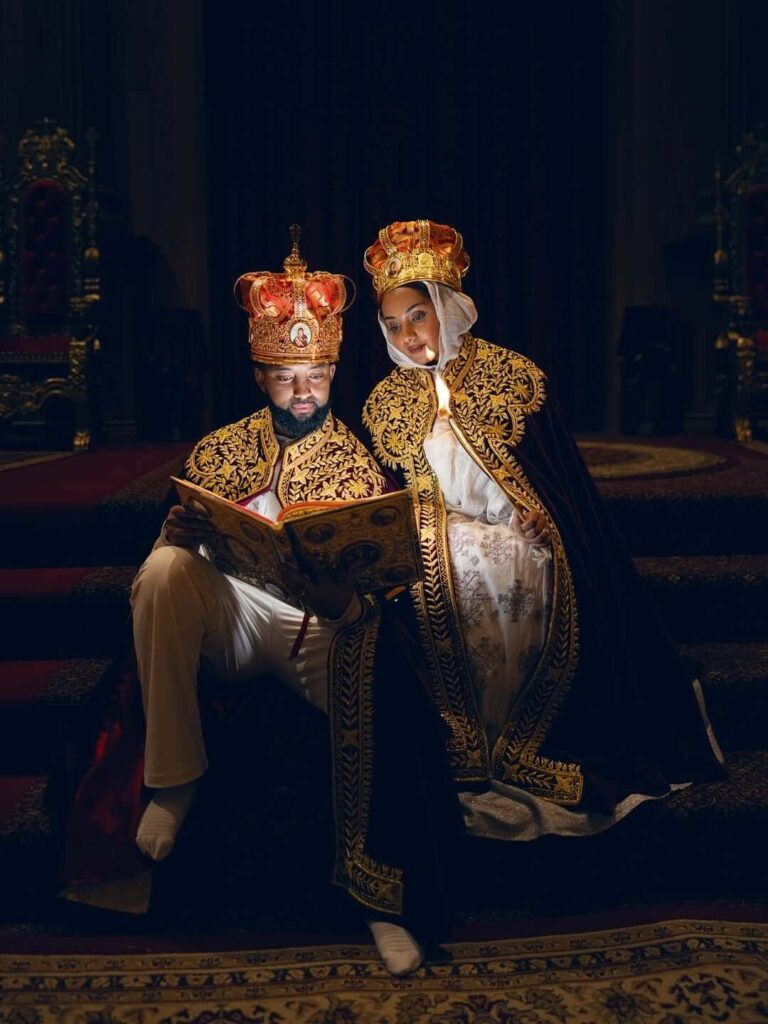
This is one of the most defining moments of an Ethiopian Orthodox wedding. The priest places the Teklil crowns on the bride and groom, symbolizing their new role as king and queen of a household built on faith. In church tradition, the crowning carries added meaning connected to purity and readiness for the sacrament, with the Teklil often reserved for brides who meet specific ecclesiastical expectations. It is more than a symbolic gesture; it represents a sacred calling to build a life rooted in Christian commitment.
Holy Matrimony (Holy Communion)
This is the heart of the ceremony. The couple receives Holy Communion, sharing bread and wine believed to represent the body and blood of Christ. It is here that the marriage is spiritually sealed. The Church views this as the moment the covenant becomes complete, binding the couple not just socially or legally but spiritually before God.
What ties all of this together is structure and intention. Nothing is rushed. Nothing is casual. Each stage carries its own weight, and together they form a complete picture of marriage as both a sacred covenant and a lifelong commitment.
Ethiopian Orthodox Tewahedo Church Journey
This is where the wedding stops being something you describe and becomes something you can actually picture. From early morning in two separate homes, through the church doors, and into a carefully ordered sacred service, the Ethiopian Orthodox Tewahedo wedding moves like a single continuous story. Every step has meaning. Every gesture has weight. Nothing happens by accident.
What actually happens during an Ethiopian Orthodox Tewahedo Church ceremony?
It begins quietly in two different places.
In the bride’s home, the morning is slow but full. Family members gather early, not for celebration yet but for preparation. Prayers are said over her, blessings are spoken by elders, and there is a sense of transition in the air. She is being prepared not just for a ceremony, but for a new life stage. In many homes, relatives offer advice, emotional support, and final words that carry both faith and responsibility.
Across the other side, the groom’s home carries a similar atmosphere. Male relatives and close family gather, often with more reserved emotion but equal weight. He is prayed over, encouraged, and prepared to step into a role that is seen as spiritual and responsible. Clothing is carefully chosen, timing is respected, and no one rushes him out the door. Both homes carry the same understanding: something permanent is about to begin.
From both sides, the journey toward the church begins. Families accompany the couple, and in many cases, the wider community becomes part of the movement toward the ceremony. It is not an isolated event. It is a shared one.
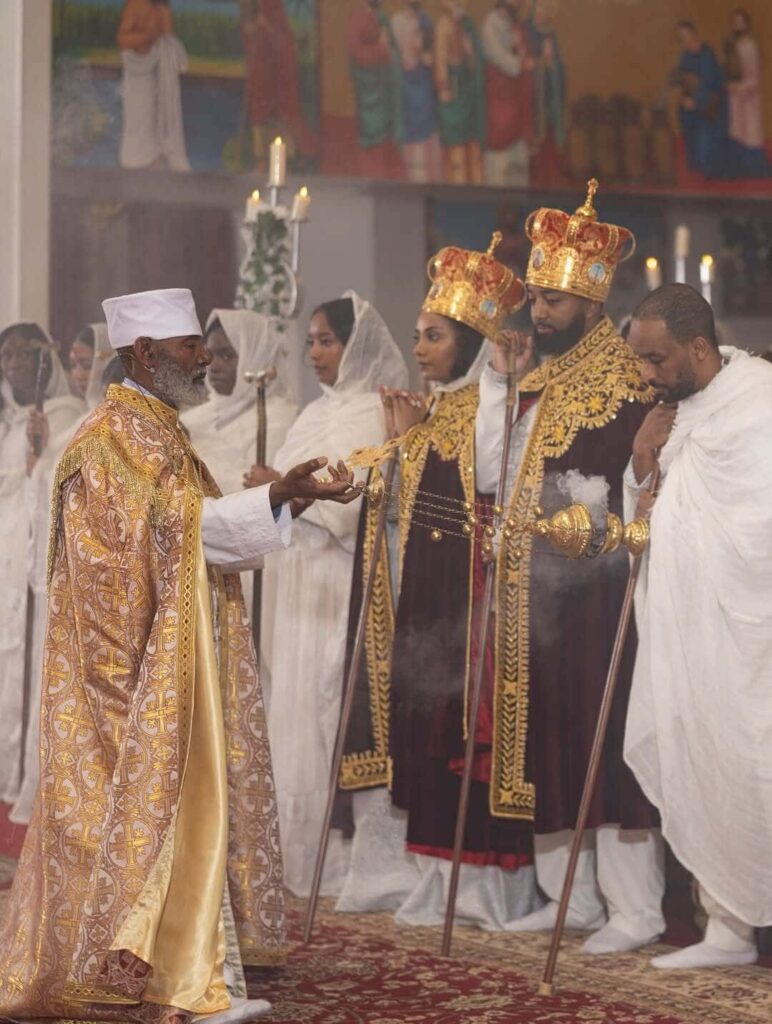
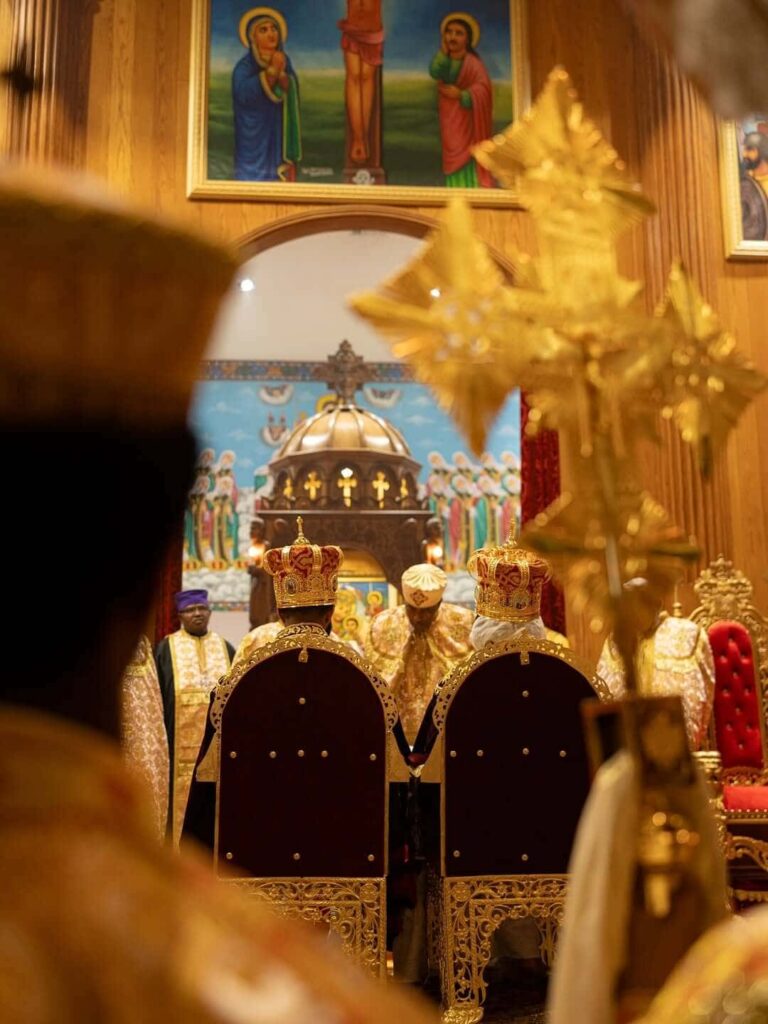
When they arrive at the church, the atmosphere shifts immediately. The sound of incense, chanting, and prayer fills the space. Deacons lead hymns while the priest prepares the altar. The church is not treated like a venue but like a sacred space already filled with presence and expectation. People take their places quietly. Reverence is not requested; it is understood.
The priest begins the service with structured prayers and scripture readings. From the start, everything is deliberate. The couple stands not as performers but as participants in a sacrament that has been repeated for generations in the same form. The Church is not improvising; it is continuing something ancient.
One of the first sacred moments is the anointing with oil. The priest blesses the oil with prayer and makes the sign of the cross over it while deacons respond “Amen.” The groom is anointed first, then the bride. As prayers are chanted, the oil is described as blessing, protection, joy, and spiritual strength. It represents sanctification, purity, and renewal. In simple terms, it marks the couple as set apart for a new life under God’s guidance.
Then comes the Betrothal (Kile), where the union is publicly affirmed. Families are not background figures here; they are active witnesses. Gifts may be exchanged, agreements are confirmed, and the intention to marry is openly declared before the Church. This is where a private decision becomes a public commitment.
After prayers and readings, the service moves into the Crowning (Teklil). The priest lifts the crowns, prays over them, and blesses what they represent: honor, spiritual authority, and a shared responsibility. The crowns are then placed on the heads of the bride and groom, marking them as king and queen of their home. The priest joins their heads briefly and makes the sign of the cross three times, symbolizing unity of mind, spirit, and life. This moment is often one of the most visually striking parts of the entire ceremony, but its meaning is deeper than appearance. It is a declaration of shared spiritual leadership within the household.
Immediately after, the rings are exchanged. The priest presents them, but the couple places them on each other’s fingers. Each ring carries the other’s name, worn on the left hand close to the heart. The symbolism is direct: closeness, responsibility, and a bond that is meant to endure. Gold is used to reflect permanence, value, and a relationship that should not corrode under pressure.
The priest then leads the couple to stand before the sanctuary door, facing east, where they receive the commandment of marriage. This is where instruction enters the ceremony. The couple is reminded that marriage is built on unity, mutual respect, and shared decision-making. Neither dominates the other. Instead, they are called to live in dialogue, humility, and cooperation. Their joined hands are placed together and covered with a white veil, then set upon the Holy Bible. This moment turns the marriage into a covenant not only with each other, but also with scripture itself.
From here, the ceremony moves deeper into scripture and prayer. Readings from the Epistles and the Gospel emphasize unity, love, and spiritual responsibility. The message is consistent: marriage is not just companionship but one life formed from two. The Church presents it as a reflection of Christ’s relationship with His people, rooted in sacrifice, faithfulness, and unity.
The final and most sacred moment is Holy Communion. The couple kneels before the altar and receives the Eucharist, believed to be the body and blood of Christ. This is where the Church considers the marriage fully sealed. It is no longer preparation or promise. It is a covenant.
Throughout the service, the priest is not just leading prayers but guiding a transformation. The family is not watching from a distance but witnessing a spiritual contract being formed. The choir, deacons, incense, and scripture all work together to create a rhythm that feels both structured and alive.
When the final blessing is given, the tone begins to shift. The sacred stillness gives way to celebration outside the church. But even in the music, food, and dancing that follow, the weight of what happened inside remains unchanged.
By the time the couple leaves the church, they are no longer two individuals preparing for marriage. They are joined, blessed, instructed, and recognized within a tradition that sees marriage not as a moment, but as a lifelong covenant lived out under faith, family, and community.
Celebration and Festivities after the Church Ceremony
Once the church doors close behind the couple, the energy changes completely. What began as a sacred, quiet, highly structured ceremony now opens into something warm, loud, and deeply communal. The weight of prayer and ritual gives way to music, movement, food, and celebration. In Ethiopian Orthodox weddings, this shift is intentional. The covenant is sealed inside the church, but it is celebrated in the world.
From here, the focus moves outward. Family, friends, and the wider community take over the atmosphere, turning the day into a shared experience that often stretches far beyond a single evening.
Wedding Reception and Communal Meals
The first stop is usually the reception, where guests gather to eat and reconnect after the ceremony. Food is not just served; it is shared. Large communal platters are placed at the center, and people eat together from the same tray, often using injera as both plate and utensil. This is where hospitality becomes visible. Meals are generous, slow, and meant to bring people together rather than rush them apart.
Traditional dishes are at the heart of it. You’ll find injera, the sour flatbread that anchors every meal, paired with rich stews like doro wot (spiced chicken stew) and sometimes kitfo, depending on the region. Drinks often include tej, a honey wine that carries its own cultural weight in celebrations. Eating together is not just nourishment here; it’s participation in the joy of the couple.
A unique tradition that often stands out is Gursha. This is when a guest feeds another person by hand as a gesture of love, respect, and blessing. It may look simple, but it carries meaning: generosity is not individual; it is shared.
@aveloo05 #tigrayorthodox💛❤⛪🙏🙏 #tigrayorthodox✝️💒 #eritreantiktok🇪🇷🇪🇷habesha #ethiopian_tik_tok🇪🇹🇪🇹🇪🇹🇪🇹 #abeltkue #weddingvibes #weddingday #mezmur @Temu Gmeskel ♬ original sound – Abel tkue
Traditional Music and Dance
As the meal continues, the atmosphere shifts again. Drums begin to play, especially the kebero, and the sound of the masinko brings in a familiar rhythm. This is where celebrations often turn into Fendika, high-energy traditional dancing that pulls people into movement, clapping, and call-and-response songs.
The dancing is not formal or distant. People move in circles, shoulder rhythms, and expressive steps that reflect more joy than structure. It is common for guests of all ages to join in, and the celebration becomes something collective rather than staged.
Family Blessings and Community Celebration
Throughout the festivities, elders play an important role. They offer blessings to the couple, speak words of wisdom, and often give gifts that symbolize support for the new household. These moments are quieter compared to the music, but they carry weight. Respect for elders is not separate from celebration; it is part of it.
Gift-giving is also common, ranging from practical household items to symbolic offerings that support the couple’s new life together. The community doesn’t just attend the wedding; it contributes to it.
@eyeru_wolde For the culture.🇪🇹❤️ #Habesha #ethiopianwedding #Melse #Coffee #Ceremony ♬ Ye Ewunet Menged – Abinet Agonafir
Melse and Extended Celebrations
In many traditions, the celebration doesn’t end on the same day. A Melse is often held the day after the church wedding, bringing family and friends back together for another round of food, music, and gatherings. It is less formal, more relaxed, and often feels like the continuation of joy rather than a separate event.
Depending on the family and region, celebrations can last one day or stretch across several days. In some areas, especially where extended family gatherings are central, the wedding becomes a multi-day experience of visiting, eating, and reconnecting.
A Celebration Rooted in Community
What makes these festivities stand out is not just the food or music but the sense of shared ownership. The wedding is not only about the couple. It belongs to the families, the neighbors, and the wider community that witnessed the union in the church.
By the time everything winds down, what remains is not just a memory of a ceremony but a full cycle: sacred union in the church, followed by communal joy in the world.
Traditional Ethiopian Orthodox Wedding Attire and Symbolism
If there’s one part of an Ethiopian Orthodox wedding that instantly catches the eye, it’s the clothing. But nothing here is just for appearance. Every fabric, color, and accessory carries meaning tied to faith, purity, identity, and tradition. The attire doesn’t sit outside the ceremony; it’s part of it.
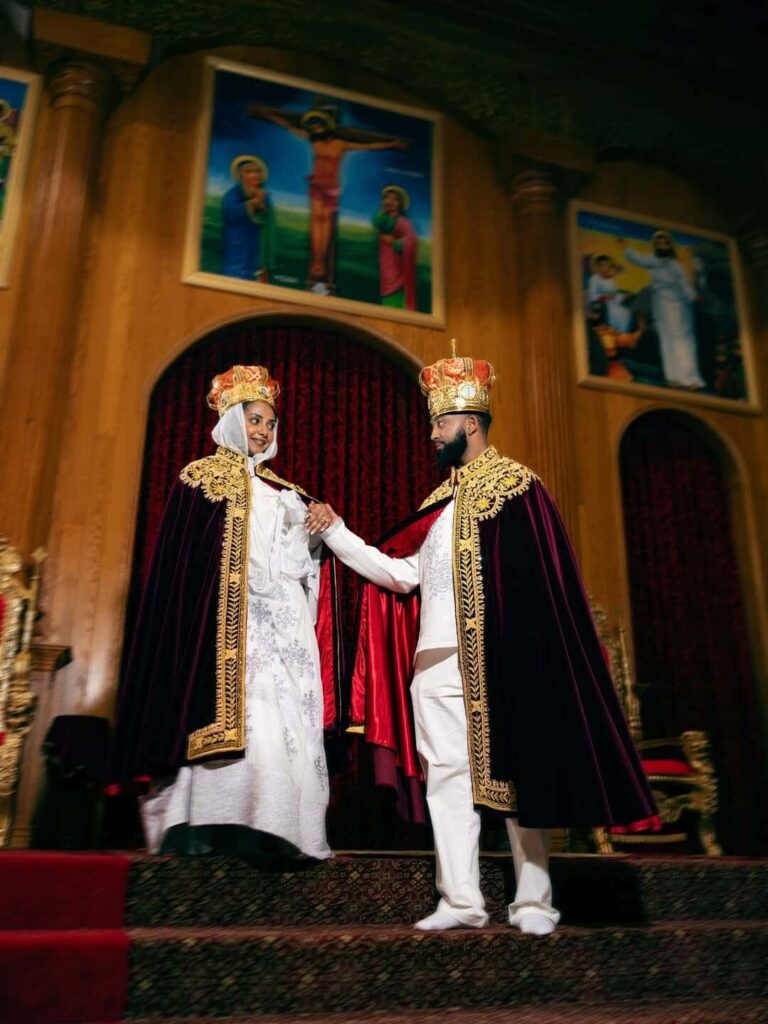
At first glance, the scene is striking: white garments, detailed embroidery, gold accents, and ceremonial crowns. But once you understand it, you realize it’s not about fashion. It’s about symbolism passed down through generations.
Bride’s Attire
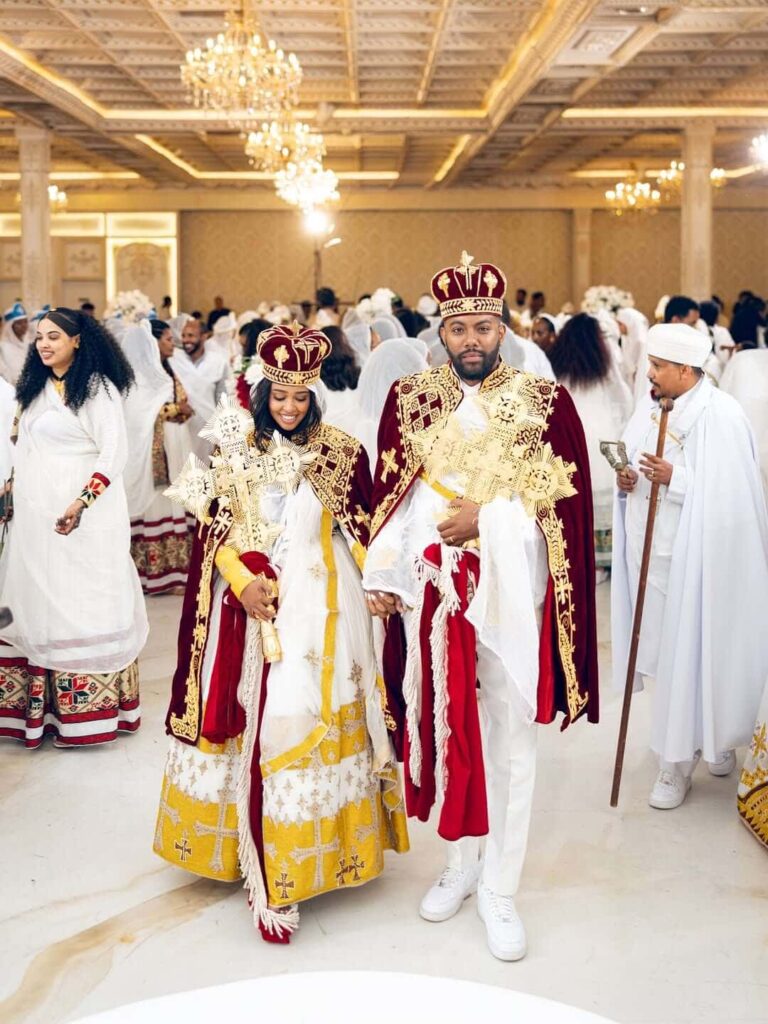
The bride’s outfit is built around elegance, modesty, and cultural identity. The most common base is the Habesha Kemis, a handwoven white cotton dress decorated with fine embroidery along the edges. The white color is not random. It reflects purity, spiritual readiness, and new beginnings.
Over this, she often wears a Kuta or Netela, a light shawl draped over her shoulders and sometimes covering her head. It adds a layer of reverence, especially during the church ceremony. Together, these pieces create a look that is simple in structure but rich in meaning, balancing beauty with spiritual humility.
Groom’s Attire
The groom wears a matching traditional outfit known as a Gabi, usually made from white cotton with embroidered detailing around the neckline and shoulders. Like the bride’s attire, the white represents purity and devotion.
The design is intentionally modest but refined, reflecting responsibility rather than display. It signals readiness to take on a role rooted in leadership, faith, and family responsibility.
Religious and Ceremonial Symbolism
One of the most recognizable elements in the wedding is the Teklil crowns, worn by both the bride and groom during the ceremony. These crowns are not decorative accessories. They represent spiritual royalty, where the couple is symbolically crowned as king and queen of their new household.
This moment ties directly into the church ritual, reinforcing the idea that marriage is not just a social union but a sacred responsibility under God.
Guest Attire and Respect for the Occasion
Guests also dress with intention. Traditional Ethiopian clothing is often worn, with white and embroidered fabrics being the most common choice. The expectation is modesty and respect, especially since the ceremony takes place in a sacred space.
Dressing appropriately is seen as part of honoring both the couple and the church service itself. It blends celebration with reverence.
Regional Variations in Style
While the core elements remain consistent, there are subtle variations across regions. In some areas, embroidery styles differ, fabric weight changes depending on the climate, and colors may include more gold or subtle accents. These differences reflect Ethiopia’s cultural diversity while still staying rooted in the same Orthodox tradition.
More Than Clothing
What makes Ethiopian Orthodox wedding attire unique is that it never stands alone. It moves with the ceremony, reflects the theology behind the marriage, and visually communicates what the church is teaching spiritually: purity, unity, responsibility, and covenant.
By the time the couple stands in full attire inside the church, nothing they are wearing is accidental. Everything has meaning, and together, it tells the story of what they are stepping into.
@kebkab_events "በፍቅር ማሰሪያ አንድ ይሆኑ ዘንድ ፤ ሰላሜን ለሁለታችሁ እሰጣለሁ ሰላሜን ከሁለታችሁ ጋራ እተወዋለሁ በላቸው አንተ የሁለታችን ሰላም ነህና" ስርዓተ ተክሊል #ተክሊልጋብቻ #weddingplanner #Kebkabevents #ethiopia #Orthodoxwedding ♬ original sound – ከብካብ ኤቨንትስ
Final Thoughts
Ethiopian Orthodox weddings have lasted this long for a reason. They are not built on trends or convenience, but on belief, structure, and memory. Even in a fast-changing world, families continue to return to these ceremonies because they offer something steady. A sense that marriage is not just a personal decision but a spiritual and communal responsibility. It’s one of the clearest expressions of how deeply weddings in Ethiopia are tied to faith and identity, not just celebration.
What stands out most is how everything blends together without losing its meaning. Faith is present in every prayer. Culture shows up in the clothing, the food, and the music. Family and community are never on the sidelines. They are part of the foundation. This is why Ethiopian Orthodox ceremonies don’t feel like isolated events. They feel like living traditions that carry history forward each time they are performed.
At the heart of it all is continuity. The same rituals, prayers, and symbols are still practiced because they continue to speak to people today. They connect modern couples to generations before them, holding together a shared understanding of what marriage is meant to be. And within the wider landscape of Ethiopian wedding traditions and customs, the Orthodox ceremony remains one of the strongest examples of how tradition doesn’t just survive; it stays relevant by staying rooted.