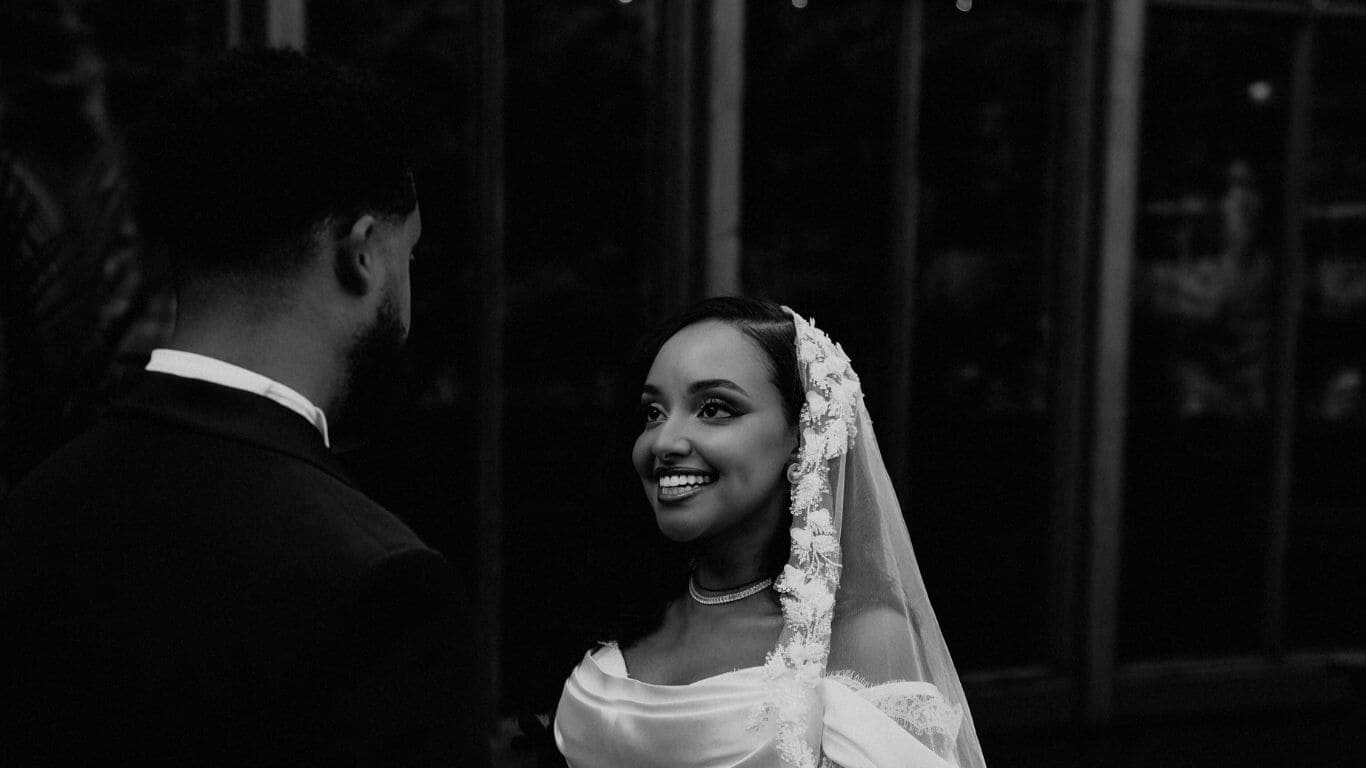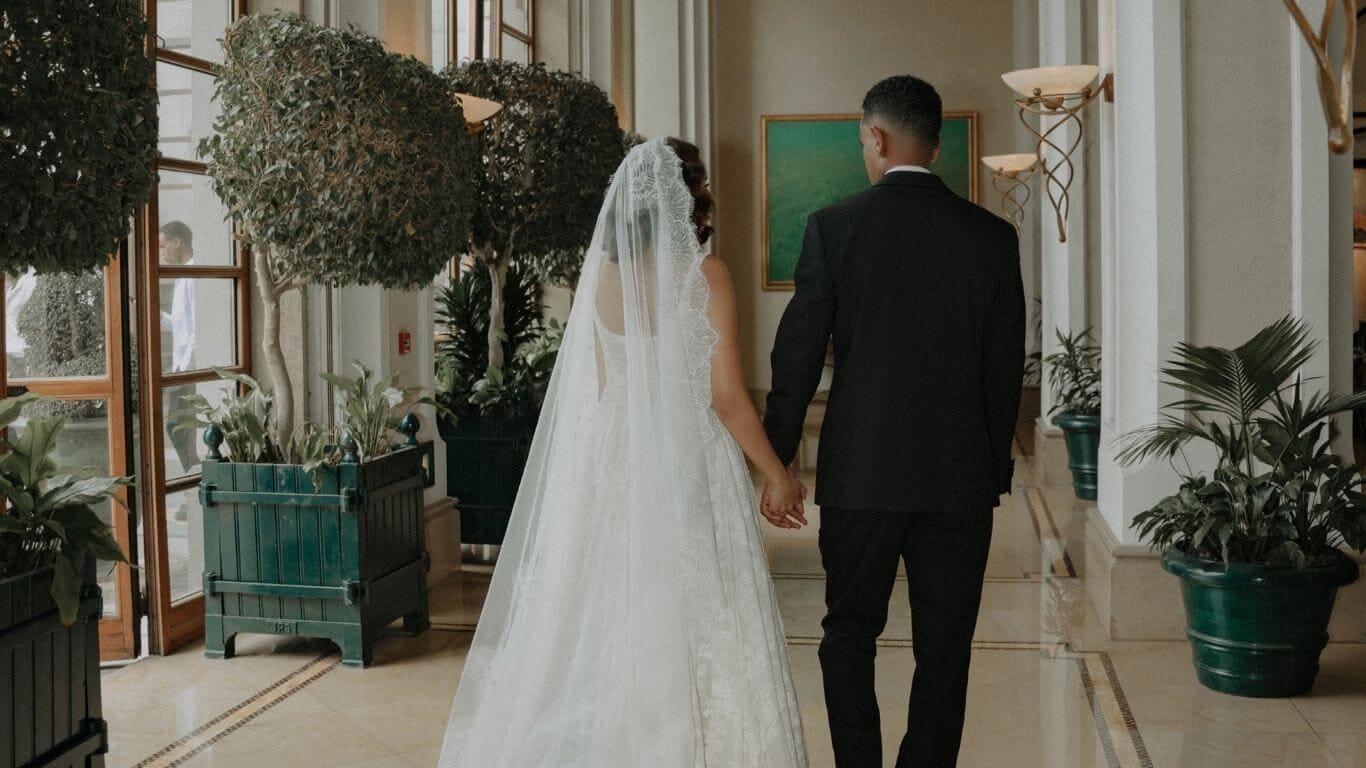
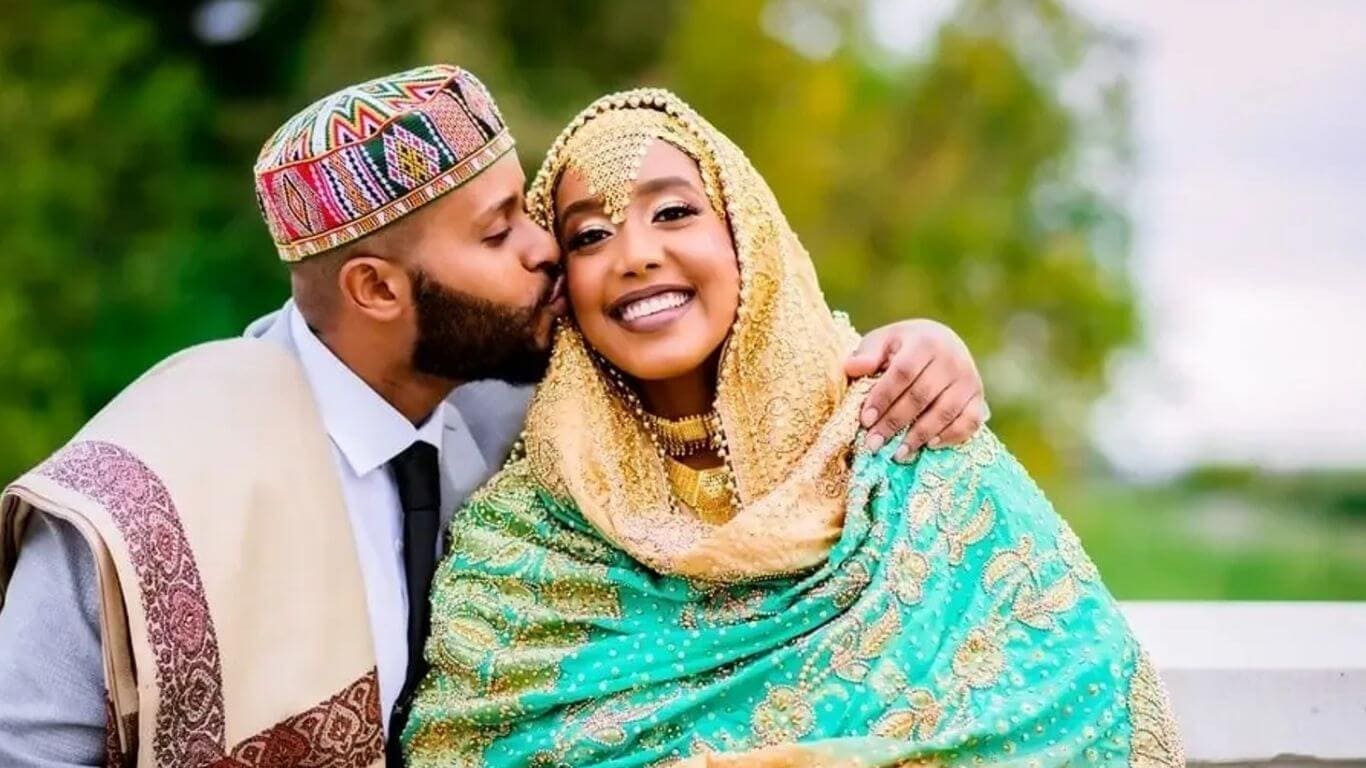
Marriage in Ethiopia takes different forms, shaped by law, religion, culture, and community traditions. From civil and religious marriages to customary unions, each type carries its own process, meaning, and recognition.
Marriage in Ethiopia has never been simply about two people deciding to spend their lives together. For generations, it has involved families, communities, faith, customs, and sometimes even an entire village. In many homes, marriage begins long before a wedding day arrives. Parents become involved, elders give guidance, families meet, and blessings often matter just as much as the couple’s own decision.
While modern relationships and dating have become more common, family approval still carries real weight in many Ethiopian communities. A couple may choose each other, but the journey often extends beyond them. Marriage is seen as the joining of households, values, and traditions passed down through generations. That is part of what makes Ethiopian marriage unique. It rarely follows one single path.
If you’ve explored broader discussions around weddings in Ethiopia, you have probably already noticed that there isn’t one standard way people marry. One ceremony may begin inside a church filled with incense, chanting, and a crowning ritual that can remind some people of royal coronations. Another may be shaped by customs passed from one generation to another, where elders, negotiations, and cultural rites play a central role. Others may follow a more structured legal process centered around official registration and government requirements.
Religion, ethnicity, law, and family traditions all shape how marriage happens across the country. Ethiopia is home to many ethnic groups and faith communities, and each brings its own understanding of what marriage means and how it should begin. In some places, spiritual rituals sit at the center of the day. In others, community customs and family involvement are equally important.
That is why talking about marriage in Ethiopia means looking beyond a single ceremony. There are different paths couples can take, each with its own meaning, process, and purpose. In this guide, we’ll walk through the main types of marriages practiced in Ethiopia and explore what makes each one distinct.
Understanding the Main Types of Marriages in Ethiopia
Marriage in Ethiopia isn’t a single, uniform system. It’s a mix of legal structure, faith, and long-standing community practice, all running side by side. What holds them together is simple: both partners must agree freely, and the union must be recognized in one form or another by law, religion, or custom.
Across the country, different communities approach marriage in ways that reflect their history and identity. Some follow a formal state process, others are guided by religious institutions, while many still rely on customs passed down through generations. In practice, these systems often overlap more than people expect, especially in modern ceremonies where families blend multiple traditions into one celebration.
What this really means is that marriage in Ethiopia exists in more than one lane. Each lane carries its own structure, meaning, and level of recognition, but all of them lead to the same idea of union between families and individuals.
The main forms you’ll come across include:
- Civil marriages
- Religious marriages
- Customary (traditional) marriages
Each one works differently, and the next sections break them down so you can see how they actually play out in real life, not just on paper.
@.ephratha beyond happy for my favs🤍💍 @Kukushiferaw @Abenezer Dejene #fypp#ethiopiantiktok#wedding#courtwedding#itsofficial#love ♬ original sound – Liya Gole
1. Civil Marriage in Ethiopia
Civil marriage in Ethiopia is the most straightforward form of union from a legal point of view. It’s handled by the state, recorded officially, and backed by government documentation. No matter what religious or cultural ceremony follows, this is the part that gives the marriage its legal standing.
In practice, couples go through a registration process at a civil registry office, usually at the woreda level. It’s less about ceremony and more about confirmation: both people show up, confirm their consent, submit documents, and have the union recorded in the official civil status register. Once that happens, the state recognizes the marriage fully, both locally and for most international purposes.
This option is often chosen by couples who want clarity and legal protection first, especially those in mixed-nationality relationships or those planning to live abroad. It’s also common for people who later add religious or customary ceremonies on top, rather than replacing the legal process entirely.
Here’s what typically defines a civil marriage in Ethiopia:
- Marriage through government registration at a civil registry office
- Full legal recognition under Ethiopian family law
- Required documents such as a valid ID, birth records, and proof of single status or divorce, where applicable
- Eligibility rules include a minimum age of 18, free consent, and no existing marriage
- Extra documentation for foreigners, including legalized or translated papers
Foreign couples often find this process more paperwork-heavy. Documents like certificates of no impediment, passports, and prior marital status records may need translation and authentication before approval. Once cleared, the marriage is registered officially, and a certificate is issued.
Attire here is usually simple and modern. Most couples go for formal clothing rather than traditional wear. A suit and dress combination is common, though some still incorporate subtle cultural elements depending on family expectations. It’s less about tradition on paper and more about marking the legal moment clearly before other ceremonies take place.
For anyone planning a deeper cultural or religious celebration afterward, this civil step often becomes the foundation. That’s where the next layer of Ethiopian weddings begins to build.
2. Religious Marriage in Ethiopia
Religion sits at the center of how many Ethiopian marriages are understood and celebrated. For a large part of the population, marriage isn’t only a social agreement or legal contract; it’s also a spiritual commitment witnessed and blessed by faith communities. That’s why religious ceremonies carry so much weight, often shaping how the entire wedding is structured, even when other systems are involved.
Across Ethiopia, religious marriage mainly falls into two broad paths, each with its own practices and interpretations:
- Christian marriages
(including Ethiopian Orthodox Tewahedo Church, Catholic, and Protestant traditions) - Islamic marriages
(commonly known as Nikah)
Each of these carries its own rituals, spiritual meaning, and community expectations, even though they all serve the same purpose: uniting two people under faith and responsibility.
Christian Marriage (Church Weddings)
Christian marriage in Ethiopia is often referred to as church marriage, but it’s not a single uniform practice. Different denominations approach it differently, especially between Orthodox traditions and Protestant or Catholic ones. What they share is the belief that marriage is sacred, not just ceremonial.
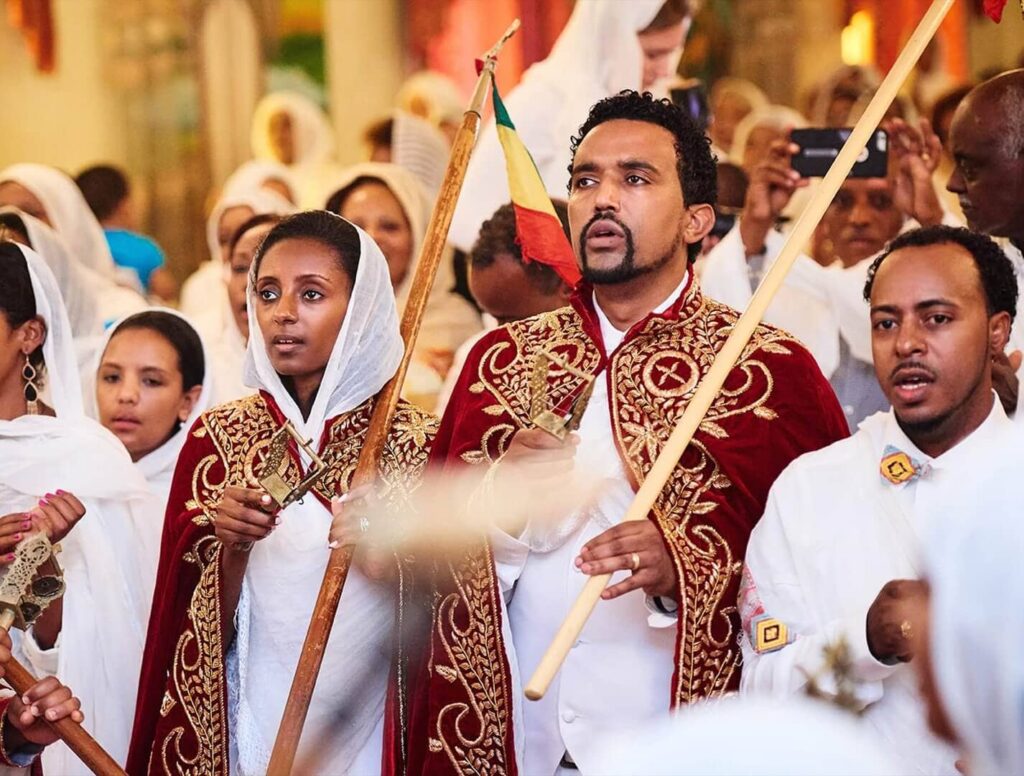
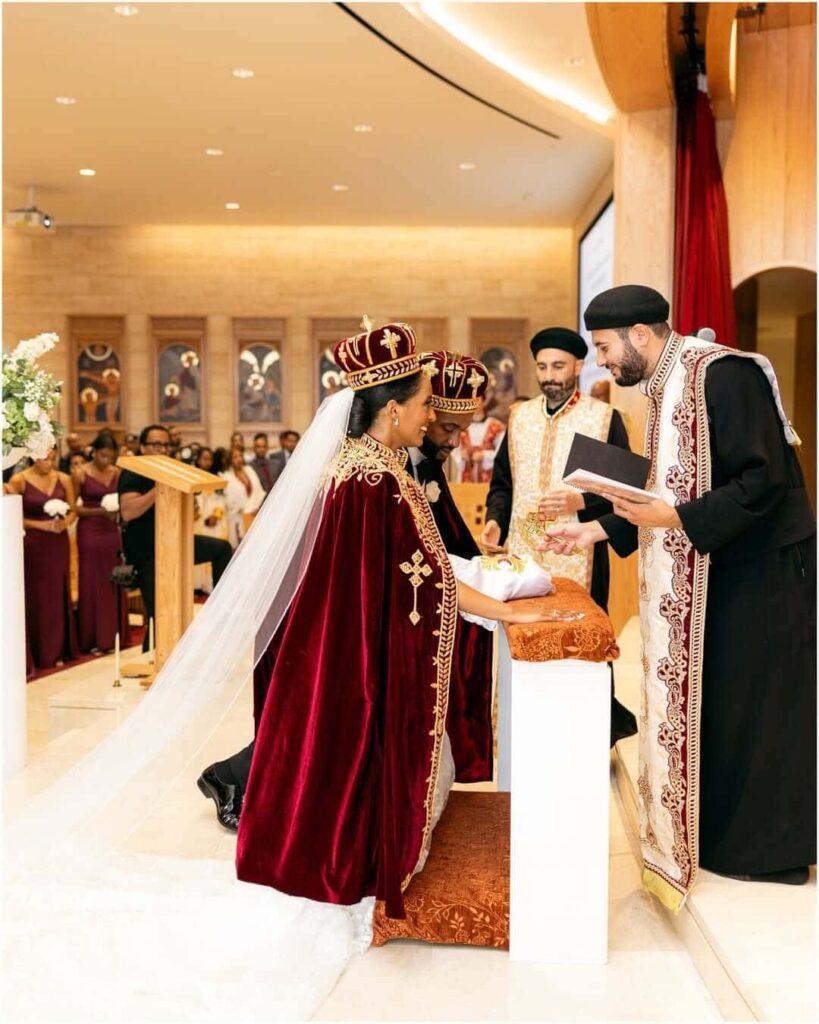
Ethiopian Orthodox Tewahedo Church Marriages
This is the most traditional and symbol-heavy form of Christian marriage in Ethiopia. It’s deeply liturgical, meaning it follows structured church rituals with prayers, chants, scripture readings, and symbolic acts that connect the couple’s union to spiritual authority.
At its core, the Orthodox wedding is built around a journey inside the church: the engagement confirmation, the blessing of the rings, the crowning ceremony (Teklil), and Holy Communion. Each moment carries meaning. The crowns represent the couple as king and queen of a new household. The rings symbolize lifelong unity and responsibility. Holy Communion seals the marriage in a deeply spiritual sense, where the union is placed under divine blessing rather than just human agreement.
Priests, deacons, and choir members all play active roles. The priest leads the prayers and blessings, often invoking scripture and tying the marriage to themes of purity, unity, and spiritual accountability. The choir and deacons respond through chants that guide the emotional rhythm of the ceremony. Families also remain close to the process, offering blessings and participating in the celebration that surrounds the church service.
There’s also a strong sense of structure and symbolism throughout. Every act inside the church carries meaning, from the placement of crowns to the reading of specific Psalms and Epistles. It’s not rushed. It’s experienced step by step, almost like walking through a spiritual narrative of marriage itself.
Protestant and Catholic Marriages
While they share the same Christian foundation, Protestant and Catholic weddings tend to be simpler in structure compared to Orthodox ceremonies.
Catholic weddings are sacramental, meaning the marriage itself is considered a sacred rite performed before God, with vows exchanged in front of a priest and congregation. The focus is often on consent, vows, and blessings, with scripture readings and prayers guiding the service.
Protestant marriages vary widely depending on denomination, but they generally emphasize preaching, worship music, vows, and prayer. The structure is more flexible, often centered on a sermon about marriage, followed by the exchange of vows and rings.
Compared to Orthodox weddings, these ceremonies are less ritual-heavy but still deeply spiritual. The focus shifts more toward personal commitment and direct expressions of faith rather than layered symbolic rites.
Islamic Marriage (Nikah)
Islamic Sharia marriage in Ethiopia, known as Nikah, is both a spiritual and contractual agreement. It is guided by Islamic teachings and conducted by a religious leader, usually an Imam, in the presence of witnesses.
The ceremony itself is simple but meaningful. The key element is the marriage contract, where both parties agree to the union freely. A mahr (mandatory gift from groom to bride) is also agreed upon, symbolizing responsibility and respect.
The Imam delivers prayers and reminders from the Quran about marriage being based on mercy, mutual respect, and faith. The presence of witnesses makes the marriage publicly recognized within the Muslim community, and families often play a strong role in confirming and supporting the union.
Islamic marriages are widely respected and recognized within Ethiopian law when properly documented. In many communities, the Nikah is followed by a larger cultural celebration, where food, music, and family gatherings bring everyone together.
What ties all these religious marriages together is not how they look on the surface, but what they represent underneath: a union witnessed by faith, supported by community, and grounded in responsibility.
3. Customary or Traditional Marriage in Ethiopia
Customary or traditional marriage is the oldest and, in many parts of Ethiopia, still the most widely practiced form of marriage. It exists outside formal church structures or government offices and instead grows out of ethnic identity, family systems, and long-standing community rules. What makes it powerful is not paperwork or liturgy, but collective agreement, memory, and respect passed down through generations.
There’s no single version of it. Ethiopia has more than 80 ethnic groups, and each one has its own way of doing marriage. But if you step back and look at the pattern, you’ll see a shared structure: families negotiate first, elders guide the process, rituals mark each stage, and the whole community eventually steps in to celebrate.
This is not a quiet or private process. It unfolds in stages, often over several days, and feels more like a sequence of events than a single ceremony. To really understand it, you have to follow it from the beginning.
It usually starts with elders stepping in before anything formal happens. In many communities, respected family elders of the groom, known as Shimagelay, are sent to the bride’s family. Their role is simple but important: they open the conversation, present the groom’s character and background, and ask for the bride’s hand in marriage.
This is not rushed. The bride’s family often responds with cautious questions, sometimes even playful resistance, testing the seriousness of the groom’s side. What follows can be more than one visit. Coffee is shared, conversations continue, and slowly, both families begin to align. Once agreement is reached, blessings are given, and the foundation of the marriage is set.
At this point, the union stops being just between two individuals. It becomes a family decision, fully acknowledged on both sides.
After the elders complete their role, the engagement phase becomes more active and visible. This is where preparations begin to feel real. Families meet again to confirm the relationship and start planning the wedding details: dates, celebrations, gifts, and the structure of the upcoming events.
One of the most expressive parts of this stage is Telosh. This is when the groom’s family, often led by close relatives and groomsmen, visits the bride’s home carrying gifts. It is both formal and theatrical. Gifts are presented, conversations are playful, and the bride’s side often responds with teasing resistance, testing the groom’s generosity and commitment.
There’s humor in it, but also meaning. Every exchange is about proving readiness, respect, and the ability to support a household.
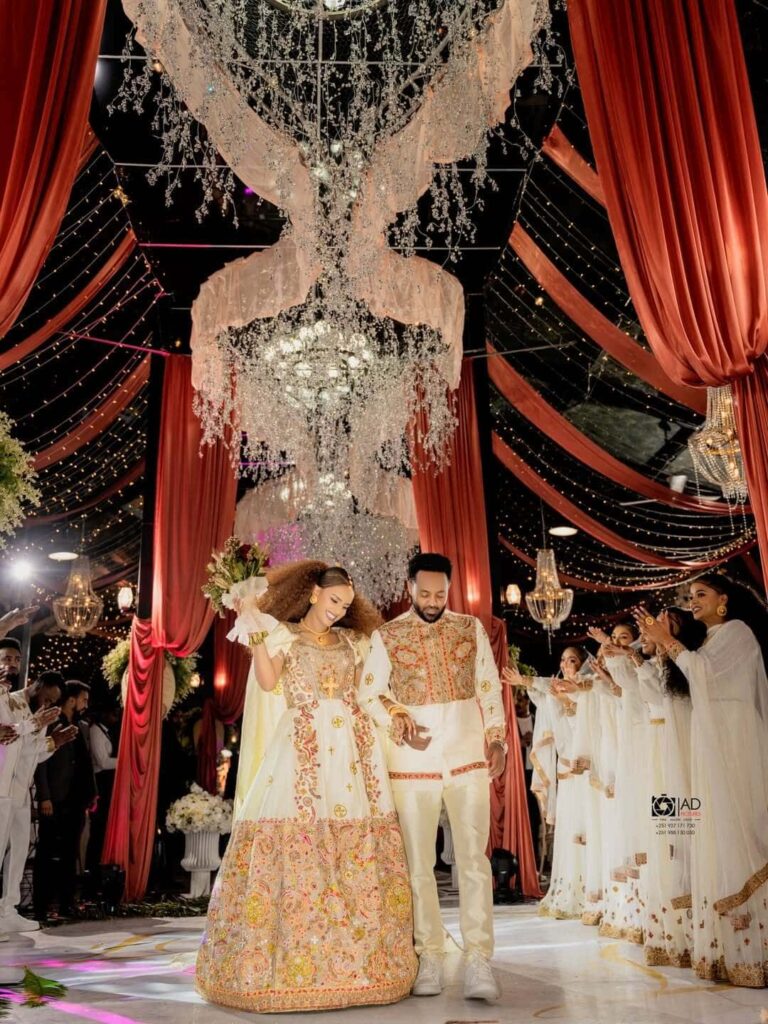
As the wedding approaches, the celebrations begin to expand into full cultural expression. Clothing becomes important here. Guests and family members dress in traditional Habesha attire, with women wearing intricately woven Habesha Kemis and men in coordinated suits or traditional garments. It’s not just about looking good; it’s about belonging to something shared and cultural.
Food and music start to define the atmosphere. Large communal meals are prepared, often featuring injera with rich stews, and tej is served as part of the celebration. Music fills the space, led by instruments like the kebero drum and masinko. Dancers perform eskista, the fast, shoulder-driven dance that instantly signals celebration in Ethiopian gatherings.
Then comes the wedding day itself, where the different threads of the process come together. Elders give final blessings. Families gather. The couple is formally recognized through the rituals of their community. In some cases, the ceremony is followed by Mels, a post-wedding celebration where the couple and close family gather again in a more relaxed setting, often continuing the festivities with food, music, and dance.
Another deeply symbolic moment is gursha, the act of feeding each other by hand in front of guests. It seems simple, but it carries weight. It represents care, trust, and shared life. At the same time, elders continue offering blessings, reinforcing the idea that marriage is not just a private bond but a community-supported commitment.
What ties all of this together is continuity. Even with regional differences, the structure remains familiar: elders initiate, families negotiate, communities celebrate, and rituals give meaning to each stage. It is a system built on participation, not observation.
By the time everything ends, what you’re left with is more than a marriage ceremony. It’s a chain of agreements, blessings, and celebrations that connect two families into one social fabric.
Mixed or Combined Marriage Ceremonies in Modern Ethiopia
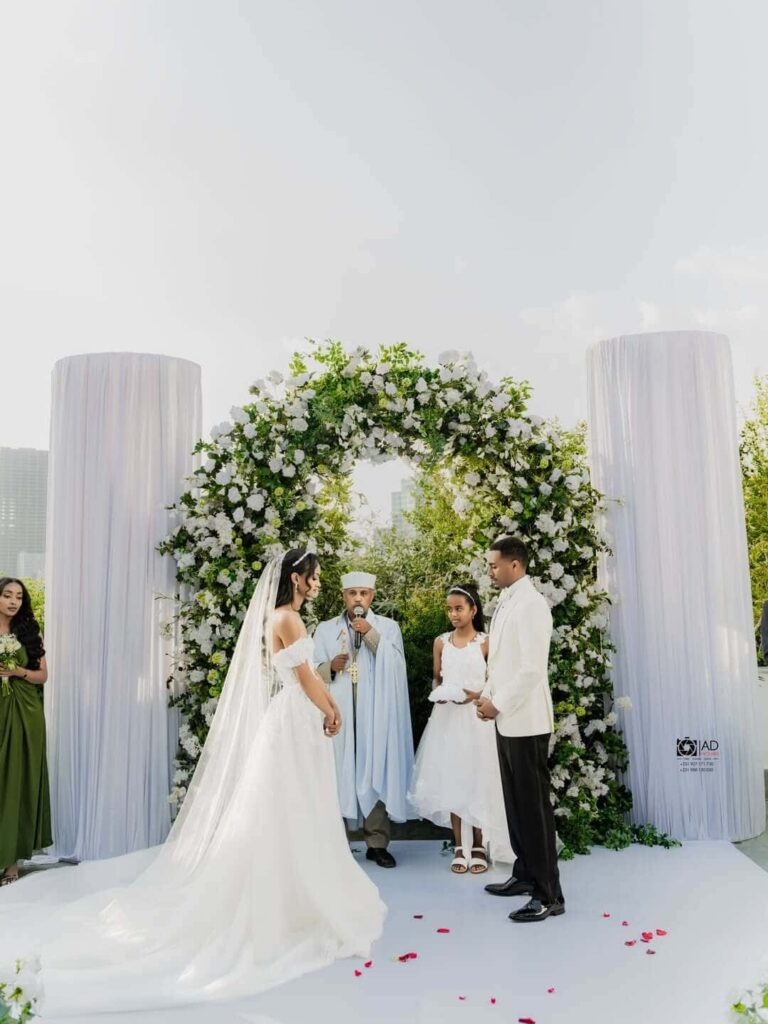
In today’s Ethiopia, it’s very common for couples not to choose just one type of marriage. Instead, they combine systems—legal, religious, and traditional—so the union is fully recognized in every sense: by the state, by faith, and by family. It reflects a simple reality on the ground: marriage here is rarely one-dimensional.
What you often see is a layered process rather than a single event. A couple might start with civil registration to secure legal recognition, then move into a church or mosque ceremony for spiritual blessing, and finally end with a traditional celebration that brings together extended family, elders, and the wider community.
A typical modern flow can look like this:
- Civil registration at a government office
- Church or mosque ceremony (Christian or Islamic blessing)
- Traditional family celebration with food, music, and cultural rituals
Sometimes this happens in a single weekend. For example, a couple may complete civil registration on Friday, have an Orthodox or Islamic ceremony on Saturday, and finish with a large family gathering afterward. Each step carries its own meaning, and skipping one is becoming less common, especially in urban areas.
The reason for this blending is practical and cultural at the same time. Civil marriage gives legal protection. Religious ceremonies provide spiritual grounding. Traditional celebrations fulfill family expectations and cultural identity. For many couples, leaving any one of these out feels incomplete.
This mix is also more common among younger generations, especially in cities, where couples want both modern legal clarity and deep cultural continuity. Instead of replacing old systems, they’re stacking them together.
What this really shows is that Ethiopian marriage today is flexible but deeply rooted. It adapts, but it doesn’t disconnect from tradition.
What Should Couples Consider When Choosing a Marriage Type?
Choosing how to get married in Ethiopia isn’t just about preference. It usually sits at the intersection of law, faith, family expectations, and personal identity. Most couples don’t make this decision in isolation either. Families often have a voice, and practical concerns tend to shape the final direction just as much as tradition does.
What matters most is understanding what each type of marriage gives you—and what it doesn’t. Once that’s clear, the choice becomes less confusing and more intentional.
Here are the key things couples usually weigh:
- Legal recognition
Whether the marriage is officially registered with the state and is valid for legal and international use. - Religious beliefs
If the couple wants their union blessed or conducted within a faith tradition, such as church or mosque ceremonies. - Family expectations
In many cases, families expect certain rituals or ceremonies to be included, especially traditional or religious ones. - Cultural identity
Some couples prioritize customs tied to their ethnicity or community, even when other systems are also involved. - Budget and ceremony scale
The type of marriage often influences cost, guest size, and how elaborate the celebrations become. - Future documentation needs
Especially important for couples planning to travel, migrate, or apply for visas where official certificates are required.
At the end of the day, most couples don’t pick one system in isolation. They build a combination that fits their life, their families, and what they want their marriage to represent in both public and private terms.
Final Thoughts
Marriage in Ethiopia goes far beyond paperwork or a single ceremony. It’s a layered experience where law, faith, and tradition all play different roles, depending on the couple and their background. What stays consistent is the idea that marriage is both a personal commitment and a public, community-recognized bond.
Each form of marriage reflects a different side of the country. Civil registration gives legal clarity. Religious ceremonies bring spiritual meaning through churches and mosques. Customary practices keep cultural identity alive through elders, rituals, and family-centered celebrations. Together, they show how flexible yet deeply rooted Ethiopian marriage really is.
For many couples, especially in modern settings, these systems don’t compete—they combine. A civil registration might be followed by a church or mosque ceremony, then completed with a traditional celebration that brings everyone together. It’s this layering that makes Ethiopian marriage feel complete rather than limited to one format.
For a deeper look at how these celebrations unfold in real life, you can explore more on [weddings in Ethiopia] or read about [Ethiopian wedding traditions and customs] and [Ethiopian Orthodox wedding traditions].