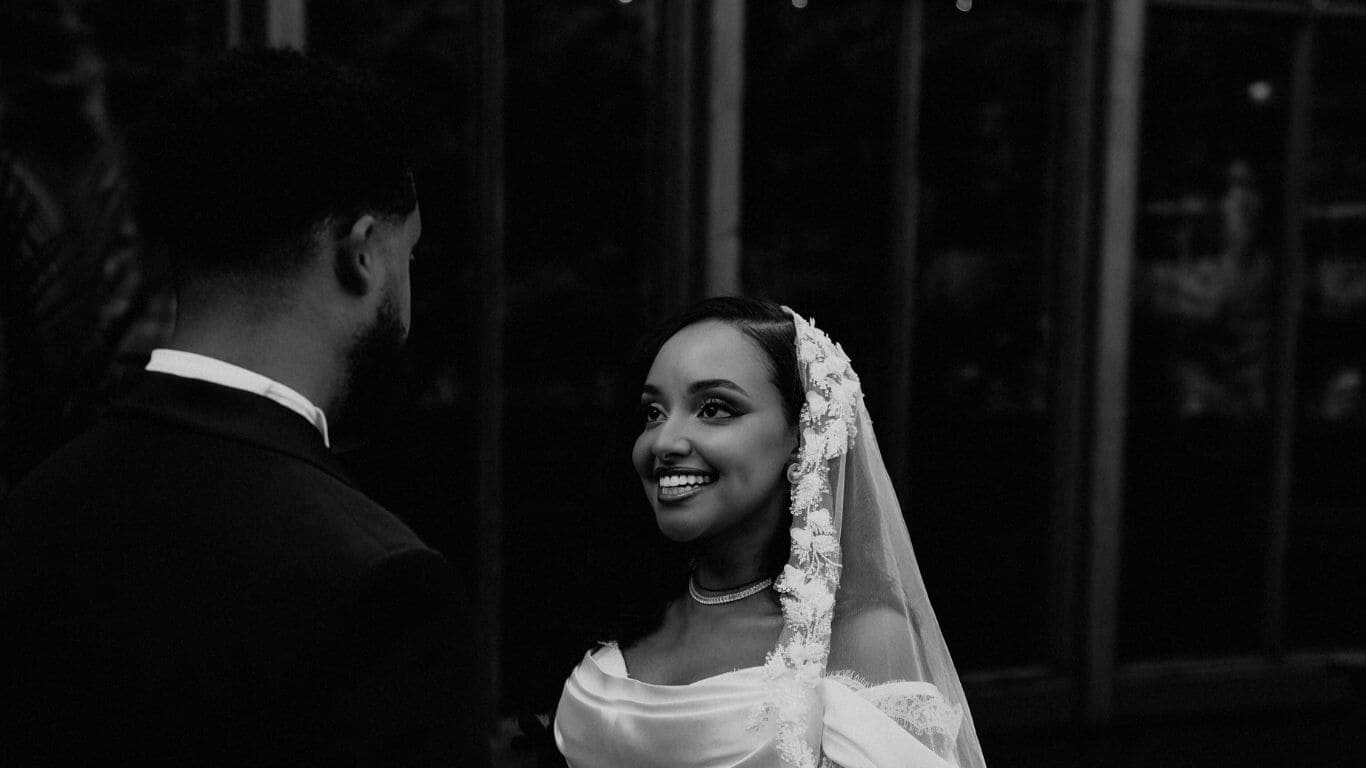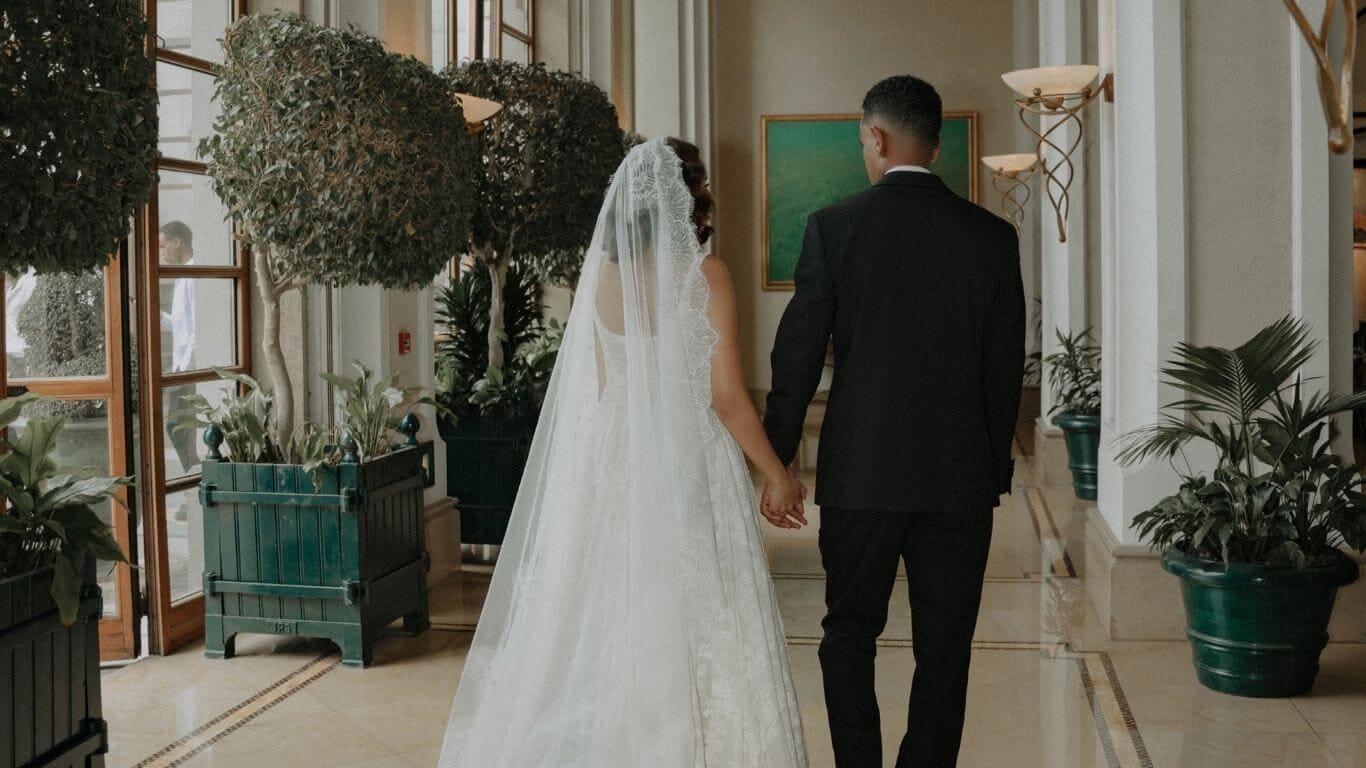
Ugandan wedding traditions are deeply rooted in family, culture, and community, shaping every stage of the celebration from introduction to reception.
Ugandan weddings have come a long way, but they haven’t lost what makes them what they are. In the past, marriages were more structured and heavily guided by families and elders. Choices were influenced by clan, social ties, and long-standing relationships between families. Today, couples have more freedom to choose who they marry and how they celebrate, but the foundation hasn’t really changed.
Uganda is culturally diverse, with different ethnic groups bringing their own customs and ways of doing things. That diversity shows up clearly in weddings. No two are exactly the same, but they all carry a shared understanding that marriage is bigger than just two people. It’s about families coming together, communities showing up, and traditions being respected.
What you see now is a blend. Modern weddings with styled venues, structured timelines, and curated experiences sit right alongside traditional ceremonies that have been practiced for generations. A couple might have a contemporary reception but still go through cultural rites that involve elders, family negotiations, and symbolic gestures that hold real meaning.
This guide walks you through that journey. From what happens before the wedding to the key ceremonies and what follows after, you’ll get a clear picture of how Ugandan wedding traditions work and why each stage matters.
Because even with all the changes, one thing hasn’t shifted. Traditions, customs, and rites still sit at the center of Ugandan weddings. They’re not just carried along for the sake of it. They’re what give the entire process structure, meaning, and a sense of identity that modern elements alone can’t replace.

The Role of Family and Community
In Uganda, marriage is not just about two people deciding to be together. It’s a union between families, and in many cases, between entire clans. That’s the lens through which everything else makes sense.
From the beginning, both families are involved. Approval isn’t just a formality. It’s part of the process. Families take time to understand each other, ask questions, and make sure there’s alignment not only between the couple but also between their backgrounds, values, and traditions. This is why pre-wedding steps like introductions and negotiations are taken seriously. They’re not delays, they’re foundations.
Elders play a central role in guiding all of this. They are the ones who understand the customs, lead discussions, and make sure things are done the right way. During ceremonies like the introduction, it’s often an appointed elder who speaks on behalf of the groom’s family, using proverbs, stories, and cultural knowledge to communicate respect and intention. Their role isn’t symbolic. They help maintain balance between both sides and ensure that traditions are followed properly.
You also see this influence in how decisions are made. In many Ugandan weddings, especially traditional ones, the couple is not the only decision-maker. Families contribute financially, help organize, and sometimes even influence key aspects of the event. What might feel unusual from a Western perspective is actually seen as support. It’s a way for the family and community to take responsibility for the union and be part of its success.
Then there’s the community itself. Weddings are not small, private affairs. They are social events that bring people together in large numbers. Friends, extended family, neighbors, and even wider networks show up not just to witness but to participate. From dancing and singing to contributing gifts or support, there’s a shared sense that everyone has a role to play.
This is why Ugandan weddings feel different. They’re not built around individual preference alone. They’re shaped by relationships, expectations, and a deep sense of collective involvement. And once you understand that, every other tradition, from ceremonies to celebrations, starts to make a lot more sense.
Pre-Wedding Traditions and Preparations
Before any formal ceremony takes place, there’s already a process happening quietly in the background. In Uganda, weddings begin long before the actual celebration. They start with families getting involved, asking questions, and setting expectations.
One of the first steps is the family introduction. This is where both sides meet, often in a structured setting, to understand who is marrying into the family. It’s also where early “background checks” happen in a cultural sense. Families want to know about clan connections, upbringing, and whether any cultural or familial ties could be an issue later.
Cultural expectations also play a big role here. Religion is often considered, especially for church or mosque weddings. Clan systems are also important in many communities, and families may ensure that the couple does not share the same clan lineage. Figures like the Ssenga (a paternal aunt who guides the bride) may also step in to prepare the bride for marriage from a cultural standpoint. These are not small details in the Ugandan context. They are part of how compatibility is understood beyond just the couple themselves.
Once both families are comfortable, early negotiations begin. This is where discussions around marriage terms, expectations, and traditional requirements start taking shape. It’s not rushed. It’s deliberate, and it often involves elders who understand how to guide both families through the process.
By the time ceremonies begin, a lot of groundwork has already been done. What follows is simply the public expression of agreements that have already been shaped privately.
Key Traditional Ceremonies in Uganda
Ugandan weddings are built around key ceremonies that carry both cultural meaning and social importance. These are not random events. Each one marks a specific stage in the journey toward marriage.
Kwanjula (Introduction Ceremony)
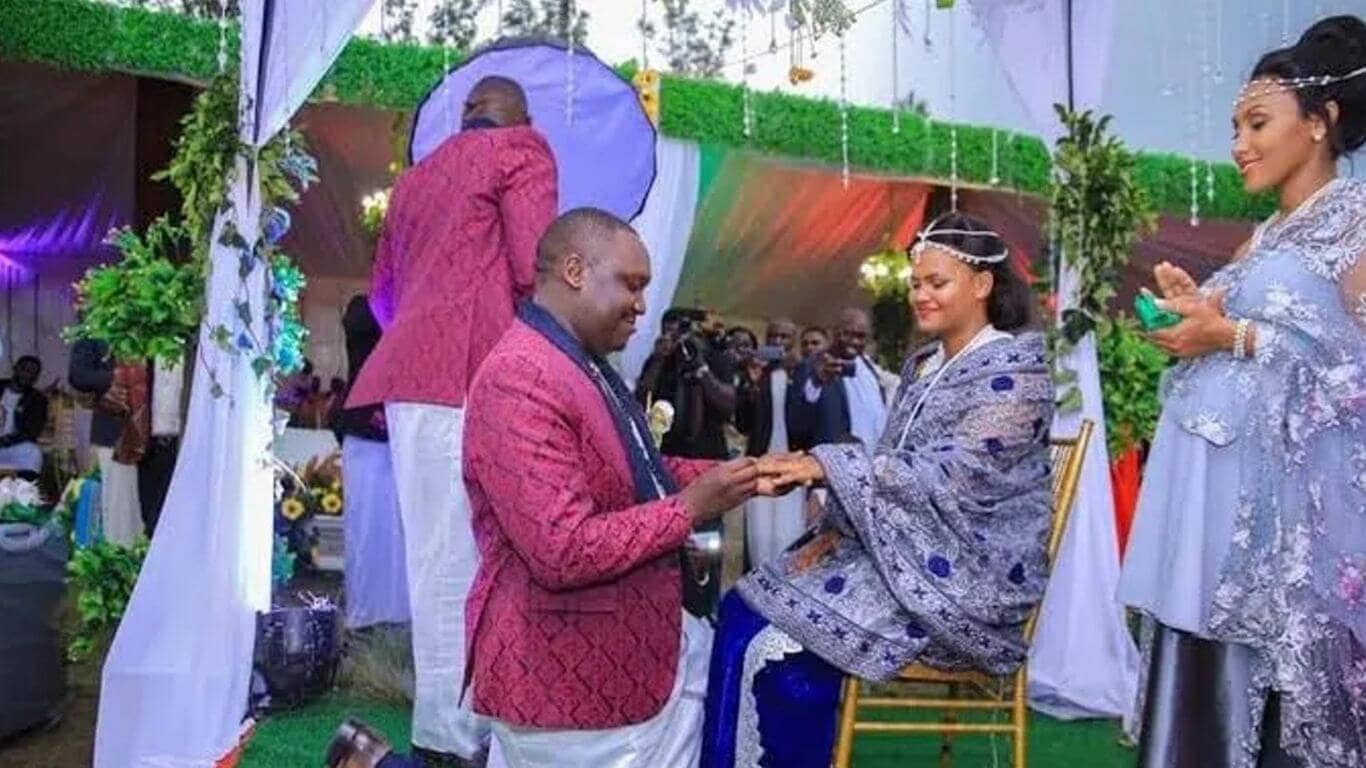
Kwanjula is one of the most important ceremonies in Ugandan wedding culture, especially among the Baganda and other central communities. It is the formal introduction of the groom and his family to the bride’s family.
The groom does not go alone. He is accompanied by family members and representatives, often led by an elder who speaks on his behalf. They are received by the bride’s family, often guided by figures like the Omuko (a close male relative, such as a brother). This spokesperson plays a key role, communicating intentions, answering questions, and ensuring that cultural protocols are followed. Symbolic gestures, including offerings like Enkoko yo’muko (a rooster presented to the brother-in-law), reflect respect and the building of family ties.
The ceremony itself is structured but lively. The bride is formally presented, and symbolic exchanges take place between both families. There are moments of negotiation of dowry, acceptance, and celebration, all guided by tradition.
Kwanjula is not just an introduction. It is a public acknowledgment that two families are now connected and that marriage is being formally considered and approved.
Kuhingira (Giveaway Ceremony)
Kuhingira, commonly practiced among the Banyankole and other western communities, is the formal “handing over” of the bride. It marks a key transition point in the marriage process.
In this ceremony, the bride is officially entrusted to the groom’s family. It is a symbolic moment that represents acceptance, responsibility, and the beginning of her new life within another household.
Like Kwanjula, Kuhingira is deeply cultural. It is guided by elders, shaped by family involvement, and supported by rituals that emphasize unity and continuity between families.

Other Cultural Rites and Regional Variations
Beyond the major ceremonies, Uganda’s diversity means that wedding traditions vary across regions and ethnic groups. Each community adds its own meaning, rituals, and style to the celebration.
Among the Baganda, ceremonies are often highly structured, with emphasis on introductions, speeches, and symbolic exchanges. In western Uganda, particularly among the Banyankole, cattle play an important role in marriage negotiations and symbolic exchanges. In northern Uganda, among groups like the Acholi, weddings often include storytelling, music, and traditional dances that reflect community identity and history.
There are also smaller but meaningful rituals that appear across different cultures. These can include blessings from elders, symbolic gifts exchanged between families, ceremonial drinks or food sharing, and moments of prayer or spiritual acknowledgment, depending on the community or religion involved.
While the details differ, the meaning is consistent. These rites are not just formalities. They are ways of connecting families, honoring tradition, and marking the transition into marriage in a way that is deeply rooted in culture.
The Bride Price and Its Cultural Meaning
The bride price is one of the most widely known parts of Ugandan wedding traditions, but it’s often misunderstood. At its core, it’s not a transaction. It’s a cultural practice that represents respect, appreciation, and formal recognition between two families coming together.
What it really represents is acknowledgment. The groom’s family is not “buying” the bride. They are formally appreciating the family that raised her and expressing readiness to take on responsibility in a new family structure. It’s also a way of showing seriousness and commitment to the marriage.
What is included in the bride price varies depending on the families involved and the region or tribe. Traditionally, it may involve money, livestock such as cows or goats, and other symbolic gifts. In some cases, modern interpretations include household items or negotiated contributions based on what both families agree on. The key point is not the exact items, but the gesture behind them.
Beyond symbolism, the bride price plays a social role. It strengthens the relationship between families and creates a formal bond that extends beyond the couple. Once accepted, it is seen as a sign that both families have agreed to the union, and it reinforces trust and mutual respect.
There is also variation across regions and communities. In some cultures, cattle play a central role and are deeply symbolic of wealth, fertility, and status. In others, the focus may be more flexible, shaped by negotiation between elders rather than fixed expectations. Even within the same ethnic group, families may interpret or apply the tradition differently depending on their values and circumstances.
Structure of a Traditional Ugandan Wedding
Ugandan weddings are not single-day events. They are structured as a series of connected ceremonies that build up to the final celebration. Understanding this flow helps make sense of why weddings often feel layered and extended.
The typical sequence looks like this:
Pre-wedding introductions → Kwanjula → Kuhingira (where applicable) → Religious or civil ceremony → Reception
Each stage has its own purpose. Pre-wedding introductions set the foundation between families. Kwanjula formalizes the relationship and introduces both sides publicly. Kuhingira, in some cultures, marks the symbolic handing over of the bride. After that, religious or civil ceremonies finalize the union legally or spiritually, followed by a reception that brings everyone together in celebration.
This multi-stage structure is a big part of what makes Ugandan weddings unique. It’s not just about one event. It’s about a process that unfolds over time, with each step carrying its own meaning and expectations.
Because of this structure, weddings often span multiple days, weeks, or even months. Families need time to prepare, coordinate, and fulfill traditional requirements. It also allows both sides to properly engage with each stage, rather than rushing through something that is culturally significant.
In the end, the structure is what holds everything together. It connects tradition, legality, and celebration into one continuous journey rather than separate moments.

Cultural Expressions During the Wedding
Ugandan weddings are not quiet, watch-from-a-distance events. They are active, expressive, and fully lived experiences where everyone present becomes part of the celebration.
Music and dancing sit at the center of it all. From traditional drums to modern playlists, sound shapes the mood from start to finish. It’s not unusual for guests to break into dance at any moment, sometimes even forming lines or circles that pull more people in as the celebration builds. The energy is continuous, not staged.
Guest participation is just as important. People don’t just attend, they engage. Guests are often invited into moments of dancing, cheering, and celebration, especially when the couple is being introduced or making their entrance. In many cases, guests even dance their way to greet the couple during the reception, turning formal moments into shared experiences.
Food is another major expression of culture. Weddings are communal by nature, and feasting reflects that. Large portions of traditional dishes are prepared and shared, often served in a way that encourages togetherness rather than formality. In some settings, the groom shares a more private meal with a small group from his side, served by the bride’s family as part of the tradition. The couple may also share their wedding cake earlier in the celebration, before the main meal begins. Eating is not rushed. It’s part of the social experience, where families and guests sit, talk, and connect.
There’s also a noticeable difference between public and private behavior, especially when it comes to affection. Ugandan weddings tend to be respectful and reserved in public displays between couples. While there is joy and closeness, expressions of intimacy are generally subtle and guided by cultural expectations. The focus stays on family, community, and celebration rather than the couple alone.
Post-Wedding Traditions and Gifts
Ugandan weddings don’t really end at the reception. There are still a few cultural steps that mark the beginning of married life, especially within more traditional families.
One of the known post-wedding practices involves the bride being formally welcomed into her new home. In some traditions, this includes rituals like okunabbya omugole, where the couple goes through symbolic acts meant to bless the union and mark the start of their life together. These moments are usually guided by family members and carry a strong sense of transition, moving the bride from one household into another.
Gift-giving is also a big part of the process. Guests may bring anything from practical items to symbolic gifts, and in some cases even livestock, depending on the setting. Families exchange gifts as well, and it’s common to see items like food, household goods, or keepsakes being presented. In traditional settings, gifts from the groom’s side may be carried in by women in a ceremonial way, adding to the overall cultural experience.
Traditional Attire and Symbolism
Clothing at a Ugandan wedding is not just about appearance. It carries meaning, identity, and cultural pride. What people wear reflects where they come from, the role they play, and the respect they show for the occasion.
Brides traditionally wear the gomesi in many central and eastern communities. It is a flowing, structured dress that stands out for its bold colors and distinct silhouette. In other regions, variations like the busuuti or locally styled dresses are also common. Brides often change outfits during the day, especially in larger weddings, reflecting different stages of the celebration.
Grooms typically wear the kanzu, a long tunic that is often white or cream. It is simple but symbolic, representing formality and cultural grounding. In many cases, it is paired with a jacket or traditional accessories, depending on the region and level of formality.
Guests also dress with intention. Women often wear dresses or traditional wraps depending on the cultural setting, while men may wear a kanzu or formal Western suits. In many weddings, especially traditional ones, guests are encouraged to dress in a way that respects the cultural tone of the event.
The symbolism behind attire is just as important as the clothing itself. Colors, fabrics, and styles often reflect cultural identity, status, and occasion. Bright colors are commonly associated with celebration, while specific fabrics or patterns may carry cultural or regional meaning. In many cases, clothing also reflects respect for tradition and the families involved.
Ultimately, attire in Ugandan weddings is part of the storytelling. It visually connects people to culture, community, and the significance of the moment being celebrated.
Modern Influence on Ugandan Weddings
Ugandan weddings today are not what they used to be, but they also haven’t broken away from tradition. What you see now is an evolving mix of old and new, shaped by urban lifestyles, global exposure, and changing social expectations.
In cities like Kampala and Entebbe, modern weddings are becoming more common. Couples are leaning into curated experiences, styled venues, coordinated color themes, and tighter event timelines. Social media also plays a role here. Weddings are now designed not just for the guests in the room, but for how they will look and feel online.
Intercultural marriages are also on the rise. As Ugandans connect more globally through education, travel, and work, weddings are increasingly blending different cultures. This often introduces new traditions into Ugandan ceremonies, from mixed religious practices to hybrid reception styles that reflect both families’ backgrounds.
A big part of this shift is the blending of Western and traditional elements. It’s common now to see a couple go through a full traditional introduction, then have a church or civil ceremony, and later host a modern reception with Western-style elements like formal vows, choreographed entrances, and structured seating arrangements. The two worlds don’t replace each other. They sit side by side.
What’s changing most is presentation and structure. Weddings are becoming more streamlined, visually styled, and influenced by global trends. But what remains constant is deeper than aesthetics. Family involvement, cultural rites, respect for elders, and the meaning of marriage itself remain firmly in place.
@owabandize The beautiful wedding for all tribes and culture in Uganda and other countries for God and my country
♬ Embaga – Judith Babirye
What to Expect at a Ugandan Wedding
If you’re attending a Ugandan wedding for the first time, one thing becomes clear quickly. These are not small, quiet events. They are full experiences that pull you in from the moment you arrive.
The atmosphere is lively. Music, dancing, and conversation fill every stage of the event. Even formal moments tend to carry energy and movement rather than stillness. There’s usually a sense that something is always happening, even in between the main ceremonies.
Guest involvement is high. People don’t just sit and observe. They participate. Whether it’s through dancing, cheering, or joining processions, guests become part of the celebration. It’s common for large groups to move together during key moments, especially during receptions.
Weddings also tend to be long and layered. Depending on the setup, they can span multiple hours or even days. There is usually a clear structure, but it unfolds gradually, with each stage carrying its own significance.
Cultural etiquette matters. Respect for elders, appropriate dressing, and understanding how to behave during ceremonies are all important. Guests are expected to be present, engaged, and respectful of traditions, even if they are not familiar with all the customs.
In the end, attending a Ugandan wedding is less about watching an event and more about experiencing a culture.
@dw_photography_ug Behind the scenes Don & mara’s kwanjula #foryou #kwanjula ♬ Tonyt – Rema namakula
Conclusion
Ugandan weddings are rich, layered, and deeply rooted in culture. Every stage, from the first family introductions to the final celebration, reflects a strong sense of identity, respect, and community. Even with modern influences shaping how weddings look today, the traditions, customs, and values behind them remain firmly in place.
There’s a lot more to understand beyond the surface. Each element, from ceremonies like Kwanjula to the role of bride price, attire, and planning, carries its own meaning and structure. Taking the time to explore these individually gives you a clearer, more complete picture of how weddings in Uganda truly work.