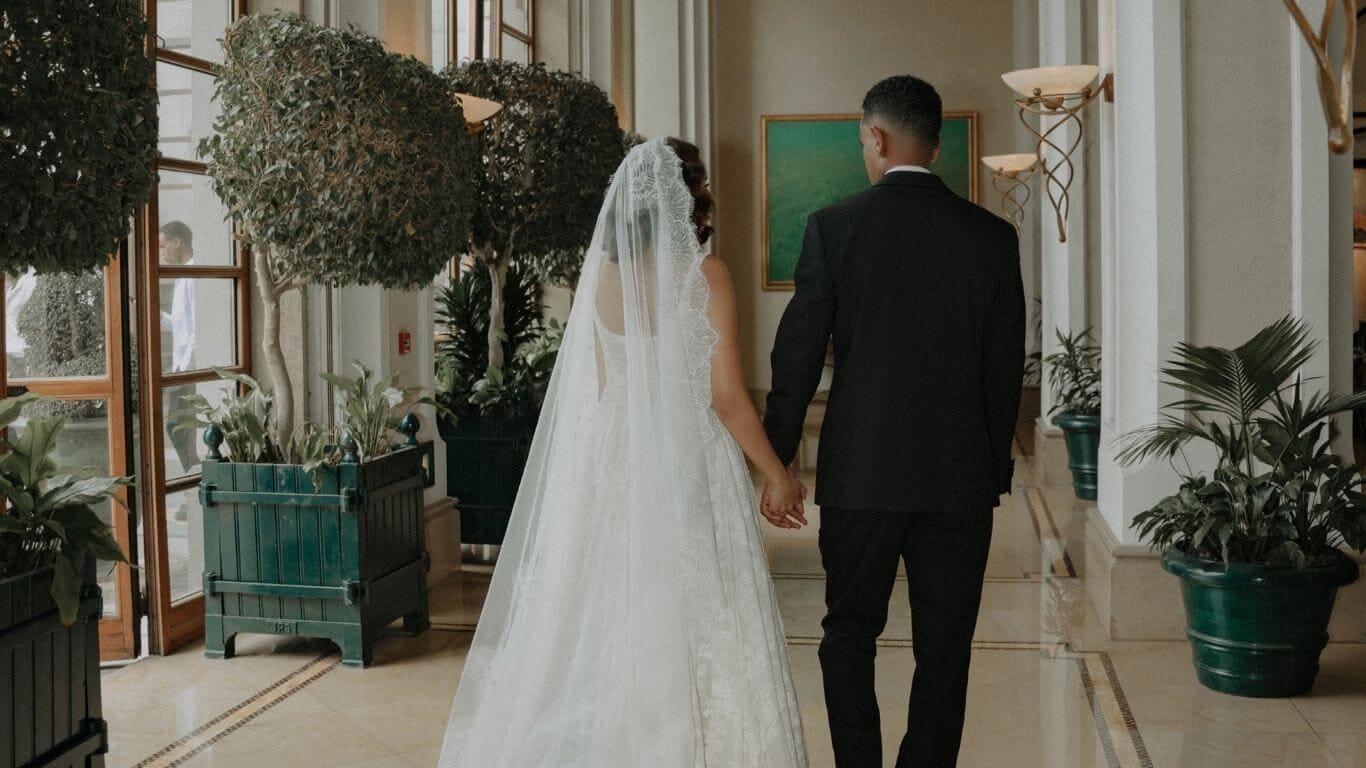
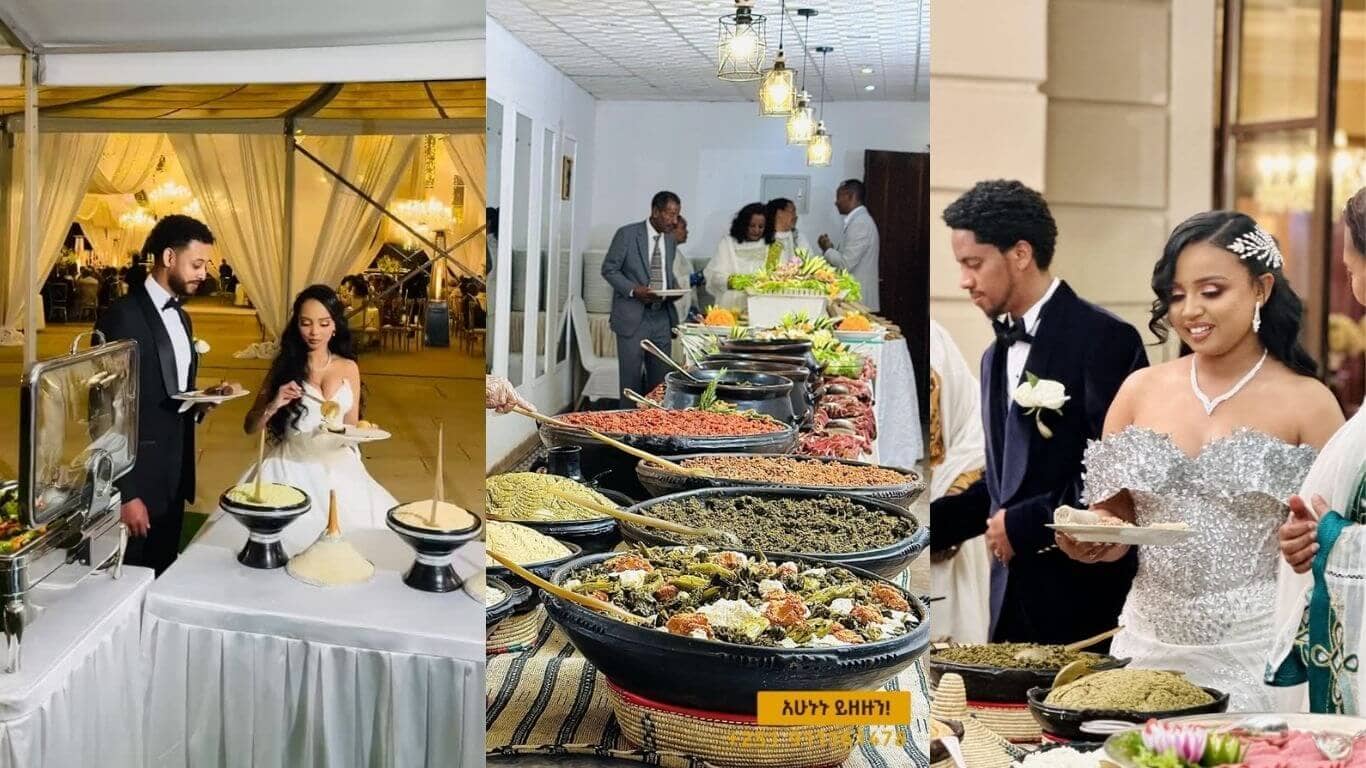
Ethiopian wedding food is more than a meal; it is a vibrant communal feast that brings families and guests together, usually served at wedding receptions and Melse celebrations.
Ethiopian weddings are deeply rooted in culture, family, and tradition. Every celebration reflects a blend of history, faith, and community, something you can explore further in our guide on weddings in Ethiopia, where we break down how these ceremonies come together from start to finish. Across different regions and communities, weddings can look slightly different, but the heart of it stays the same: bringing people together in a meaningful way.
To really understand the setting, it also helps to look at the unique traditions and customs that shape how weddings are celebrated. From pre-wedding rituals to post-wedding gatherings, Ethiopian marriage customs carry a strong sense of identity and continuity. Couples should confidently select a form of marriage that aligns with their background and effectively reflects their religious or cultural values. This includes both customary and Christian marriage, each with its own clear expectations and significance.
But no matter the variation, one thing is constant: Ethiopian weddings are never complete without food. The celebration always opens up into a shared feast where guests gather, talk, and eat together in a way that feels almost ritualistic. It’s not just about serving dishes; it’s about creating a shared moment around the table.
Ethiopian wedding food carries that experience. Think of large communal platters of injera topped with richly spiced stews, slow-cooked meats, and vibrant vegetarian dishes. It’s the kind of food that invites people to reach in, share, and slow down. The flavors are bold, but the real magic is in how it brings everyone into the same space, physically and socially.
And that’s really what makes it special. Ethiopian wedding food is not just part of the celebration; it is the celebration. From the aroma of spices to the rhythm of shared plates, it turns weddings into an immersive and memorable experience. Whether served at a reception or during Melse, the food becomes the moment people remember long after the day is over.
Wedding Receptions and Melse: Where Ethiopian Wedding Feasting Begins
The wedding ceremony is only the beginning. Once it ends, the atmosphere shifts completely, and the real celebration takes shape. This is where Ethiopian weddings open up into something louder, more expressive, and deeply communal, first at the reception and then again during Melse.
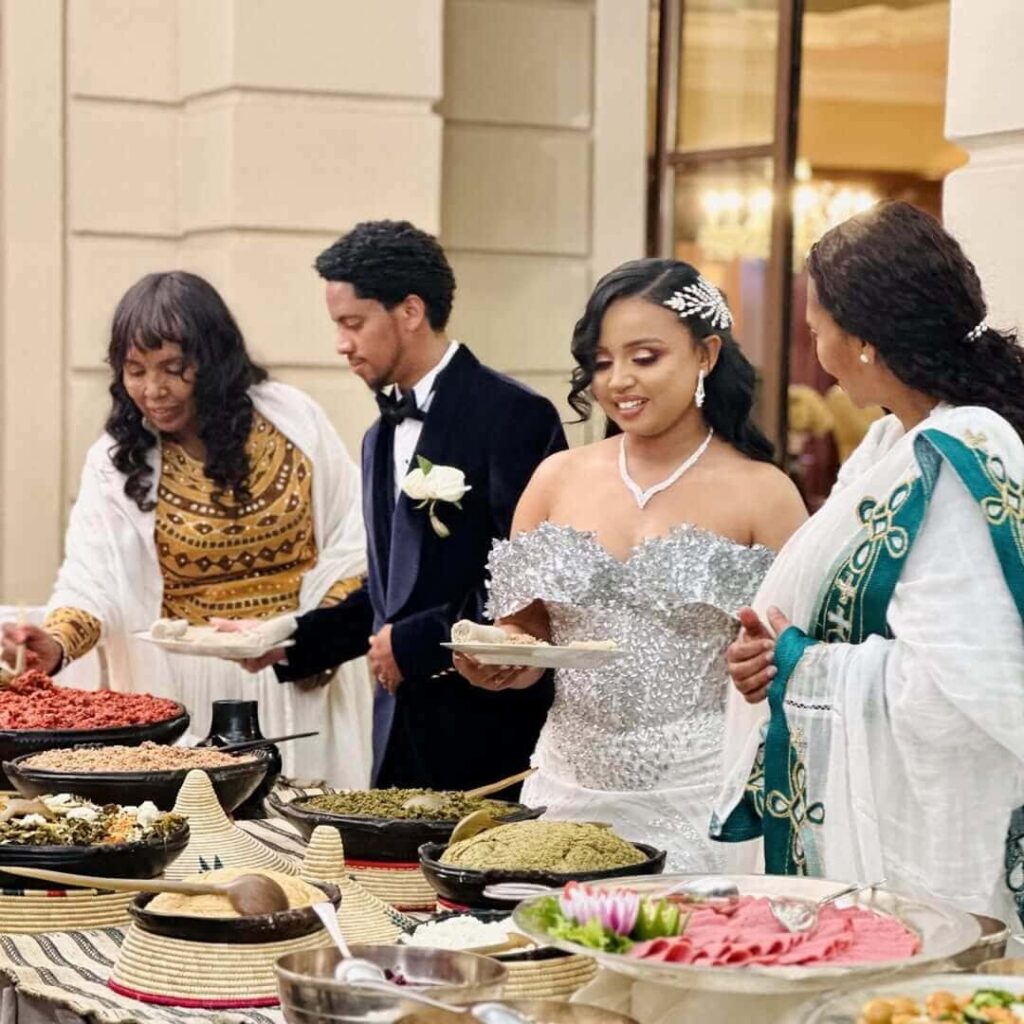
At the reception, the couple makes a grand entrance surrounded by music, movement, and tradition. Guests rise to welcome them as the space fills with energy, dancing, and celebration. It’s a moment that feels both structured and spontaneous, where formalities quickly give way to joy and connection. The couple is seated in a place of honor, and from there, the celebration unfolds with dancing, blessings from elders, and continuous music that carries the night forward.
There are also moments of deep cultural meaning woven into the celebration. Elders step in to offer blessings, speaking words of guidance and stability over the couple. Ritual gestures of respect take place, and family roles become more visible as both sides come together in a shared space. Even the flow of the event reflects tradition, with structured moments followed by open celebration that stretches late into the night.
Then comes Melse, the quieter but equally important continuation of the celebration. It usually happens the next day and feels more intimate, with close family and friends gathering in a more relaxed setting. The energy is softer, but the meaning runs just as deep. The couple appears in traditional attire, and the focus shifts toward acceptance, bonding, and bringing both families closer together.
By the time Melse ends, the celebration feels complete in every sense. What began as a formal union has now been fully absorbed into family life and community. The wedding doesn’t just mark a moment in time; it becomes a shared experience that carries forward long after the music stops.
Traditional Ethiopian Wedding Foods Served at Weddings
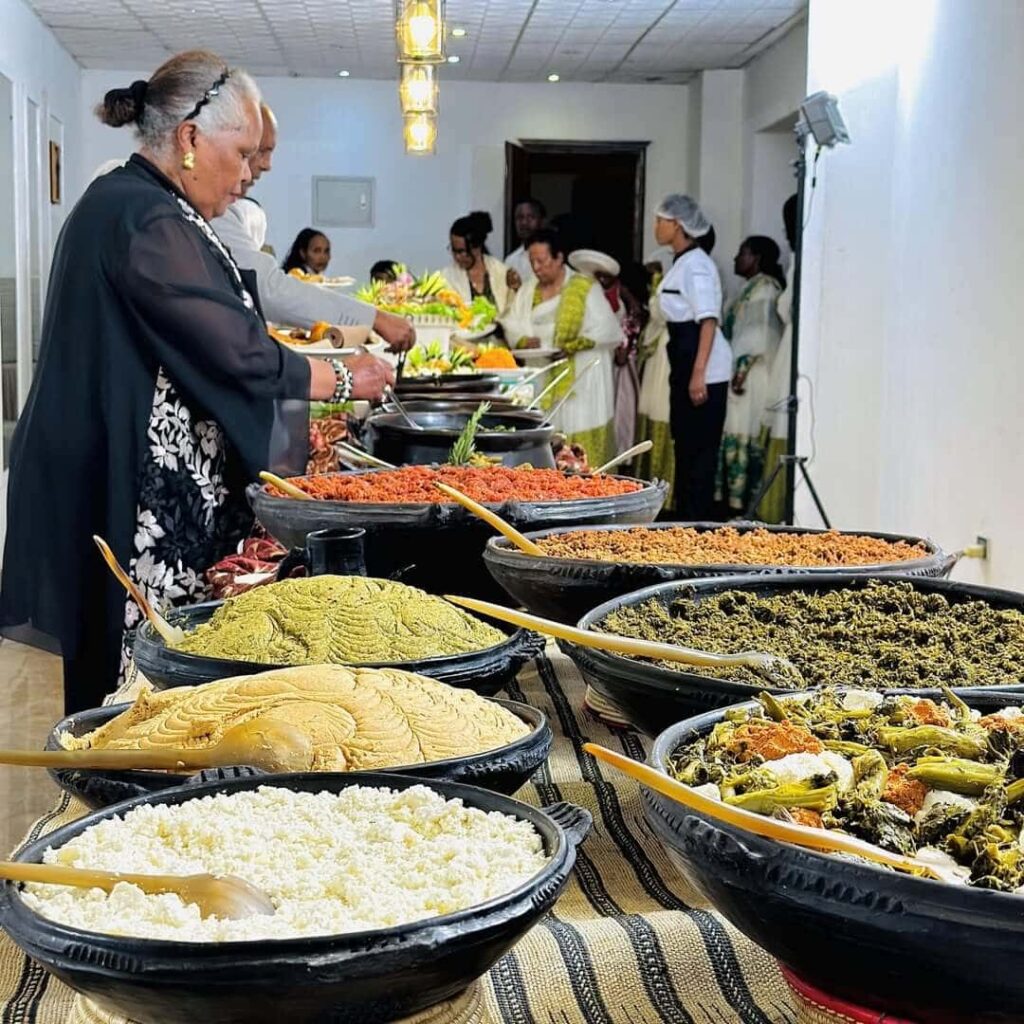
Ethiopian wedding food is built around bold flavors, shared platters, and slow-cooked dishes that carry both comfort and meaning. While the variety can change depending on the region or family tradition, the foundation stays the same: richly spiced stews, fresh accompaniments, and food designed to be eaten together, not separately.
At the center of everything is the spice profile that defines Ethiopian cooking. Dishes aren’t necessarily hot in the way people expect, but they are deeply layered and aromatic. The most important blend is berbere, a mix of chili, garlic, ginger, fenugreek, cinnamon, and other spices that gives many stews their signature depth. Alongside it, you’ll often find niter kibbeh, a spiced clarified butter that adds richness, and mitmita, a sharper seasoning usually served with meat. In some dishes, awaze, a paste made from berbere and oil, brings everything together.
All of these flavors sit on top of the foundation of every Ethiopian wedding table: injera, the soft, slightly sour flatbread made from teff. It isn’t just part of the meal; it is the meal’s structure. Everything is served on it, scooped with it, and shared through it.
From there, the dishes open up into a wide and familiar spread that guests instantly recognize at celebrations:
1. Doro Wat
A slow-cooked chicken stew and one of the most important dishes at any wedding. It’s made with berbere, onions reduced into a rich sauce, and spiced butter, and often includes hard-boiled eggs. It’s the dish most people expect to see at the center of the feast.
2. Key Wat
A beef version of the famous stew family. It’s deeply spiced, slightly thicker, and often eaten when the celebration calls for something more intense and filling.
3. Tibs / Derek Tibs
Sautéed or roasted meat, usually beef or goat, cooked quickly with onions, garlic, and herbs. It’s served sizzling and is one of the most popular choices for meat lovers at weddings.
4. Kitfo
Finely minced beef mixed with spiced butter and mitmita. It can be served raw or lightly cooked, depending on preference, and is usually reserved for special moments or honored guests.
5. Shiro Wat
A thick, smooth stew made from chickpeas or broad beans. It’s simple, widely loved, and often the most common vegetarian option at any wedding spread.
6. Misir Wat
Red lentils cooked slowly with berbere until rich and tender. It’s a staple dish that shows up at almost every celebration table.
7. Gomen Be Siga
Collard greens cooked with beef, garlic, and butter. It balances heavier dishes and brings a deeper, earthy flavor to the meal.
8. Beyaynetu
A mixed vegetarian platter featuring different stews, lentils, and greens arranged over injera. It’s especially common when families want to cater to all dietary preferences.
9. Salata (Tomato Salad)
Fresh chopped tomatoes, onions, chili, lemon, and oil. It adds a bright, refreshing contrast to the heavier stews and is surprisingly memorable in its simplicity.
10. Sambusa
Crispy pastry pockets filled with lentils or minced meat, usually served as snacks during the celebration.
11. Injera Fir Fir
Torn pieces of injera mixed with leftover stews, soaking up all the flavor. It’s more casual, but still widely enjoyed, especially during extended celebrations.
In many weddings, food also extends into drinks and small rituals that complete the experience. Coffee plays a big role, prepared in a traditional ceremony where beans are roasted, brewed in a clay pot called a jebena, and served in small cups meant for conversation rather than rush. Alongside it, fruit juices and smoothies, especially avocado and mixed fruit blends, are common and often surprisingly fresh and light.
Then there is tej, the honey wine that often appears during celebrations. It’s sweet, slightly strong, and deeply tied to ceremony and toasts. It’s not just a drink at the table; it’s part of how the celebration moves forward.
What makes the entire spread special is not just the food itself but how it is experienced. Guests don’t eat in isolation. They share from the same platters, reach across the same space, and take part in small gestures like feeding one another. The meal becomes part of the social fabric of the wedding, not just something served in between events.
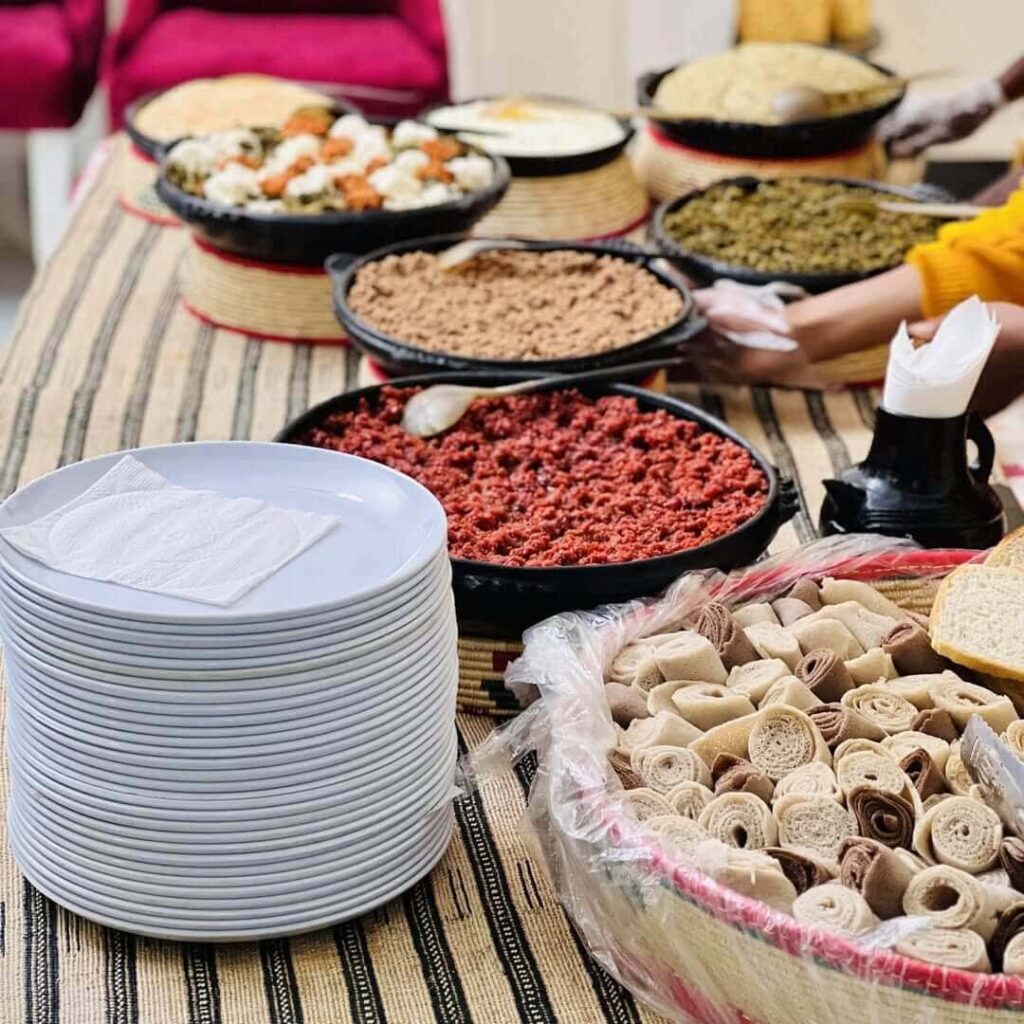
Feasting Traditions Across Ethiopia’s Communities
Ethiopian wedding feasts are not just about food on the table. They are shaped by long-standing customs that define how people eat, share, and connect during celebrations. Across different communities, the details may shift, but the idea stays consistent: food is a communal experience that carries meaning beyond the meal itself.
Here are some of the most important traditions that shape how wedding feasts are experienced:
1. Communal eating (Gebeta style)
Guests gather around large shared trays called gebeta, where food is served on top of injera. Everyone eats from the same platter using their hands, tearing pieces of injera to scoop up stews and vegetables. It’s a simple setup, but it naturally creates closeness and interaction among guests.
2. Gursha (feeding tradition)
One of the most recognizable customs in Ethiopian weddings. Guests feed each other small bites of food by hand as a sign of affection, respect, and unity. It often happens between family members, friends, and especially the newlyweds, and it turns the meal into something deeply personal.
3. Raw meat tradition
In many celebrations, freshly prepared raw or lightly seasoned meat is served, often seen as a sign of freshness, abundance, and hospitality. It’s typically prepared with care and shared among guests as part of the wider feast.
4. Traditional drinks (Tej and Tella)
No wedding feast feels complete without traditional beverages. Tej, a honey-based wine, is the most common, while Tella, a local fermented beer, appears in more traditional or rural settings. These drinks are usually shared alongside food and toasts throughout the celebration.
5. Coffee ceremony ending
After the main feast, many weddings transition into a traditional Ethiopian coffee ceremony. Beans are roasted, brewed in a clay pot, and served in multiple rounds. It slows everything down and gives guests a final moment to sit, talk, and reflect.
6. Desserts and small bites
Depending on the region and family, weddings may include sweets like butter biscuits, halawa, or other simple desserts. These usually come toward the end of the celebration rather than as a separate course.
7. Feast structure
The overall spread is generous and layered, usually combining injera, different stews like doro wat, vegetarian dishes, and meat options. The key idea is abundance, making sure every guest feels included and well provided for.
Across all of these traditions, the real pattern is clear. Ethiopian wedding feasts are designed to remove distance between people. Whether it’s sharing one tray, feeding each other, or sitting through a long coffee ceremony together, the food becomes a way of building connection, not just filling plates.
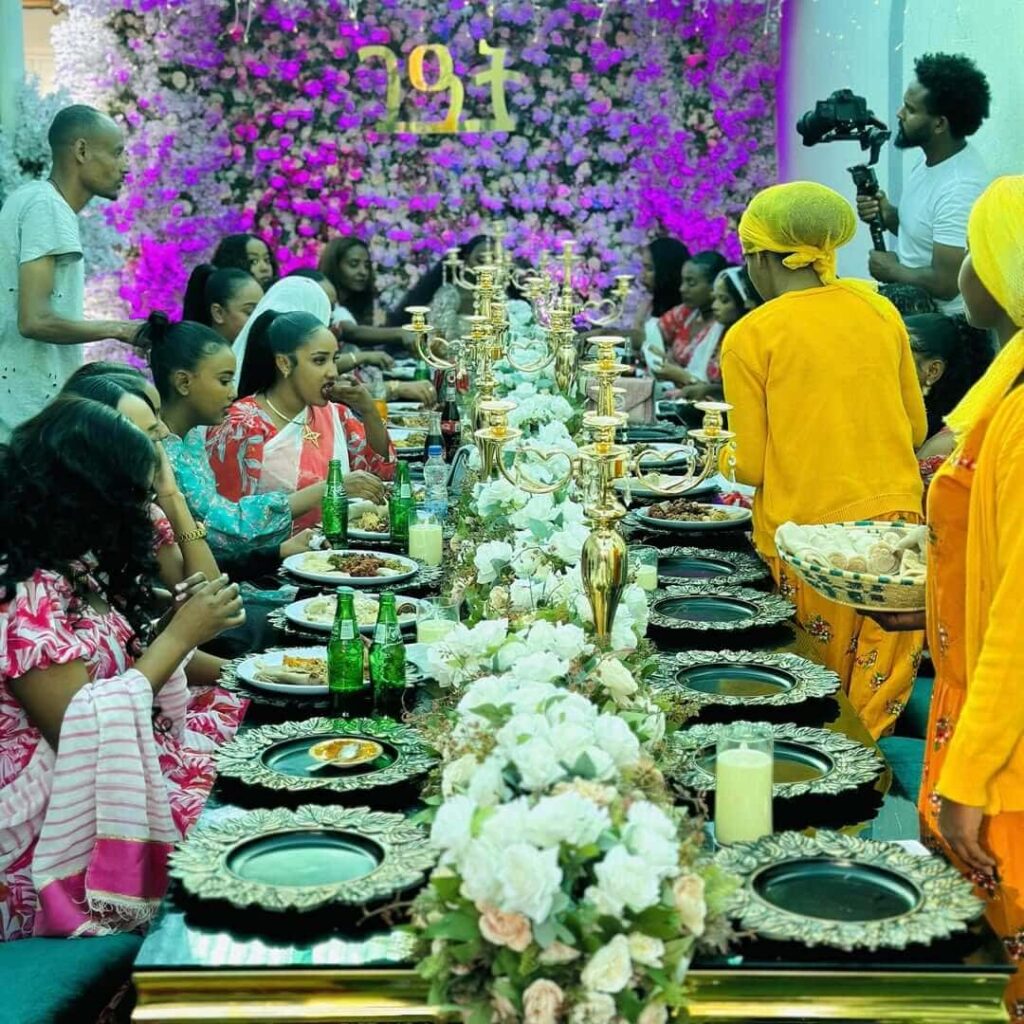
Modern Ethiopian Wedding Menu Ideas
While Ethiopian wedding food is deeply rooted in tradition, modern celebrations are starting to shift in subtle but interesting ways. Couples still keep the core dishes and communal style, but there’s more room now for creativity, presentation, and blending different influences without losing identity.
Here are some of the modern directions Ethiopian wedding menus are taking:
- Traditional base with modern presentation: The foundation is still the same, injera, doro wat, tibs, shiro, and other classics, but they’re now being arranged in more curated buffet setups or styled platters that feel more refined and organized for large receptions.
- Expanded vegetarian and health-conscious options: While Ethiopian food already has strong vegetarian roots, modern weddings often highlight these dishes more intentionally. Expect larger spreads of lentils, greens, salads, and lighter preparations that appeal to diverse guests.
- Fusion touches in select dishes: Some couples introduce subtle fusion ideas, not by replacing tradition but by adding variety. You might see pasta dishes, roasted chicken variations, or international-style sides placed alongside traditional Ethiopian meals for broader guest preferences.
- Interactive serving styles: Instead of only traditional platters, some weddings now include live serving points where guests can build their own plates. This keeps the communal feel but adds flexibility and a more modern reception flow.
- Dessert tables and expanded sweet options: Traditional weddings are now often paired with more visible dessert spreads. Alongside Ethiopian sweets, you’ll find cakes, pastries, fruit displays, and modern dessert setups that make the final part of the celebration feel more complete.
- Brunch-style or simplified receptions: In urban settings, some couples opt for lighter daytime weddings where food is served in a more structured, less layered format. It still includes core Ethiopian dishes but in a more streamlined, easy-to-serve style.
- Drink upgrades and creative beverage bars: Traditional coffee ceremonies and tej are still present, but some weddings now add juice bars, mocktail stations, and a wider variety of non-alcoholic options for guests who prefer lighter drinks.
At the center of all these changes is one thing: flexibility without losing identity. Even when the setup feels modern, the food still tells the same story: sharing, hospitality, and celebration around the table.
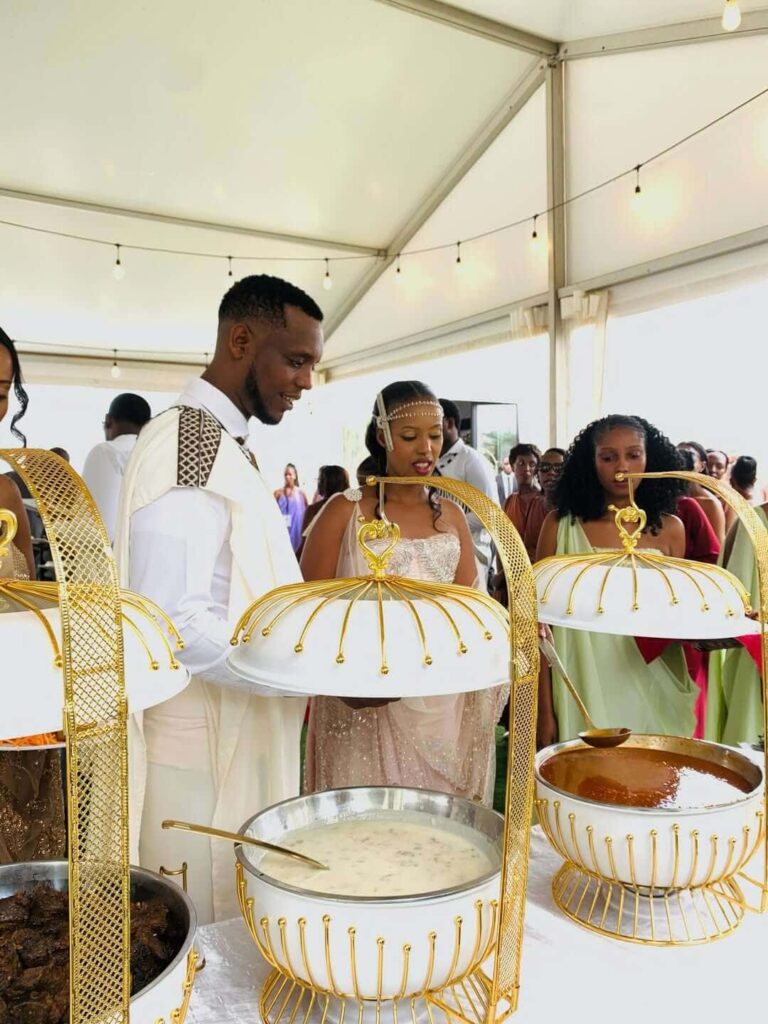
Catering Trends Shaping Ethiopian Weddings Today
Ethiopian wedding catering is changing, but not in a way that replaces tradition. It’s more about how the food is presented, organized, and experienced. Couples still want the same familiar dishes, but the way they’re delivered is becoming more intentional and refined.
Here are some of the key trends shaping how catering looks today:
- More structured catering setups: Instead of one long informal spread, many weddings now use clearly organized serving stations. This helps manage large guest numbers while still keeping the communal feel of Ethiopian dining.
- Blending tradition with presentation: Classic dishes like doro wat, injera, and tibs are still central, but they’re being presented in more visually arranged platters or buffet-style displays that feel more polished without losing authenticity.
- Professional catering teams and chefs: There’s a growing preference for experienced caterers who understand both traditional cooking and large-scale service. This shift is helping maintain consistency in taste while improving timing and coordination during events.
- Custom menu planning: Couples are becoming more involved in designing menus that reflect their background, guest mix, and personal preferences. Some lean heavily traditional, while others balance it with lighter or alternative options for variety.
- Tiered catering packages: Many providers now offer flexible packages depending on budget and guest size. This makes it easier for families to plan without compromising the scale or quality of the feast.
- Experience-focused service: Catering is no longer just about serving food. It now includes pacing the meal, coordinating with music and speeches, and creating moments like coffee service or ceremonial touches that fit into the flow of the wedding.
At its core, the shift is simple. Ethiopian wedding catering is becoming more organized and experience-driven, but the heart of it, shared food, hospitality, and abundance, is still exactly the same.
How to Choose the Right Catering for an Ethiopian Wedding
Choosing catering for an Ethiopian wedding is less about picking a menu and more about understanding tradition, scale, and how the entire celebration flows. Food sits at the center of the event, so the right choice has to respect culture while also handling the reality of large, energetic gatherings.
Here are the key things to keep in mind when making that decision:
- Stay true to traditional expectations: Ethiopian weddings are built around familiar staples like injera, doro wat, tibs, kitfo, and vegetarian stews. A good caterer should know how to prepare these properly and present them in a way that feels authentic to the families involved.
- Plan for abundance, not limitation: These are generous celebrations. Guests expect full platters, second servings, and food that never feels scarce. The right catering team understands how to scale without losing quality or consistency.
- Make shared dining work smoothly: Since most Ethiopian wedding meals are communal, service style matters just as much as the food itself. Large trays, organized serving flow, and well-timed refills help keep the experience smooth instead of chaotic.
- Balance tradition with variety: While the core menu should remain traditional, it helps to include options for different preferences, especially vegetarian dishes, lighter sides, and milder flavors for guests who may not be used to stronger spice levels.
- Think about timing and coordination: Food service is closely tied to speeches, dancing, blessings, and other parts of the ceremony. A good caterer knows how to time service so it supports the rhythm of the event instead of interrupting it.
- Include drinks and finishing touches: Traditional coffee service, teas, and beverages like tej often complete the experience. Choosing a caterer who understands how to integrate these moments adds depth to the celebration.
At the end of the day, the right catering choice isn’t just about cooking skills. It’s about understanding the culture behind the meal and knowing how to deliver it in a way that feels generous, organized, and true to the spirit of an Ethiopian wedding.
Final Thoughts
Ethiopian wedding food carries more than flavor. It carries memory, tradition, and the sense of people coming together around one table. From the first shared platter to the last cup of coffee, the experience is built on connection.
Across regions and families, the details may shift, but the spirit stays steady. It’s a celebration shaped by generosity, shared eating, and customs that give meaning to every dish served.
In the end, what guests remember isn’t just what was eaten but how it felt to be part of it. That’s what makes Ethiopian wedding food such a central part of the celebration.