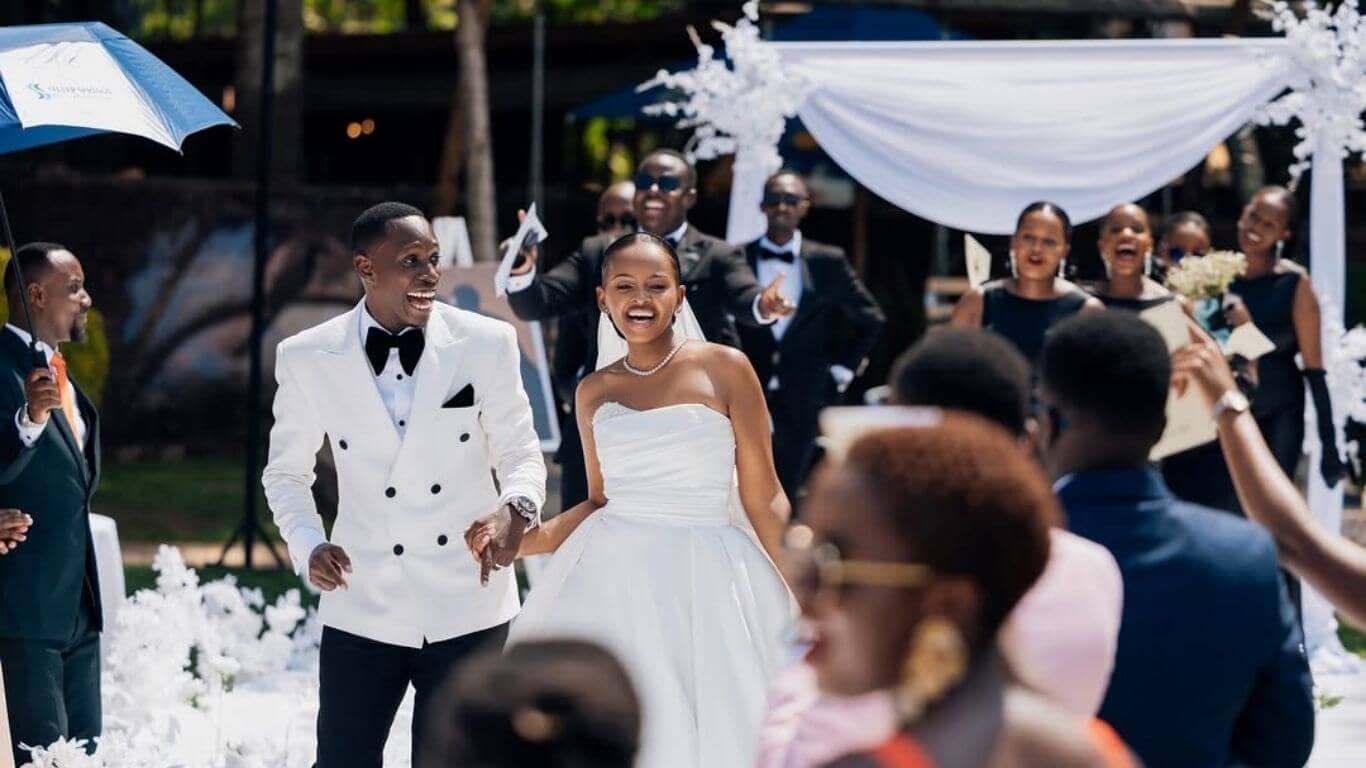
Weddings in Uganda vary widely depending on budget and style. Here’s the average cost for couples planning simple, mid-range, luxury, or destination celebrations.
Most couples don’t start planning a wedding in Uganda with a budget in mind; they start with a vision. The perfect venue, a specific decorator they’ve seen on Instagram, that photographer everyone is talking about, a dream dress, and a packed guest list. One by one, vendors get added to the list. It feels exciting at first, until the numbers start showing up and the total quietly begins to climb.
Here’s the thing: every choice has a cost attached to it. That “must-have” decorator? Premium pricing. The popular MC? Booked and expensive. The venue that looks perfect in photos? Likely priced for that same reason. Before long, what started as a simple plan begins to stretch into something much bigger than expected, not because couples want extravagance, but because every decision pushes the budget a little further.
Weddings in Uganda are also layered. It’s rarely just one event. There’s the introduction ceremony (Kwanjula), sometimes a traditional wedding, then the white wedding, and finally the reception. Add bride price, family expectations, and large guest lists into the mix, and you begin to see why costs can vary so widely from one couple to another.
This is why understanding the real cost of weddings in Uganda matters. Not just rough estimates, but what people actually spend across different types of celebrations. In this guide, we break it down clearly, from simple to luxury weddings, so you know what to expect and how to plan without surprises.

Overview of Weddings in Uganda
To understand what weddings cost in Uganda, you first have to understand how they are structured. It’s not usually a one-day event. Most couples go through multiple stages, starting with the Kwanjula (introduction ceremony), followed by a traditional ceremony in some cases, then the white wedding (church or civil), and finally the reception. Each of these comes with its own expectations, planning, and expenses.
The Kwanjula, in particular, carries a lot of weight. It’s where families formally meet and where the groom’s side presents gifts and fulfills parts of the bride price (dowry) requirements. This alone can take up a significant portion of the budget, depending on the family and cultural background. From there, the white wedding introduces a more modern, structured ceremony, while the reception brings everything together in a full celebration with guests, food, music, and decor.
Then there’s the cultural side of it. Weddings in Uganda are rarely small or private. Family involvement is strong, and guest lists can easily grow beyond what couples initially planned. It’s common to invite extended family, friends, colleagues, and community members, which directly affects costs, especially when it comes to catering, venue size, and logistics. There’s also an unspoken pressure to “do it well,” which can push couples toward bigger spending.
What this really means is that weddings in Uganda sit at the intersection of culture and modern lifestyle. They can be simple, but if not carefully planned, they can quickly become expensive. And that’s exactly why breaking down the actual cost matters, so you can see where the money goes and what to expect at each level.

Cost of Weddings in Uganda
Wedding costs in Uganda are not fixed, and that’s where many couples get caught off guard. The final amount depends on a mix of choices and circumstances, things like guest size, venue, vendor quality, number of events, and how much family is involved. Even something as simple as choosing a popular decorator or increasing your guest list can shift your budget significantly. One major factor that often drives costs up is the Kwanjula (introduction ceremony), especially when bride price and traditional expectations are involved.
How much does a wedding cost in Uganda?
On average, weddings in Uganda can range widely depending on the scale. Simple weddings can cost anywhere from UGX 3 million to 10 million, while many couples fall within the UGX 10 million to 15 million range for a modest celebration. Mid-range weddings typically sit between UGX 15 million and 30 million, while luxury weddings can easily go beyond UGX 30 million and stretch into much higher figures. For those choosing a civil wedding, the cost is significantly lower. A civil marriage in Uganda costs around UGX 260,000 for locals (about $210 for foreigners), covering official registration and solemnization through government-authorized offices.
How much does a bride price cost in Uganda?
Bride price, often handled during the Kwanjula, is one of the most variable and culturally influenced costs. On average, it can range from UGX 2 million to over UGX 20 million, depending on the family, tribe, and expectations. In many cultures, this includes items like cattle, goats, chickens, food items, and sometimes cash. In modern settings, many families accept a cash equivalent, which is where most of these estimates come from.
Beyond these averages, real wedding costs in Uganda vary based on how far couples choose to go. Some insights from actual experiences and industry estimates help put things into perspective:
- UGX 3M – 10M → low-budget weddings (often 100–150 guests)
- UGX 10M – 15M → modest, common range for many couples
- UGX 15M – 30M → mid-range weddings (200–300 guests)
- UGX 30M+ → premium/luxury weddings with full experience
- Some couples (like Mr and Mrs Ntulume) have pulled off weddings for as low as UGX 7 million, keeping things simple and intentional
- Others report budgets around UGX 14–15 million for a modest, traditional wedding
- Larger, more elaborate weddings (especially with big Kwanjula ceremonies) can reach UGX 60 million+ when family contributions and bride price are included
- Wedding planners like Nyom Planet in Uganda also offer packaged estimates, for example:
- ~UGX 19M for 50 guests
- ~UGX 23M for 100 guests
- ~UGX 27M for 150 guests
- ~UGX 33M for 200 guests
- ~UGX 37M for 250 guests
- Broad estimates suggest weddings can range from about $2,000 to $50,000+, depending on scale and luxury level
What this shows clearly is that there’s no single price tag for weddings in Uganda. The cost is shaped by decisions, expectations, and how each couple chooses to balance culture, experience, and budget.
Factors That Increase the Cost of Weddings in Uganda
If there’s one thing that quietly drives wedding budgets up in Uganda, it’s how small decisions stack over time. No single item feels too expensive on its own, but when you combine venue, food, culture, and expectations, the total can shift quickly. Understanding where the pressure points are makes it easier to plan smarter and avoid surprises.
Here are the key factors that tend to increase wedding costs:
1. Guest List Size
This is the biggest cost driver, period. The more people you invite, the more you spend on food, seating, space, and logistics. With catering alone averaging around UGX 100,000 per person in some venues, even adding 50 extra guests can significantly stretch your budget.
2. Venue Choice
Your venue sets the tone and the price. High-end locations often require upfront deposits, sometimes UGX 1 million to 3.5 million or more, depending on the space. Hotels and resorts also bundle services, which can be convenient but expensive if you’re not careful with what’s included.
3. Catering and Drinks
Food is often the single largest expense at Ugandan weddings. Whether it’s buffet or plated service, costs scale directly with guest count. Add drinks, cocktails, and extended service hours, and this category alone can take a huge portion of your budget.
4. Bride Price and Kwanjula Costs
The Kwanjula (introduction ceremony) is not just symbolic; it’s financial. Bride price and traditional items can range from UGX 2 million to over 20 million, depending on family expectations. When you combine this with hosting guests and organizing the event itself, it becomes a major cost center.
5. Decoration and Setup
Décor can go from simple to extravagant very quickly. Floral arrangements, lighting, stage design, and table styling all add up. Focusing heavily on statement areas like the high table can help control costs, but full venue transformations will push the budget higher.
6. Vendor Selection
Top photographers, videographers, MCs, and planners come at a premium. Many couples prefer well-known vendors for quality and visibility, but this choice alone can significantly increase spending, especially when booking multiple high-end professionals.
7. Number of Events
In Uganda, it’s rarely just one event. Between the Kwanjula, white wedding, and reception, each stage requires its own planning, outfits, vendors, and logistics. The more events you host, the higher the overall cost.
When you look at it this way, it becomes clear that wedding costs in Uganda are less about one big expense and more about how everything connects. And that leads naturally to the next question: how do you keep these costs under control without losing the essence of the celebration?
Tips to Cut High Wedding Costs in Uganda
At some point in planning, most couples in Uganda hit the same realization: it’s not that weddings are “too expensive,” it’s that costs rise quietly when nothing is controlled. The good news is, you don’t have to strip your wedding of beauty or meaning to keep it affordable. It’s more about making intentional choices, knowing where to spend, and where to cut back without affecting the experience.
Here are practical ways couples actually reduce wedding costs in Uganda:
1. Plan with a clear budget (and stick to it)
Before anything else, set a realistic total budget and divide it by priority. Once numbers are assigned, every decision should fit inside that structure. Without this, spending tends to follow emotion, not logic.
2. Reduce guest numbers early
This is one of the most effective cost-saving decisions. Since catering can go up to UGX 100,000 per person in some venues, even a small reduction in guests can save millions. Keep the list intentional, not automatic.
3. Use a planning committee or trusted family support
Instead of hiring full-service planners, many couples form a small committee of trusted friends or relatives. This helps manage tasks like coordination, follow-ups, and vendor handling, which reduces extra service fees.
4. Leverage skills within your circle
Ugandan weddings often benefit from community talent. Friends who are good at photography, decoration, music, or makeup can contribute in place of paid vendors. Even partial support in key areas can significantly reduce costs.
5. Choose a smart venue strategy
Venues can be expensive, but flexibility helps. Gardens or community spaces often reduce setup costs since they provide basics like seating. Some hotels also offer bundled packages, so comparing what’s included matters more than just the price tag.
6. Focus spending on key visual areas
You don’t need to decorate everywhere. Many couples now prioritize the high table, entrance, and photo areas, while keeping the rest simple. This creates impact without inflating the entire décor budget.
7. Combine or simplify events where possible
Since weddings in Uganda often include multiple stages like Kwanjula, traditional ceremonies, and receptions, merging or scaling down one event can reduce pressure on the overall budget. Some couples opt for a smaller introduction or a simplified reception to balance costs.
At the end of the day, cutting costs isn’t about doing less—it’s about doing what matters most, and letting go of what doesn’t add real value to the day.
Final Thoughts
Weddings in Uganda don’t come with a fixed price tag. They stretch across a wide range because every couple makes different choices—some lean into simplicity, others go all out. The truth is, the cost is often less about what’s required and more about what gets added along the way.
There’s also a constant balance between culture and modern expectations. On one side, you have traditions like Kwanjula, bride price, and family involvement. On the other, there’s social media influence, vendor trends, and the pressure to “do it big.” Navigating both is where most of the budgeting tension comes from.
In the end, what holds the most weight isn’t how much is spent, but what the day represents. A wedding should reflect commitment, family, and celebration, not financial pressure that lingers long after the event is over.