The payment of a bride price (or dowry) is a common part of weddings across many Ugandan cultures. But beyond the cost, it’s a structured process shaped by family expectations and negotiation.
Weddings in Uganda are rarely just about two people deciding to get married. They sit inside a wider cultural system where families, clans, and community expectations all play a role. From the first introduction between families to the final celebration, every step carries meaning. It’s structured, intentional, and deeply rooted in tradition, even when modern elements are added in.
If you look at how marriage ceremonies unfold across the country, you’ll notice how layered the process really is. Our guide on Ugandan weddings from start to finish shows how everything moves step by step and why these celebrations often stretch across multiple stages instead of happening in a single day. It’s not random. It’s how the culture keeps everything connected.
At the center of it all are traditions and customs that shape how families come together. Inside Ugandan wedding traditions and customs, you can see how music, attire, rituals, and community involvement all come together to give weddings their identity. These are not side details. They are the foundation of how marriage is understood and celebrated.
One of the most important parts of this entire journey is the traditional introduction and negotiation process between families. The Kwanjula and Kuhingira ceremonies explain this moment clearly, where families formally meet, expectations are set, and agreements begin to take shape. It is in these stages that the foundation of the marriage is publicly and culturally recognized.
And right inside that process is where bride price comes in. Known locally as a key part of marriage negotiations, it is not just a payment but a cultural exchange shaped by meaning, respect, and family agreement. To understand it properly, you have to see it in context, not in isolation. That is what this guide unpacks: how bride price works, what it represents, and how it fits into Ugandan marriage traditions.

What Bride Price and Dowry Mean in Uganda
At the heart of Ugandan weddings, bride price and dowry sit in a place that goes far beyond money or exchange. They show up most clearly in traditional marriage ceremonies like the cultural wedding process in Uganda, where families formally come together to shape the future of the couple.
In many Ugandan communities, marriage is not treated as a private agreement between two people. It’s a family decision, often guided by elders, clan identity, and long-standing customs passed down through generations. You see this most clearly in ceremonies like the traditional introduction and marriage rites in Uganda, where families meet, speak, and agree before anything becomes official.
That same mindset is what gives bride price its meaning. It is less about a transaction and more about recognition. A way of acknowledging the bride’s family, the upbringing behind her, and the new bond being created between the two families. This is why it often appears in structured ceremonies like Kwanjula and Kuhingira, where families don’t just exchange gifts; they exchange respect, responsibility, and agreement.
At the same time, modern Ugandan weddings have added new layers to the practice, but the foundation hasn’t changed. Whether the ceremony is traditional, religious, or a blend of both, bride price still carries cultural weight. It signals intention, commitment, and the formal linking of families in a way that purely legal or symbolic weddings alone don’t fully capture.
What this really means is simple: bride price in Uganda is not a standalone payment. It is part of a wider cultural system where marriage is seen as a connection between households, not just individuals.
That’s why, before going deeper into numbers or negotiation, it’s important to first understand how it differs from dowry in meaning and practice, especially in the Ugandan context.

Bride Price vs Dowry: What’s the Difference?
In Uganda, the term you’ll hear most often is bride price, not dowry. That’s because the practice is deeply tied to clan-based marriage systems where families formally agree through ceremonies like Kwanjula in Uganda and other traditional marriage introductions.
The word dowry is more of a global or historical term. In many cultures outside Uganda, it refers to wealth or property given by the bride’s family. But in the Ugandan context, what actually takes place is the opposite direction of exchange, which is why “bride price” is the correct cultural and practical term in most communities. Still, you’ll see “dowry” used in general discussions, even when people are referring to the same Ugandan practice.
Here’s the difference in simple terms:
- Who gives what
Bride price is given by the groom’s family to the bride’s family. Dowry traditionally comes from the bride’s side. - Direction of exchange
Bride price flows toward the bride’s family as a sign of appreciation and agreement. Dowry flows toward the bride or couple as support for setting up their new home. - What is practiced in Uganda
Most Ugandan cultures, especially in Buganda and many other ethnic groups, practice bride price. “Dowry” is commonly used in language, but doesn’t reflect the actual system. - Cultural meaning
Bride price represents respect, family bonding, and formal acceptance of marriage. Dowry is more about economic support for the bride in marriage. - Who is involved
Bride price is negotiated between two families, often led by elders during introduction ceremonies. Dowry systems elsewhere may involve the bride’s family independently providing assets. - What is exchanged
Bride price includes items like cattle, money, clothing, food, and symbolic gifts agreed upon during negotiation. Dowry traditionally includes household goods or wealth transferred for the bride’s use. - Modern usage
In Uganda today, bride price is often symbolic in urban settings but still culturally important in traditional settings. The term “dowry” continues to appear in search queries, but it usually refers to the bride price in practice.
What this really means is simple: in Uganda, when people talk about dowry, they are usually describing the bride price system, even if the terminology doesn’t match the cultural reality.
How Bride Price Fits Into the Wedding Process
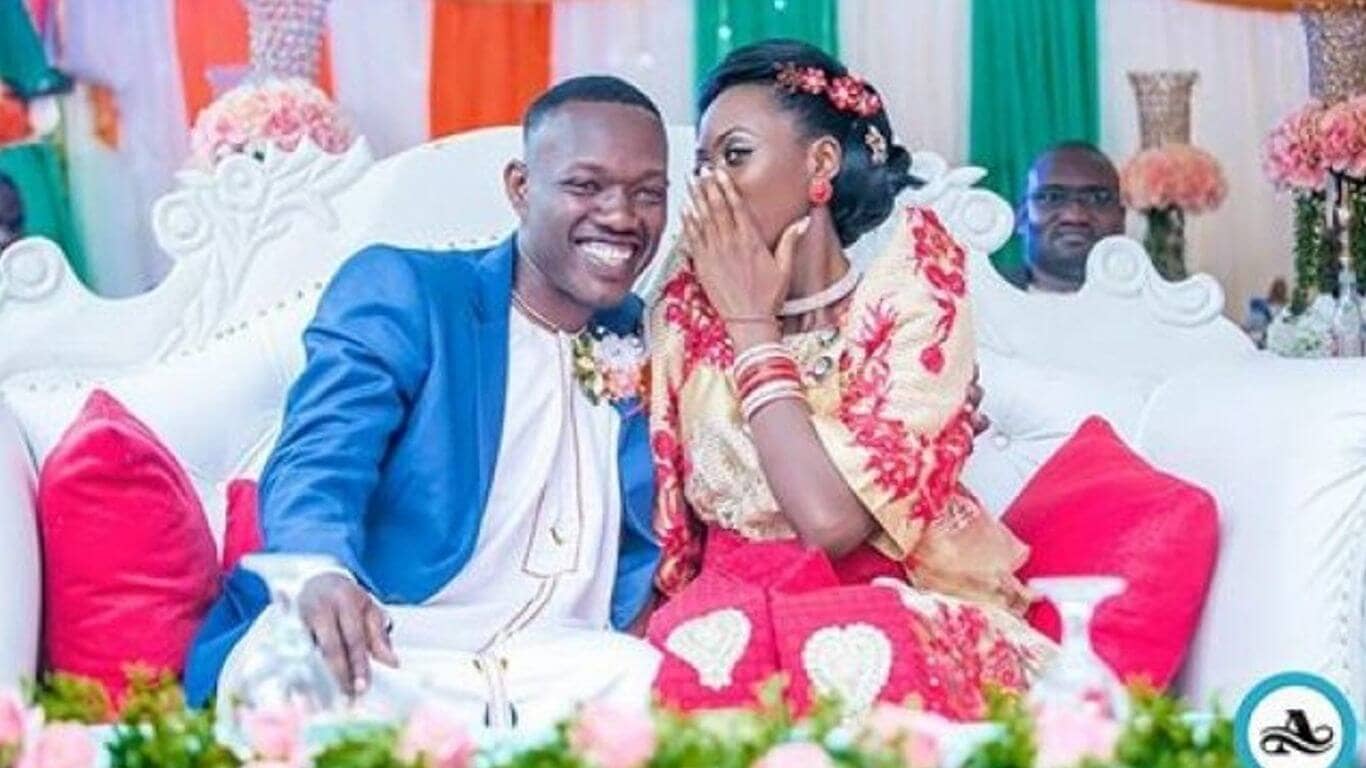
In Uganda, bride price is not a side conversation. It is embedded directly into the marriage journey and is most visibly handled during the Kwanjula (introduction ceremony), where both families formally meet and agree on the union. This is also where other cultural steps leading into Kuhingira (in some regions) begin to take shape, depending on the community.
The process is never handled by the couple alone. It is led by structured family roles: the omuko (bride’s close male relative), the ssenga (paternal aunt), clan elders, and the groom’s omwogezi (spokesperson). These figures guide the discussions, present requests, and ensure that cultural protocol is followed from start to finish.
Bride price is also not spoken about casually or privately between individuals. It is handled through formal negotiation, usually led by elders on both sides. The groom’s family does not simply “offer” an amount. Instead, they respond to a culturally prepared list, presented through the omwogezi, and discussed in a controlled, respectful setting. Every item, from omutwalo (cash component) to symbolic gifts, is acknowledged publicly.
What this really means is that bride price is not a transaction happening in isolation. It is a structured cultural process that reflects respect between families, guided by elders, and carried out through ceremony.
The Cost of Bride Price in Uganda
There’s no single fixed price for bride price in Uganda. It changes from one family to another and from one community to the next. But across most traditional settings, the cost usually falls within a broad range depending on expectations, negotiations, and cultural background.
In practical terms, bride price in Uganda commonly ranges from about UGX 2 million ($540) to UGX 20 million ($5,400). In some cases, especially in more urban or high-profile families, it can go beyond that range depending on what is agreed upon during negotiation. Some families also prefer a mix of cash and items rather than a purely monetary exchange.
Many factors influence the final amount. The bride’s family background and clan traditions play a big role, especially in communities where customs are strongly observed. Education level can also affect expectations, along with the bride’s social standing, upbringing, and sometimes even the groom’s financial capacity. In many cases, it’s not just about the ability to pay but also about what both families consider respectful and appropriate.
What’s included in the bride price is also not uniform. It may involve cash (often referred to as omutwalo in some Buganda settings), livestock such as cows or goats, and symbolic gifts like clothing, food items, beverages, or household goods. In many ceremonies, these items are listed in advance and presented during the Kwanjula, where each one is acknowledged as part of the agreement between families.
What this really shows is that bride price in Uganda is not a fixed market value. It’s a negotiated cultural agreement shaped by tradition, family expectations, and context rather than a standard price tag.
How Bride Price / Dowry Negotiation Works in Uganda
Here’s the thing: most people only understand once they’re inside it, bride price negotiation in Uganda is not a private discussion or a casual family chat. It is a structured cultural process, usually played out during or around the Kwanjula, guided by elders, tradition, and carefully observed etiquette.
At the center of it are the spokespersons on both sides. The groom’s side is led by the omwogezi (also called omuteesa in some settings), who speaks on behalf of the entire delegation. On the bride’s side, elders are supported by key family figures like the ssenga (paternal aunt) and senior male relatives such as the omuko. The couple themselves are not part of the negotiation. They watch, listen, and wait for the outcome.
The actual negotiation is a back-and-forth exchange filled with formal language, humor, proverbs, and cultural references. The bride’s family presents expectations through a structured list, often introduced indirectly rather than bluntly stated. The groom’s spokesman responds carefully, sometimes agreeing immediately, other times stepping aside to consult the groom’s delegation before replying. What looks like debate from the outside is actually a well-understood rhythm of cultural negotiation.
Etiquette matters just as much as the numbers. Interrupting elders, rushing decisions, or speaking out of turn is avoided completely. Silence, patience, and respect carry weight. Even disagreement is expressed in a coded and polite way, often softened with humor or storytelling. The aim is not confrontation but alignment between the two families.
Once terms are understood, agreement is reached gradually rather than declared suddenly. There is usually no single “final moment” where everything ends. Instead, acceptance is confirmed through continued conversation, acceptance of gifts, and blessings from both sides.
What this really means is simple: bride price negotiation in Uganda is not about pressure or transaction. It is about process, respect, and how both families conduct themselves in reaching a shared agreement.
Can Bride Price Be Refunded?
This is one of the most sensitive questions around bride price in Uganda, and it usually comes up when a marriage breaks down or when families are dealing with disputes after separation. In some traditional settings, there is an expectation that bride price discussions may be revisited if the marriage ends, especially in customary unions where agreements were made between families rather than through formal legal contracts.
In reality, this is where culture and law start to diverge. Traditionally, some families may attempt to negotiate a return of bride price through elders, especially in cases where there is conflict or divorce. But legally, Uganda has taken a different position. The Supreme Court ruled that demanding a refund of bride price in customary marriages is unconstitutional, since it can undermine a woman’s right to freely exit a marriage. In practice, however, enforcement is limited, and some communities still discuss it informally through family channels rather than courts.
This tension is exactly why the topic remains sensitive. In cultural terms, bride price is seen as part of family bonding, not a contract for repayment. In legal terms, once marriage has been recognized and lived, the idea of “refund” becomes problematic because it can reduce a deeply cultural process into something transactional. That’s why even when disputes happen, most families prefer mediation through elders rather than formal legal action.
The Modern Shift: How Bride Price Is Changing
Bride price in Uganda is not standing still. It is gradually adapting to modern life, especially in urban areas where couples are more exposed to different cultures, education systems, and economic realities. In cities like Kampala, the process is still respected, but the way it is practiced is often more flexible than in rural or strictly traditional settings.
One of the biggest changes is how negotiation is handled. In many modern families, expectations are discussed earlier and more openly, sometimes even before the formal Kwanjula. Instead of rigid lists and heavy demands, some families now agree on simplified contributions or symbolic payments that still honor tradition without overwhelming either side financially.
Intercultural marriages have also influenced the shift. When Ugandans marry partners from different cultural or international backgrounds, bride price is often adjusted to reflect understanding rather than strict cultural enforcement. In some cases, families reduce items, convert livestock into cash equivalents, or agree on symbolic gestures instead of full traditional lists.
At the same time, not everything is changing. The core structure remains strong. Elders still lead negotiations, families still meet formally, and the idea of respect between clans and households is still central. Even when simplified, bride price continues to carry meaning beyond money.
Conclusion
Bride price remains one of the most defining parts of Ugandan weddings, not because of the cost, but because of what it represents. It is a system built on family connection, cultural identity, and structured agreement between clans rather than individuals.
Even as modern influences reshape how it is practiced, the foundation stays the same. Whether traditional or simplified, bride price continues to signal respect, unity, and the formal joining of two families into one shared relationship.